MinuteRead
30 min
Book summary
Premium summary · Opens in the app · 30 min read
Imagine being asked to point to Ukraine on a map. Sounds simple enough. Now imagine being asked to point to Ukraine on a map while holding an opinion about whether the United States should send military aid there. What if you couldn't do it? What if your opinion about a matter of war and peace existed independently of any ability to locate the country in question?
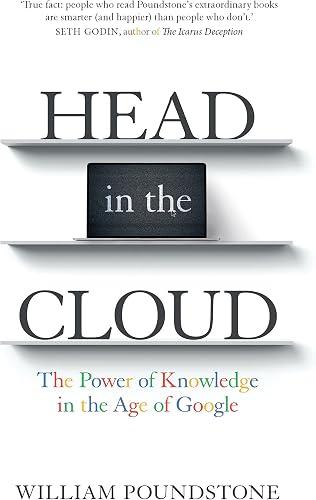
**Author:** William Poundstone
**Estimated Reading Time:** 45 minutes
**What You'll Learn:** - Why factual knowledge still matters in the age of Google - How ignorance shapes your decisions without your awareness - The surprising relationship between trivia knowledge and income - Why the internet may be making you less aware of what you don't know - Practical strategies for becoming a more informed thinker
**Who This Book Is For:** Anyone who has ever wondered whether it still matters to know things when the answer to nearly every question lives in your pocket. This book is for professionals who want to make better decisions, parents concerned about what their children are learning, citizens navigating a complex information landscape, and anyone curious about the hidden costs of outsourcing memory to the cloud.
Imagine being asked to point to Ukraine on a map. Sounds simple enough. Now imagine being asked to point to Ukraine on a map while holding an opinion about whether the United States should send military aid there. What if you couldn't do it? What if your opinion about a matter of war and peace existed independently of any ability to locate the country in question? This is not a hypothetical scenario. When researchers asked Americans to locate Ukraine on a map, the results were sobering. The further off people were in their geographic guesses, the more likely they were to support military intervention. In other words, the less people knew about where a place was, the more comfortable they felt advocating for bombs to be dropped there. William Poundstone's "Head in the Cloud" begins with this uncomfortable observation and follows it to its logical conclusion. We live in an era of unprecedented access to information. The sum of human knowledge sits in our pockets, available in seconds. And yet, by many measures, we know less than previous generations did. More troublingly, we seem increasingly unaware of how much we don't know. The book's title captures this paradox perfectly. Having your head in the clouds once meant being a dreamer, someone disconnected from practical reality. Today, the cloud is where we store our photos, our contacts, our calendars, and increasingly, our knowledge. We have outsourced our memory to servers in distant data centers. The question Poundstone asks is simple: What happens to us when we do that? The answer is not what you might expect. The problem is not that the internet makes us stupid. The problem is subtler and more dangerous. The internet makes us feel smart while quietly eroding our ability to recognize the boundaries of our own knowledge. We confuse access to information with possession of knowledge. We mistake the ability to look something up with actually…
Continue reading in the MinuteRead app
Get the complete 30-minute summary of Head in the Cloud
Get the complete summary in the app**The poorly informed don't necessarily know less; they know different things.** The issue is not a lack of knowledge bu
**Ignorance distorts decisions.** When your mental map of the world is distorted, your decisions are distorted. This aff
**Factual knowledge correlates with higher income.** The knowledge premium persists even when controlling for education
**The least competent are often the most confident.** The Dunning-Kruger effect means that ignorance is often invisible
**Access to information is not the same as possession of knowledge.** The Google effect means we forget what we can look
**Ignorance can be rational, but collective ignorance is dangerous.** Individual rational ignorance can lead to collecti
"Head in the Cloud" is a strong fit if you want practical ideas around psychology, science, technology, especially themes like **the poorly informed don't necessarily know less; they know different things.** the issue is not a lack of knowledge bu; **ignorance distorts decisions.** when your mental map of the world is distorted, your decisions are distorted. this aff. The MinuteRead summary distills these concepts into a focused read, whether you're deciding whether to buy the book or applying its lessons at work.
Motivated to help readers with the poorly informed don’t necessarily know less, William Poundstone wrote “Head in the Cloud” to package those ideas for a fast, focused read. Through “Head in the Cloud”, William Poundstone distills the core ideas on psychology into lessons readers can absorb in a single short sitting. Readers turn to this work when they want William Poundstone's perspective on the subject without working through the entire original volume. The book is structured so each chapter h…
View all summaries by William PoundstoneContinue Reading
Access the complete 30-minute summary and thousands more nonfiction books in the MinuteRead app.

Continue reading the complete summary in the MinuteRead app.