MinuteRead
30 min
Book summary
Premium summary · Opens in the app · 30 min read
For decades, medicine operated on a simple assumption: if you are sick, something specific is broken. Find the broken part, fix it, and you get better. This approach has produced remarkable results for acute problems. A broken bone can be set. An infection can be treated with antibiotics. A blocked artery can be opened.
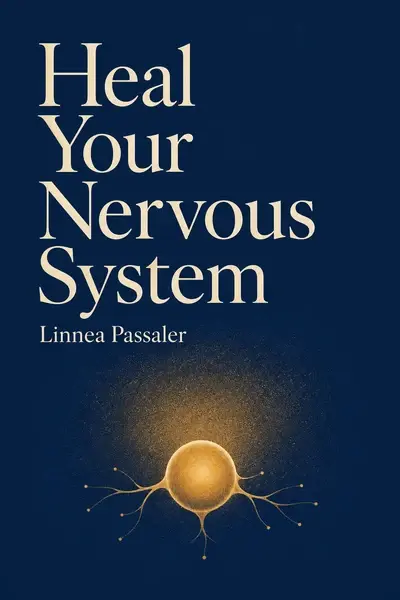
**Author:** Linnea Passaler
**Estimated Reading Time:** 45 minutes
**What You'll Learn:**
- Why your nervous system may be behind symptoms that doctors can't explain - How sensitivity shapes your experience of the world and your health - The five-stage process for restoring nervous system flexibility - Body-based practices that create lasting regulation - How to build resilience without pushing yourself harder
**Who This Book Is For:**
This book is for anyone who has been told their symptoms are "just stress" or that nothing is physically wrong. It is for people who feel exhausted by their own sensitivity, who struggle with anxiety that seems to come from nowhere, and who have tried treating individual symptoms without finding lasting relief. It is also for practitioners who want to understand the deeper mechanisms connecting stress, trauma, and chronic illness.
For decades, medicine operated on a simple assumption: if you are sick, something specific is broken. Find the broken part, fix it, and you get better. This approach has produced remarkable results for acute problems. A broken bone can be set. An infection can be treated with antibiotics. A blocked artery can be opened. But this model fails spectacularly when applied to the growing epidemic of chronic conditions that defy clear diagnosis. Millions of people walk out of doctors' offices with normal test results and no explanation for their crushing fatigue, their unpredictable digestive problems, their racing hearts, their skin that flares without warning, their sleep that never restores. They are told to reduce stress, to exercise more, to try meditation. They are given medications that address symptoms while the underlying problem continues to worsen. Linnea Passaler was one of these people. A physician by training, she found herself trapped in a cycle of unexplained symptoms that her medical education could not explain. She was exhausted, anxious, and increasingly unwell, yet every test came back normal. It was only when she began exploring the emerging science of nervous system regulation that she found both an explanation and a path forward. The explanation was simple but profound: her nervous system had lost its flexibility. It was stuck in states of high alert, constantly preparing for threats that were not actually present. This chronic state of activation was not just causing her anxiety. It was disrupting her digestion, her sleep, her immune function, and her ability to recover from everyday stress. Her symptoms were not separate problems requiring separate treatments. They were all expressions of a single underlying issue. This insight is the foundation of Passaler's work. The nervous system is not just another system in the body. It is the master regulator, the communication network that tells every other system how to respond to the…
Continue reading in the MinuteRead app
Get the complete 30-minute summary of Heal Your Nervous System
Get the complete summary in the appYour nervous system is the master regulator of your body, and its health affects every aspect of your wellbeing.
Dysregulation occurs when your nervous system loses flexibility, getting stuck in states of high alert or shutdown.
Sensitivity exists on a spectrum, and understanding your profile helps you work with your nervous system rather than aga
The Alertness Elevator describes five states of activation, from deep rest to emergency freeze.
Awareness is the foundation of healing because you cannot change what you cannot see.
Regulation happens through the body, using practices like breath work, movement, and self-touch.
"Heal Your Nervous System" is a strong fit if you want practical ideas around health & fitness, self help, health, especially themes like your nervous system is the master regulator of your body, and its health affects every aspect of your wellbeing; dysregulation occurs when your nervous system loses flexibility, getting stuck in states of high alert or shutdown. The MinuteRead summary distills these concepts into a focused read, whether you're deciding whether to buy the book or applying its lessons at work.
Linnea Passaler is a doctor who developed a global digital health program to address nervous system dysregulation. Her work focuses on helping people with various mental and physical symptoms related to anxiety, burnout, and chronic health issues. Passaler's approach combines recent scientific advances in neurobiology, chronic stress, and trauma with a holistic perspective on healing. She emphasizes the mind-body connection and the importance of nervous system regulation in overall health. Passa…
View all summaries by Linnea PassalerContinue Reading
Access the complete 30-minute summary and thousands more nonfiction books in the MinuteRead app.

Continue reading the complete summary in the MinuteRead app.