MinuteRead
30 min
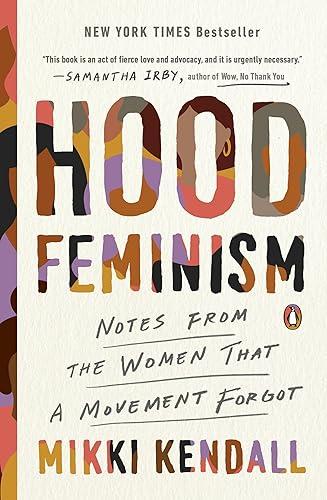
Hood Feminism explores the idea that traditional feminism only seeks to improve life for white women and not all women, arguing that true equality and inclusivity means seeking to lift all women, including those of color.
Hood Feminism explores the idea that traditional feminism only seeks to improve life for white women and not all women, arguing that true equality and inclusivity means seeking to lift all women, including those of color.
Kendall learned a lot about feminism from her grandmother, who didn’t consider herself a feminist. Why? Because as a woman of color, she felt that feminism really was only looking out for white women.
For example, it was her grandmother who cared for the children and homes of the feminists who joined the workforce. Domestic work like she did was poorly paid and rarely acknowledged by feminists.
Birth control was a another top priority for feminists. Meanwhile, women of color struggled to even have access to good education or basic healthcare. Who was fighting for them? Kendall believes that most feminists just don’t understand what it’s like to be disadvantaged.
There are 42 million Americans who suffer hunger on a regular basis, and of those, 70% are women and children. Experiencing hunger and poverty affects you for life, yet feminists tend to overlook this suffering almost entirely.
When it comes to housing, women of color often lose out to white women also. This is because white women are less able to compete with white men in the housing market, so they are forced to move to less desirable areas, which contributes to their gentrification. This process displaces people of color, showing that what’s good for white women isn’t necessarily good for women of color.
The wealth gap puts women at a much higher risk of eviction or homelessness. This affects their entire family. But yet, feminism seems to gloss over this whole issue. These women aren’t worried about shopping for organic food—- they’re worried about feeding their family. These women deserve much more support from the feminists who are supposedly there to support women.
If I asked you how we can address sexual or gendered violence, what would you say? White women usually would count on law enforcement to address these issues. They would assume that the perpetrator would be taken away by police and be punished, while the victim receives justice. This is known as carceral feminism. Does it work this smoothly? The reality for many people is that involving law enforcement can actually make matters worse. This is especially true for minority women. Even in the best-case scenario where the perpetrator is actually locked up, often a woman is left with no income. Sometimes these survivors of abuse aren’t able to go to work right away, but the welfare system doesn’t recognize this. So now these women face poverty. In some cases, a woman who fights back might face prosecution herself. In…
Continue reading in the MinuteRead app
Get the complete 5-minute summary of Hood Feminism
Get the complete summary in the appMainstream feminists and progressives often overlook the disadvantaged when fighting for policies.
White women are reassured by the criminal justice system, while people of color can’t count on it.
It isn’t enough just to be an ally to marginalized women, you should be an accomplice.
"Hood Feminism" is a strong fit if you want practical ideas around culture, feminism, history, especially themes like mainstream feminists and progressives often overlook the disadvantaged when fighting for policies; white women are reassured by the criminal justice system, while people of color can’t count on it. The MinuteRead summary distills these concepts into a focused read, whether you're deciding whether to buy the book or applying its lessons at work.
Mikki Kendall lives and works in Chicago where she wields words and raises a family. She has a couple of degrees, a couple of kids, and one patient husbeast. A graduate of the University of Illinois at Urbana Champaign and DePaul, Mikki Kendall has been blogging since 2003 under the pen name Karnythia. She has discussed topics ranging from Chicago violence to police brutality, from parenting to racial representation in media, from reproductive health to food insecurity. She has also covered abor…
View all summaries by Mikki KendallContinue Reading
Access the complete 5-minute summary and thousands more nonfiction books in the MinuteRead app.

Continue reading the complete summary in the MinuteRead app.