MinuteRead
30 min
Book summary
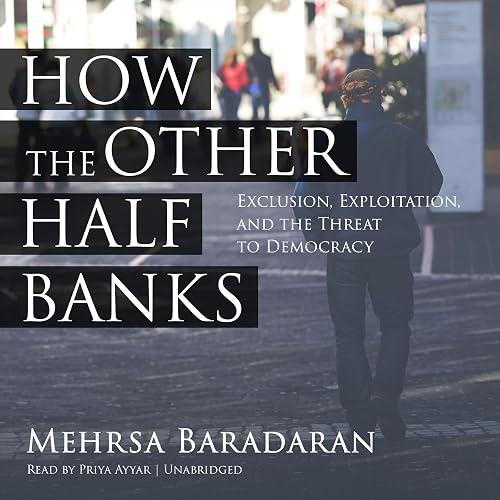
by Mehrsa Baradaran
Premium summary · Opens in the app · 30 min read
There is a strange moment in American life when you realize that being poor is expensive. A person with money writes a check and it clears for free. A person without a bank account walks into a check-cashing store and pays a percentage of their hard-earned wages just to access their own money. A wealthy family secures a mortgage at three percent interest. A working family without credit history pays twenty-five percent at a car dealership or worse at a payday lender.
**Author:** Mehrsa Baradaran
**Estimated Reading Time:** 45 minutes
**What You'll Learn:**
- Why banks are not ordinary businesses and what makes them fundamentally different - How the American banking system abandoned millions of working families - Why the unbanked pay more for money than the wealthy - The hidden history of public banking in America - Why postal banking offers a practical solution to financial exclusion - How the social contract between banks and citizens has broken down
**Who This Book Is For:**
This book is for anyone who has wondered why payday lenders thrive in poor neighborhoods while banks close branches. It is for readers curious about the relationship between government and finance, for those concerned about economic inequality, and for citizens who want to understand why millions of Americans remain locked out of the financial system. If you have ever paid a fee to cash a check or wondered why banking seems designed for people who already have money, this book explains the forces at work and what can be done about them.
There is a strange moment in American life when you realize that being poor is expensive. A person with money writes a check and it clears for free. A person without a bank account walks into a check-cashing store and pays a percentage of their hard-earned wages just to access their own money. A wealthy family secures a mortgage at three percent interest. A working family without credit history pays twenty-five percent at a car dealership or worse at a payday lender. These are not accidents of the market. They are the predictable results of a banking system that has abandoned its public purpose. Mehrsa Baradaran begins her investigation with a simple observation that most Americans have forgotten: banks are not ordinary businesses. A grocery store does not receive a government guarantee against failure. A clothing retailer cannot borrow money from the Federal Reserve at near-zero rates. A restaurant does not have its deposits insured by the full faith and credit of the United States government. Banks do. This support is not incidental to banking. It is the foundation of the entire system. The relationship between banks and government goes back to the founding of the American republic. Alexander Hamilton understood that a nation needed a stable financial system to prosper. Thomas Jefferson feared the concentration of financial power. Their debate set the terms for two centuries of American banking policy, a debate that has shaped who gets access to credit and who does not. What Baradaran reveals is that this debate has been resolved, quietly and decisively, in favor of the banks. The government provides enormous support to the banking industry. Deposit insurance protects…
Continue reading in the MinuteRead app
Get the complete 30-minute summary of How the Other Half Banks
Get the complete summary in the appBanks are not ordinary businesses. They depend on government support for their existence.
The social contract between banks and the public has broken down. Banks receive government support without serving the p
The retreat from low-income communities was a deliberate choice driven by deregulation and consolidation.
The fringe banking sector emerged to fill the void left by mainstream banks, charging fees that would have been illegal
Approximately 70 million Americans are unbanked or underbanked, paying fees that can amount to 10 percent of their incom
The unbanked are not unbanked by choice. They face structural barriers that exclude them from the banking system.
"How the Other Half Banks" is a strong fit if you want practical ideas around economics, politics, history, especially themes like banks are not ordinary businesses. they depend on government support for their existence; the social contract between banks and the public has broken down. banks receive government support without serving the p. The MinuteRead summary distills these concepts into a focused read, whether you're deciding whether to buy the book or applying its lessons at work.
Motivated to help readers with the essential relationship between banks and the governments that enable them has largely been forgotten, Mehrsa Baradaran wrote “How the Other Half Banks” to package those ideas for a fast, focused read. In “How the Other Half Banks”, Mehrsa Baradaran focuses on the essential relationship between banks and the governments that enable them has largely been forgotten. Through “How the Other Half Banks”, Mehrsa Baradaran distills the core ideas on economics into less…
Continue Reading
Access the complete 30-minute summary and thousands more nonfiction books in the MinuteRead app.

Continue reading the complete summary in the MinuteRead app.