MinuteRead
30 min
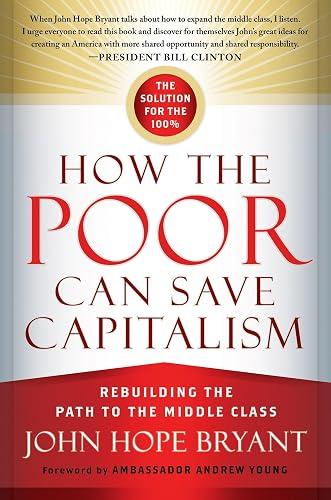
Book summary
by John Hope Bryant
Premium summary · Opens in the app · 30 min read
America has a secret. The wealthiest nation in human history has systematically excluded a significant portion of its own citizens from the very system that created its prosperity. The poor, the working class, and increasingly the struggling middle class have been left out of capitalism's promise, not because they lack ambition or ability, but because no one ever taught them how the game works.
**Author:** John Hope Bryant **Estimated Reading Time:** 45 minutes
**What You'll Learn:**
- Why the economic fate of America depends on the financial success of its poorest citizens - How financial literacy became the new civil rights issue of our time - The real definition of poverty that goes far beyond income statistics - Why your credit score is a measure of hope, not just financial health - A practical blueprint for transforming communities through economic inclusion - How entrepreneurship and homeownership can rebuild the middle class
**Who This Book Is For:**
This book is for anyone who senses that something is broken in the American economy but cannot quite articulate what it is. It is for business leaders who wonder why growth feels hollow, for policymakers who struggle to design programs that actually work, for educators who see students trapped by circumstances beyond their control, and for ordinary citizens who feel financially insecure despite working hard. Most importantly, it is for anyone who believes that dignity, not charity, is the foundation of lasting prosperity.
America has a secret. The wealthiest nation in human history has systematically excluded a significant portion of its own citizens from the very system that created its prosperity. The poor, the working class, and increasingly the struggling middle class have been left out of capitalism's promise, not because they lack ambition or ability, but because no one ever taught them how the game works. John Hope Bryant knows this from personal experience. Growing up in Compton and South Central Los Angeles, he saw firsthand how financial exclusion destroys hope. He watched hardworking people lose everything because they did not understand interest rates. He saw talented young people turn away from legitimate opportunity because no one had ever shown them a different path. And he discovered something remarkable: when you give people access to financial knowledge and economic opportunity, they transform not only their own lives but the communities around them. The central argument of this book is both simple and profound. The American economy is driven by consumer spending. The bottom 80 percent of consumers account for the vast majority of economic activity. When these consumers are financially healthy, the entire economy thrives. When they struggle, everyone feels the pain. The poor are not a drag on capitalism. They are the engine that can save it. But there is a problem. No one has ever seriously tried to make free enterprise work for the poor at scale. We have tried charity. We have tried government programs. We have tried welfare. What we have not tried is treating the poor as valuable economic participants who simply lack the tools, knowledge, and access they need to succeed.…
Continue reading in the MinuteRead app
Get the complete 30-minute summary of How the Poor Can Save Capitalism
Get the complete summary in the app**Poverty is not about money.** It is about self-confidence, role models, and opportunity.
**Financial literacy is a civil right.** Access to financial knowledge is essential for freedom in the modern world.
**The poor can save capitalism.** The American economy depends on the purchasing power of ordinary people.
**Banks must serve communities.** Financial exclusion drives people into the arms of predatory lenders.
**Homeownership builds wealth.** Real estate is the working family's hedge fund.
**Credit scores transform lives.** Moving from 500 to 700 opens doors to economic opportunity.
"How the Poor Can Save Capitalism" is a strong fit if you want practical ideas around economics, business, social justice, especially themes like **poverty is not about money.** it is about self-confidence, role models, and opportunity; **financial literacy is a civil right.** access to financial knowledge is essential for freedom in the modern world. The MinuteRead summary distills these concepts into a focused read, whether you're deciding whether to buy the book or applying its lessons at work.
Motivated to help readers with and no one has ever tried to make free enterprise and capitalism work for the poor and others left out and, John Hope Bryant wrote “How the Poor Can Save Capitalism” to package those ideas for a fast, focused read. In “How the Poor Can Save Capitalism”, John Hope Bryant focuses on and no one has ever tried to make free enterprise and capitalism work for the poor and others left out and. Through “How the Poor Can Save Capitalism”, John Hope Bryant distills the core …
Continue Reading
Access the complete 30-minute summary and thousands more nonfiction books in the MinuteRead app.

Continue reading the complete summary in the MinuteRead app.