MinuteRead
30 min
Book summary
Premium summary · Opens in the app · 5 min read
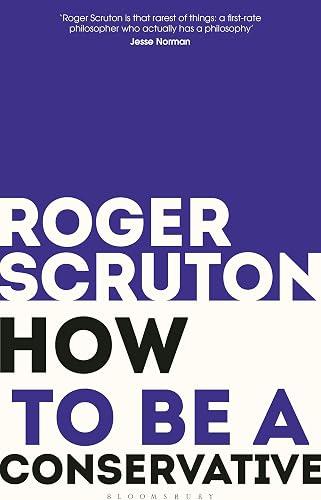
How to Be a Conservative builds the case for traditionalists and conservative people who view society through the lenses of someone who’s defending their nation, the long-lasting values of the world, the free market, and many other healthy principles.
How to Be a Conservative builds the case for traditionalists and conservative people who view society through the lenses of someone who’s defending their nation, the long-lasting values of the world, the free market, and many other healthy principles.
A true conservative person believes in a society built from the bottom up, from its people to their representatives. A healthy society is defined by its people and follows the will of the majority. Unfortunately, many states fail to understand and implement these principles. This was also the case of communist Czechoslovakia or even the UK under Margaret Thatcher.
The ideology of a party is not the main aspect people should focus on. Instead, the focus should be on how they plan on implementing it. Throughout history, societies have fallen prey to all sorts of regimes. As such, people have started to shift towards absolute democracy with no intention of looking back. The problem with this sudden shift is that they leave behind what’s important: their legacy, history, and values.
For this reason, conservators are trying to preserve these cultural ideas. While still being pro-development, one can also be pro-preservation of the nation’s values and principles. Moreover, without a moral compass and a history, society is easier to divide and conquer. That’s because there’s nothing to stick people together under a common purpose.
There’s no point in rushing to bring the future closer by leaving the past behind. As such, an ideal society has representatives that offer extreme care and consideration towards the families, the traditions, the history of that society, and other similar aspects. Moreover, the elected officials ought to work to preserve these. Doing so will build a better, more developed society having such implications in mind.
One of the many unfortunate implications of communism is the nationalization of all institutions, businesses, and all other entities. Having the idea of the greater good and a centralized administration to serve all people equally, this practice has brought people tremendous misfortune during the twentieth century. Not only is this philosophy utopic, but so much power in the hands of a few can prove to be dangerous. Scruton learned this first-hand during his experiences in the communist states. He saw that private clubs and schools were closing due to the fact that they were providing “unfair” opportunities and access to networks to those who were privileged enough to join them. The entire approach was wrong. The solution is to make them more accessible to the masses. Thus, giving more people opportunities to seize and chances to succeed. Moreover, by shutting them down, a state is only forcing the privileged to find loopholes to fulfill their wishes. They can still buy houses in…
Continue reading in the MinuteRead app
Get the complete 5-minute summary of How to Be a Conservative
Get the complete summary in the appA healthy society should be built from below, instead of being ruled from above.
A conservative society strives to offer equal opportunities and keeps all institutions involved in the market.
Nationalism became a controversial word, but it actually promotes a healthy society.
"How to Be a Conservative" is a strong fit if you want practical ideas around culture, philosophy, politics, especially themes like a healthy society should be built from below, instead of being ruled from above; a conservative society strives to offer equal opportunities and keeps all institutions involved in the market. The MinuteRead summary distills these concepts into a focused read, whether you're deciding whether to buy the book or applying its lessons at work.
Roger Vernon Scruton, FBA, FRSL (/ˈskruːtən/; born 27 February 1944) is an English philosopher who specialises in aesthetics. He has written over thirty books, including Art and Imagination (1974), The Meaning of Conservatism (1980), Sexual Desire (1986), The Philosopher on Dover Beach (1990), The Aesthetics of Music (1997), Beauty (2009), How to Think Seriously About the Planet: The Case for an Environmental Conservatism (2012), Our Church (2012), and How to be a Conservative (2014). Scruton ha…
View all summaries by Roger ScrutonContinue Reading
Access the complete 5-minute summary and thousands more nonfiction books in the MinuteRead app.

Continue reading the complete summary in the MinuteRead app.