MinuteRead
30 min
Book summary
Premium summary · Opens in the app · 30 min read
You have probably asked someone to do something today. Maybe you asked a colleague to review a document, a child to clean their room, a customer to try a new product, or a friend to help you move. Some of those requests worked. Some did not. Most of us chalk up the failures to the other person being stubborn, busy, or uninterested. We rarely stop to ask whether the way we made the request had anything to do with the outcome.
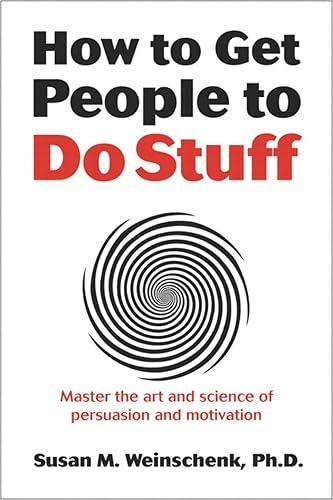
**Author:** Susan M. Weinschenk **Estimated Reading Time:** 45 minutes
The hidden psychological drivers that shape human behavior, why people say yes when they do, and how to ethically apply these insights to influence decisions in your personal and professional life.
Anyone who needs to persuade, motivate, or inspire others. Managers who want engaged teams. Marketers who want loyal customers. Parents who want cooperative children. Teachers who want curious students. And anyone who has ever wondered why people do what they do, despite their best intentions.
You have probably asked someone to do something today. Maybe you asked a colleague to review a document, a child to clean their room, a customer to try a new product, or a friend to help you move. Some of those requests worked. Some did not. Most of us chalk up the failures to the other person being stubborn, busy, or uninterested. We rarely stop to ask whether the way we made the request had anything to do with the outcome. Susan Weinschenk has spent her career asking that question. A behavioral psychologist with decades of experience applying research to real-world problems, she has studied why people take action and why they resist. Her conclusion is both simple and profound: human behavior is not random. It follows predictable patterns. Once you understand those patterns, you can design requests that align with how the brain actually works. The problem is that most of us operate on a flawed model of human motivation. We assume people make decisions by carefully weighing pros and cons. We believe that if we present logical arguments, people will respond logically. We think that offering more information will lead to better decisions. The research tells a different story. People are driven by unconscious forces, social pressures, habits, stories, instincts, and cognitive shortcuts that operate below the level of awareness. Logic plays a role, but it is rarely the deciding factor. This book exists because there is a gap between what science knows about human behavior and what most people do when they try to influence others. That gap costs you time, money, relationships, and opportunities. Every failed pitch, ignored request, and abandoned behavior change effort is a symptom of that gap. What makes Weinschenk's approach different is her grounding in research. She does not offer motivational platitudes or manipulative tricks. Instead, she draws on decades of studies in psychology, neuroscience, and behavioral economics to identify seven core drivers of human motivation. These drivers explain why people join groups, form habits, tell stories, respond to rewards, follow instincts, pursue mastery, and fall prey to cognitive biases. Understanding these drivers gives you a framework for influence that is both practical and ethical. The stakes…
Continue reading in the MinuteRead app
Get the complete 30-minute summary of How to Get People to Do Stuff
Get the complete summary in the appThe seven drivers of motivation are: belonging, habits, stories, rewards, instincts, mastery, and cognitive biases.
Show people that others like them are already doing the desired behavior.
Anchor new habits to existing ones and make them small.
Change the story to change the behavior.
Use rewards strategically. Do not undermine intrinsic motivation.
Frame messages in terms of what people will lose if they do not act.
"How to Get People to Do Stuff" is a strong fit if you want practical ideas around psychology, business, self help, especially themes like the seven drivers of motivation are: belonging, habits, stories, rewards, instincts, mastery, and cognitive biases; show people that others like them are already doing the desired behavior. The MinuteRead summary distills these concepts into a focused read, whether you're deciding whether to buy the book or applying its lessons at work.
Motivated to help readers with "If you understand the science behind what motivates people, Susan M. Weinschenk wrote “How to Get People to Do Stuff” to package those ideas for a fast, focused read. In “How to Get People to Do Stuff”, Susan M. Weinschenk focuses on "If you understand the science behind what motivates people. Through “How to Get People to Do Stuff”, Susan M. Weinschenk distills the core ideas on psychology into lessons readers can absorb in a single short sitting. Readers turn to…
View all summaries by Susan M. WeinschenkContinue Reading
Access the complete 30-minute summary and thousands more nonfiction books in the MinuteRead app.

Continue reading the complete summary in the MinuteRead app.