MinuteRead
30 min
Book summary
Premium summary · Opens in the app · 30 min read
There is a quiet tragedy that plays out in millions of minds every day. It happens when someone looks at a problem, a challenge, or an opportunity and thinks: "I'm just not creative enough for this." They believe creativity belongs to artists, musicians, inventors, and a lucky few who were born with some mysterious gift. They believe the rest of us must simply make do with conventional thinking.
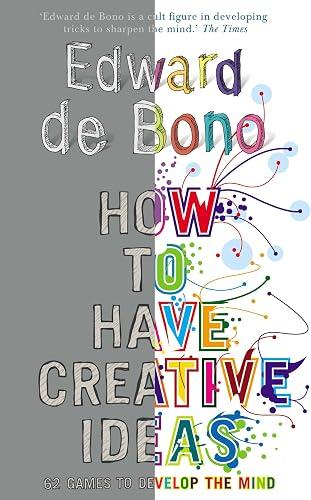
**Author:** Edward de Bono
**Estimated Reading Time:** 45 minutes
**What You'll Learn:**
* Why creativity is a skill you can develop, not a talent you are born with * How the brain's pattern-making tendency both helps and limits your thinking * The power of random stimulation to unlock new ideas * How to see value where others see nothing * Why simplification is one of the highest forms of creativity * How to apply creative thinking to business, relationships, and everyday life
**Who This Book Is For:**
Anyone who has ever believed they are "not creative." Anyone who works in business, education, design, or leadership and needs fresh ideas on demand. Anyone who suspects that the way they think has become a rut and wants to break free.
There is a quiet tragedy that plays out in millions of minds every day. It happens when someone looks at a problem, a challenge, or an opportunity and thinks: "I'm just not creative enough for this." They believe creativity belongs to artists, musicians, inventors, and a lucky few who were born with some mysterious gift. They believe the rest of us must simply make do with conventional thinking. Edward de Bono spent his entire career dismantling this belief. His argument is simple and radical: creativity is not a talent. It is a skill. And like any skill, it can be learned, practiced, and improved. This book exists because the world has changed. For most of human history, creativity was a luxury. People needed to follow established procedures, repeat proven methods, and maintain stable systems. The farmer who invented a new way to plow was rare. The clerk who followed the rules was valued. But in the modern world, the rules have changed. Information is everywhere. Technology is available to everyone. What was once scarce is now abundant. The only remaining source of competitive advantage, in business and in life, is the ability to generate new ideas. De Bono was uniquely qualified to write this book. A physician by training, he spent decades studying how the brain actually works. He did not approach creativity as a mystical subject. He approached it as a scientist. He observed that the brain is a self-organizing information system, a machine that builds patterns and then follows them. This pattern-making ability is essential for survival. It allows you to recognize a door, use a fork, drive a car, and navigate social situations without conscious effort. But it also creates a problem: the brain becomes trapped in its own patterns. The solution de Bono developed is called lateral thinking. Unlike vertical thinking, which moves logically from one step to the next, lateral thinking moves sideways. It deliberately disrupts established…
Continue reading in the MinuteRead app
Get the complete 30-minute summary of How to Have Creative Ideas
Get the complete summary in the appCreativity is a skill you can learn, practice, and improve. It is not a fixed talent.
The brain builds patterns to function efficiently. Creative thinking requires deliberately disrupting these patterns.
The Random Word technique is a reliable tool for generating new ideas. Select a random word and force connections with y
Perception determines possibility. Generate multiple interpretations before settling on one.
New ideas are combinations of existing elements. Learn to decompose ideas and reassemble them in new ways.
Value sensitivity is as important as idea generation. Learn to see practical, economic, aesthetic, and social value.
"How to Have Creative Ideas" is a strong fit if you want practical ideas around psychology, self help, personal development, especially themes like creativity is a skill you can learn, practice, and improve. it is not a fixed talent; the brain builds patterns to function efficiently. creative thinking requires deliberately disrupting these patterns. The MinuteRead summary distills these concepts into a focused read, whether you're deciding whether to buy the book or applying its lessons at work.
Motivated to help readers with creativity is a skill that can be learned, Edward de Bono wrote “How to Have Creative Ideas” to package those ideas for a fast, focused read. In “How to Have Creative Ideas”, Edward de Bono focuses on creativity is a skill that can be learned. Through “How to Have Creative Ideas”, Edward de Bono distills the core ideas on psychology into lessons readers can absorb in a single short sitting. Readers turn to this work when they want Edward de Bono's perspective on th…
View all summaries by Edward de BonoContinue Reading
Access the complete 30-minute summary and thousands more nonfiction books in the MinuteRead app.

Continue reading the complete summary in the MinuteRead app.