MinuteRead
30 min
Book summary
Premium summary · Opens in the app · 30 min read
Every day, you participate in dozens of interactions where someone might not be telling you the complete truth. The job candidate who assures you they left their last position on good terms. The date who says they had a wonderful time and will definitely call. The salesperson who insists this is the best price they can offer. The friend who claims everything is fine when their eyes suggest otherwise.
**Author:** Vanessa Van Edwards **Estimated Reading Time:** 42 minutes
How to establish behavioral baselines that make deception visible, read the seven universal facial expressions that reveal hidden emotions, interpret body language signals most people never think to control, detect vocal patterns that accompany dishonesty, and apply these skills in dating, business, and everyday interactions.
Professionals who negotiate, interview, or manage people. Individuals who want to improve their relationships by understanding what others are actually feeling. Anyone who has ever wondered if someone was being completely honest with them and wished they had a reliable way to know.
Every day, you participate in dozens of interactions where someone might not be telling you the complete truth. The job candidate who assures you they left their last position on good terms. The date who says they had a wonderful time and will definitely call. The salesperson who insists this is the best price they can offer. The friend who claims everything is fine when their eyes suggest otherwise. Most of us navigate these moments using intuition. We get a vague feeling that something is off, but we cannot articulate why. We second-guess ourselves. We wonder if we are being paranoid or overly suspicious. And because we cannot point to specific evidence, we often talk ourselves out of our own accurate perceptions. Vanessa Van Edwards wrote this book to solve that problem. As a behavioral researcher and founder of Science of People, she has spent years studying the science of nonverbal communication and deception detection. Her work draws on research from psychology, neuroscience, and behavioral economics, but she translates that research into practical skills anyone can learn. The central problem with most lie detection advice is that it focuses on spotting lies directly. People want to know the one gesture, the one facial expression, the one verbal slip that proves someone is being dishonest. They want a shortcut. But Van Edwards argues this approach is fundamentally flawed. There is no single behavior that reliably indicates deception. A person might touch their nose because they are lying, or because their nose itches. They might cross their arms because they are hiding something, or because the room is cold. The solution is to flip the entire approach. Before you can spot lies, you must learn to recognize truth. You must understand how a specific person behaves when they are comfortable, relaxed, and honest. Only then can you identify meaningful deviations from that pattern. This process is called baselining, and it is the foundation of everything that follows in this book. What makes Van Edwards's approach different is its emphasis on scientific rigor combined with real-world applicability. She does not offer a list of "tells" that…
Continue reading in the MinuteRead app
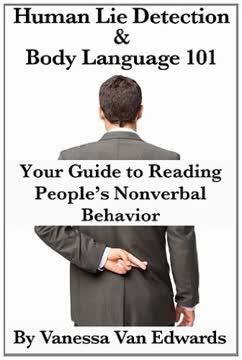
Get the complete 30-minute summary of Human Lie Detection and Body Language 101
Get the complete summary in the appEstablish a baseline before trying to detect deception. Know what normal looks like for each person.
There is no single tell. Look for clusters of red flags rather than individual behaviors.
The face reveals emotions; the body shows how someone is coping with emotions.
Microexpressions are brief, involuntary displays that reveal true feelings. Learn to recognize the seven universal emoti
People neglect their feet and legs when trying to control their behavior. The lower body is a reliable source of informa
Stay quiet and listen. Ask open-ended questions and let the other person fill the silence.
"Human Lie Detection and Body Language 101" is a strong fit if you want practical ideas around psychology, communication, self help, especially themes like establish a baseline before trying to detect deception. know what normal looks like for each person; there is no single tell. look for clusters of red flags rather than individual behaviors. The MinuteRead summary distills these concepts into a focused read, whether you're deciding whether to buy the book or applying its lessons at work.
Vanessa Van Edwards is a bestselling author and behavioral researcher specializing in human behavior, communication, and relationships. Her work has gained international recognition, with her book "Captivate" translated into 16 languages. As the founder of Science of People, she has reached millions through her YouTube videos and TEDx Talk. Van Edwards has presented her science-backed approach to people skills at major conferences and to prominent companies like Google and Microsoft. Her experti…
View all summaries by Vanessa Van EdwardsContinue Reading
Access the complete 30-minute summary and thousands more nonfiction books in the MinuteRead app.

Continue reading the complete summary in the MinuteRead app.