MinuteRead
30 min
The most famous story about scientific discovery is probably not true. Dmitri Mendeleev, the Russian chemist who gave us the periodic table, supposedly saw the entire arrangement of elements in a dream. The vision came to him fully formed, the elements snapping into their proper places like pieces of a cosmic puzzle. It is a beautiful story. It is also wrong.
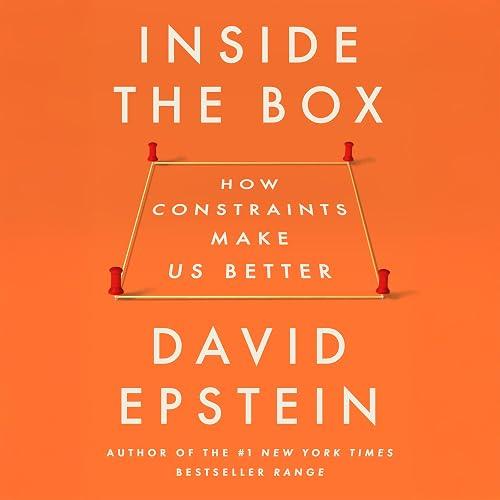
**Author:** David Epstein
**Estimated Reading Time:** 45 minutes
**What You'll Learn:** Why the stories we tell about creative genius are mostly wrong, how limitations consistently outperform freedom when it comes to breakthrough thinking, and how to apply specific constraint-based strategies to your own work, relationships, and life.
**Who This Book Is For:** Anyone who has ever felt stuck staring at a blank page, overwhelmed by too many options, or convinced that their lack of resources is the reason they cannot succeed. If you have ever believed that creativity requires unlimited freedom, this book will change how you think.
The most famous story about scientific discovery is probably not true. Dmitri Mendeleev, the Russian chemist who gave us the periodic table, supposedly saw the entire arrangement of elements in a dream. The vision came to him fully formed, the elements snapping into their proper places like pieces of a cosmic puzzle. It is a beautiful story. It is also wrong. Mendeleev was not dreaming. He was racing a deadline. He had promised his publisher a chemistry textbook, and he needed to fit fifty-five remaining elements into a single volume. The constraint forced him to find a compact way to organize the material. Grouping elements by their shared properties saved space. That cramped, practical assignment produced the most important chart in the history of science. The box beat the dream. This pattern repeats everywhere once you start looking. The iPhone's brilliant ancestor died from too much money and too few boundaries. Dr. Seuss wrote his most beloved book after accepting a bet that he could not write a story using only fifty words. A jazz pianist stuck with a broken, out-of-tune piano produced the best-selling solo piano album of all time. The evidence keeps pointing in the same direction: constraints do not limit creativity. They enable it. Yet we continue to believe the opposite. We tell ourselves that if we just had more time, more money, more resources, more freedom, then we could finally do our best work. We treat limitations as obstacles to overcome rather than tools to use. We reach for a dream when what we actually need is a textbook. This book is about correcting that misunderstanding. It draws on research from psychology, economics, design, sports, and the arts to show how constraints shape better decisions, more creative output, and more meaningful lives. It explains why too much freedom often leads to paralysis rather than productivity. It offers specific strategies for using constraints deliberately, whether you are trying to launch a business, write a novel, improve your health, or simply figure out what matters most. The central argument is simple but profound: the path to better work is not…
Continue reading in the MinuteRead app
Get the complete 30-minute summary of Inside the Box
Get the complete summary in the appConstraints enable creativity; they do not limit it.
Break big visions into small, testable pieces and iterate quickly.
Write down your predictions before you see the data.
Block your default solution to force new thinking.
Anchor radical ideas in the familiar.
Design for the most constrained user.
"Inside the Box" is a strong fit if you want practical ideas around psychology, business, self help, especially themes like constraints enable creativity; they do not limit it; break big visions into small, testable pieces and iterate quickly. The MinuteRead summary distills these concepts into a focused read, whether you're deciding whether to buy the book or applying its lessons at work.
Motivated to turn hard-won expertise into something readers can use every day, David Epstein wrote “Inside the Box” to distill the ideas behind the work into clear, actionable lessons. Through “Inside the Box”, David Epstein distills the core ideas on psychology into lessons readers can absorb in a single short sitting. Readers turn to this work when they want David Epstein's perspective on the subject without working through the entire original volume. The book is structured so each chapter hig…
View all summaries by David EpsteinContinue Reading
Access the complete 30-minute summary and thousands more nonfiction books in the MinuteRead app.

Continue reading the complete summary in the MinuteRead app.