MinuteRead
30 min
Book summary
by Ivan Pastine
Premium summary · Opens in the app · 30 min read
Every day you make decisions that depend on what other people will do. Should you negotiate for a higher salary, knowing your employer can hire someone else? Should you merge into heavy traffic, aware that other drivers may not let you in? Should you trust a business partner, understanding they might betray you? These situations share a common thread: your best move depends on what others choose, and their best move depends on what you choose.
### A Condensed Edition
**Author:** Ivan Pastine **Estimated Reading Time:** 45 minutes
### What You'll Learn
How to recognize strategic situations in everyday life, understand the hidden incentives that shape decisions, predict when cooperation will succeed or fail, and use game theory frameworks to make better choices when outcomes depend on what others do.
### Who This Book Is For
Anyone who has ever wondered why people sometimes act against their own interests, why markets behave unpredictably, why cooperation can be so difficult, or how to make smarter decisions when other people's choices affect your results. No background in mathematics or economics is required.
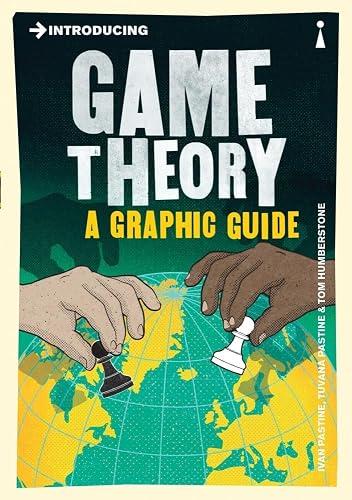
Every day you make decisions that depend on what other people will do. Should you negotiate for a higher salary, knowing your employer can hire someone else? Should you merge into heavy traffic, aware that other drivers may not let you in? Should you trust a business partner, understanding they might betray you? These situations share a common thread: your best move depends on what others choose, and their best move depends on what you choose. This interdependence is everywhere. Firms set prices while watching competitors. Political candidates craft platforms while anticipating rivals. Parents negotiate with children who are learning to negotiate back. Countries weigh military actions while predicting responses. In each case, thinking clearly requires more than just knowing what you want. It requires understanding what others want, what they think you want, and what they think you think they want. Most people navigate these situations through intuition. Sometimes intuition works well. Often it fails. We cooperate when we should compete, compete when we should cooperate, trust when we should verify, and hesitate when we should act. The results range from minor frustrations to major losses: failed negotiations, broken partnerships, missed opportunities, and avoidable conflicts. Game theory exists to make this intuition explicit and rigorous. It provides tools for analyzing situations where outcomes depend on multiple people's choices. Despite the name, it is not primarily about games like chess or poker. It is about the strategic logic underlying all interdependent decisions. The same mathematical frameworks that explain why two prisoners might confess also explain why companies engage in price wars, why countries struggle to cooperate on climate change, and why animals evolve particular behavioral patterns. Ivan Pastine's introduction to game theory makes these tools accessible without sacrificing their power. The approach is deliberately practical. Rather than drowning readers in mathematical formalism, Pastine focuses on the core insights that change how you see the world. Each concept is tied to concrete examples: movie studios choosing release dates, wireless routers competing for bandwidth, couples deciding where to spend an evening, central banks defending currencies, and animals competing…
Continue reading in the MinuteRead app
Get the complete 30-minute summary of Introducing Game Theory
Get the complete summary in the appYour best move depends on what others do, and their best move depends on what you do.
A Nash equilibrium is a stable state where no one wants to change their strategy.
Individual rationality does not guarantee collective optimality. The Prisoner's Dilemma shows how everyone can end up wo
Repeated interaction changes behavior. The threat of future punishment can sustain cooperation today.
Unpredictability is valuable. Randomization prevents exploitation.
Only credible threats and promises matter. Non-credible commitments are ignored.
"Introducing Game Theory" is a strong fit if you want practical ideas around science, economics, mathematics, especially themes like your best move depends on what others do, and their best move depends on what you do; a nash equilibrium is a stable state where no one wants to change their strategy. The MinuteRead summary distills these concepts into a focused read, whether you're deciding whether to buy the book or applying its lessons at work.
Motivated to help readers with game theory is a set of tools used to help analyze situations where an individual’s best course of action, Ivan Pastine wrote “Introducing Game Theory” to package those ideas for a fast, focused read. In “Introducing Game Theory”, Ivan Pastine focuses on game theory is a set of tools used to help analyze situations where an individual’s best course of action. Through “Introducing Game Theory”, Ivan Pastine distills the core ideas on science into lessons readers can…
Continue Reading
Access the complete 30-minute summary and thousands more nonfiction books in the MinuteRead app.

Continue reading the complete summary in the MinuteRead app.