MinuteRead
30 min
Book summary
by Joseph O'Connor
Premium summary · Opens in the app · 30 min read
Most of us go through life with a curious blind spot. We experience our thoughts, emotions, and behaviors as things that simply happen to us. We feel angry when someone cuts us off in traffic. We feel anxious before a presentation. We feel stuck when faced with a difficult decision. And we assume this is simply how life works, that our internal experience is at the mercy of external events.
**Author:** Joseph O'Connor **Estimated Reading Time:** 2 hours 15 minutes
How to understand the hidden structure of human excellence, master your emotional states, communicate with precision and influence, resolve inner conflicts, and replicate the success patterns of top performers in any field.
This book is for anyone who wants to understand how their mind creates their experience of reality, and how to take conscious control of that process. Whether you are a coach, therapist, manager, teacher, parent, or simply someone committed to personal growth, the principles of Neuro-Linguistic Programming offer practical tools for transforming how you think, communicate, and act.
Most of us go through life with a curious blind spot. We experience our thoughts, emotions, and behaviors as things that simply happen to us. We feel angry when someone cuts us off in traffic. We feel anxious before a presentation. We feel stuck when faced with a difficult decision. And we assume this is simply how life works, that our internal experience is at the mercy of external events. But what if this assumption is wrong? What if the way we feel, think, and act is not determined by the world around us, but by the internal maps we use to navigate that world? And what if those maps can be redrawn? This is the central promise of Neuro-Linguistic Programming, or NLP. It is a methodology for understanding the structure of subjective experience, the invisible patterns that determine how we perceive, think, communicate, and behave. More importantly, it is a set of tools for changing those patterns in ways that produce greater freedom, effectiveness, and fulfillment. NLP began in the early 1970s at the University of California, Santa Cruz, when a linguistics professor named John Grinder and a psychology student named Richard Bandler asked a deceptively simple question: What makes excellent performers excellent? They were not interested in theories about excellence. They wanted to know, specifically and concretely, what top performers actually did that produced their outstanding results. So they studied three remarkable therapists: Fritz Perls, the founder of Gestalt therapy; Virginia Satir, a pioneer of family therapy; and Milton Erickson, widely regarded as the greatest hypnotherapist of his generation. What they discovered was surprising. These three therapists had very different personalities, styles, and approaches. Yet underneath those differences, they shared certain patterns of behavior, language, and attention. They noticed things others missed. They used language in ways that bypassed resistance and accessed deeper resources. They held beliefs about their clients that made change possible. And they moved with a flexibility that allowed them to adapt to whatever arose in the moment. Grinder and Bandler began to codify these patterns. They asked: What if excellence is not a mysterious…
Continue reading in the MinuteRead app
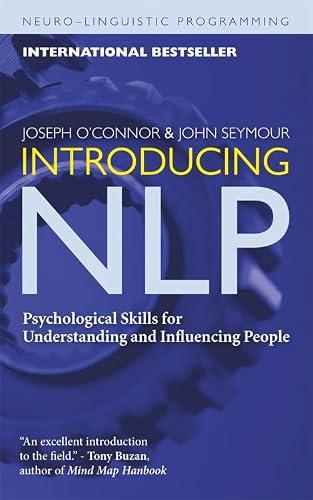
Get the complete 30-minute summary of Introducing NLP
Get the complete summary in the appYour map is not the territory. You experience your model of reality, not reality itself.
Every behavior has a positive intention. Look for the purpose behind the problem.
Excellence has a structure. Model the best and you can learn what they do.
Your state determines your performance. Learn to access resourceful states at will.
Language shapes experience. Use the Meta Model for precision and the Milton Model for influence.
Meaning is assigned by frames. Reframe to transform your experience.
"Introducing NLP" is a strong fit if you want practical ideas around psychology, self help, personal growth, especially themes like your map is not the territory. you experience your model of reality, not reality itself; every behavior has a positive intention. look for the purpose behind the problem. The MinuteRead summary distills these concepts into a focused read, whether you're deciding whether to buy the book or applying its lessons at work.
Motivated to help readers with nLP is the art and science of excellence, Joseph O'Connor wrote “Introducing NLP” to package those ideas for a fast, focused read. In “Introducing NLP”, Joseph O'Connor focuses on nLP is the art and science of excellence. Through “Introducing NLP”, Joseph O'Connor distills the core ideas on psychology into lessons readers can absorb in a single short sitting. Readers turn to this work when they want Joseph O'Connor's perspective on the subject without working throu…
Continue Reading
Access the complete 30-minute summary and thousands more nonfiction books in the MinuteRead app.

Continue reading the complete summary in the MinuteRead app.