MinuteRead
30 min
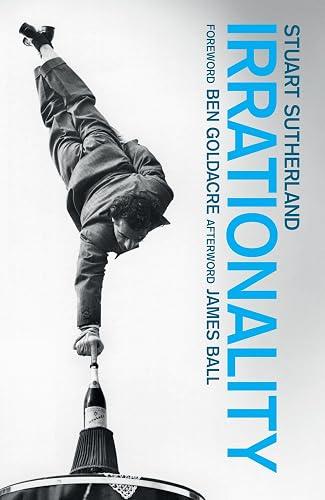
Book summary
by Stuart Sutherland
Premium summary · Opens in the app · 30 min read
Aristotle called humans the rational animal. Stuart Sutherland spent his career examining that claim and reached a different conclusion. After decades of studying how people actually think, he concluded that irrational behavior is not an occasional glitch in an otherwise logical system. It is the norm.
**Author:** Stuart Sutherland
**Estimated Reading Time:** 45 minutes
**What You'll Learn:** Why intelligent people consistently make foolish decisions, how cognitive biases distort judgment in every domain of life, and what practical steps can help you think more clearly.
**Who This Book Is For:** Anyone who makes decisions. Which is everyone. But especially professionals whose judgments affect others, leaders who want to understand why organizations make poor choices, and individuals who suspect their own thinking might not be as rational as they believe.
Aristotle called humans the rational animal. Stuart Sutherland spent his career examining that claim and reached a different conclusion. After decades of studying how people actually think, he concluded that irrational behavior is not an occasional glitch in an otherwise logical system. It is the norm. The evidence is everywhere once you start looking. Doctors misdiagnose patients because they rely on recent cases rather than statistical probabilities. Judges hand down wildly different sentences for identical crimes depending on what they ate for lunch. Investors pour money into failing ventures because they cannot bear to admit a mistake. Smart people join cults, fall for obvious scams, and persist in beliefs that contradict overwhelming evidence. Sutherland wrote this book because he noticed something troubling. The same patterns of flawed reasoning appeared across completely different domains. The errors people make in the stock market resemble the errors they make in medicine. The biases that distort a manager's hiring decision also distort a juror's verdict. These were not random mistakes. They were systematic, predictable, and deeply rooted in how the human mind works. The problem is not lack of intelligence. Sutherland found that highly educated people, including scientists and professionals, were just as susceptible to these errors as anyone else. In some cases, intelligence made things worse. Smart people are better at constructing elaborate justifications for their irrational beliefs. They have more cognitive resources to rationalize decisions that were actually driven by emotion or bias. The problem is not lack of information either. People often persist in irrational behavior even when they have all the facts they need to make better choices. The issue is how the mind processes information. Our brains evolved for a different world. They are optimized for quick judgments, social conformity, and emotional responses that served our ancestors well on the savanna but often fail us in modern environments filled with statistics, complex systems, and delayed consequences. Sutherland's approach is different from the self-help genre that promises to make you a perfectly rational thinker. He is too honest for that. He acknowledges that these biases are deeply embedded in human cognition. You cannot simply decide to be rational and expect it to happen. The biases operate automatically, often…
Continue reading in the MinuteRead app
Get the complete 30-minute summary of Irrationality
Get the complete summary in the appIrrationality is systematic and predictable, not random.
People seek confirming evidence and reject disconfirming evidence.
Conformity and obedience can override judgment and morality.
Overconfidence leads to poor decisions across every domain.
The sunk cost fallacy causes people to throw good resources after bad.
Statistical methods outperform human intuition.
"Irrationality" is a strong fit if you want practical ideas around psychology, science, self help, especially themes like irrationality is systematic and predictable, not random; people seek confirming evidence and reject disconfirming evidence. The MinuteRead summary distills these concepts into a focused read, whether you're deciding whether to buy the book or applying its lessons at work.
Motivated to help readers with pace Aristotle, Stuart Sutherland wrote “Irrationality” to package those ideas for a fast, focused read. In “Irrationality”, Stuart Sutherland focuses on pace Aristotle. Through “Irrationality”, Stuart Sutherland distills the core ideas on psychology into lessons readers can absorb in a single short sitting. Readers turn to this work when they want Stuart Sutherland's perspective on the subject without working through the entire original volume. (Norman) Stuart Sut…
Continue Reading
Access the complete 30-minute summary and thousands more nonfiction books in the MinuteRead app.

Continue reading the complete summary in the MinuteRead app.