MinuteRead
30 min
Book summary
by Nomi Prins
Premium summary · Opens in the app · 30 min read
The 2008 financial crisis did not begin with Lehman Brothers collapsing on a September morning. It did not begin with subprime mortgages going bad or with the sudden realization that complex securities were worth far less than anyone admitted. The crisis began decades earlier, in the quiet dismantling of rules that had protected the American economy since the Great Depression.
**Author:** Nomi Prins **Estimated Reading Time:** 45 minutes
**What You'll Learn:** How Wall Street engineered the 2008 financial crisis through decades of deliberate deregulation, why the government's response transferred trillions from taxpayers to banks, and what structural changes are necessary to prevent the next collapse.
**Who This Book Is For:** Anyone who wants to understand the real mechanics behind the financial crisis beyond the headlines. This book is for people who sensed something deeply unfair happened in 2008 but could not articulate exactly what. It is for readers who want to know how power actually operates between Wall Street and Washington, and what can be done about it.
The 2008 financial crisis did not begin with Lehman Brothers collapsing on a September morning. It did not begin with subprime mortgages going bad or with the sudden realization that complex securities were worth far less than anyone admitted. The crisis began decades earlier, in the quiet dismantling of rules that had protected the American economy since the Great Depression. Nomi Prins knows this story from the inside. Before becoming a journalist and author, she worked as a managing director at Goldman Sachs and Bear Stearns. She sat on trading floors where the instruments that would eventually destabilize the global economy were created and sold. She watched colleagues earn millions for moving risk off balance sheets and into opaque structures that few people understood, including many of the people selling them. When the crisis hit, Prins was no longer on Wall Street. She had already begun the work that would define her career: investigating the relationships between financial institutions and the government officials who are supposed to regulate them. What she found was not a story of accidents or unforeseeable events. She found a story of deliberate choices, made over decades, that systematically removed every safeguard standing between financial speculation and economic catastrophe. The problem this book addresses is not simply that the financial system failed. The problem is that the system worked exactly as it was designed to work. It was designed to concentrate wealth and power in the hands of a small group of financial institutions and their executives. It was designed to privatize profits while socializing losses. It was designed to operate with minimal transparency and maximum freedom from oversight. The topic matters because the response to the crisis did not fix these underlying problems. The government committed more than thirteen trillion dollars to rescuing the financial system. That is more than the cost of every major war in American history combined. Yet the institutions that caused the crisis emerged larger, more profitable, and more politically powerful than before. The executives who presided over the destruction kept their bonuses.…
Continue reading in the MinuteRead app
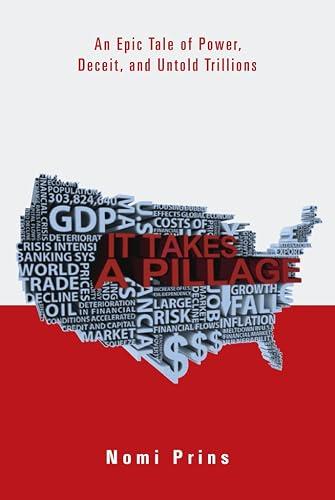
Get the complete 30-minute summary of It Takes a Pillage
Get the complete summary in the appThe financial crisis was deliberately manufactured through decades of deregulation, not an accident of unforeseeable eve
The repeal of Glass-Steagall removed the firewall between commercial and investment banking, creating systemic risk.
Wall Street's compensation culture rewards short-term risk-taking without imposing consequences for long-term losses.
Complex financial instruments were designed to obscure risk and enable massive leverage.
The Federal Reserve provided more than $7.6 trillion in secret bailouts with minimal transparency.
The revolving door between Wall Street and Washington ensures policy favors financial interests.
"It Takes a Pillage" is a strong fit if you want practical ideas around economics, politics, business, especially themes like the financial crisis was deliberately manufactured through decades of deregulation, not an accident of unforeseeable eve; the repeal of glass-steagall removed the firewall between commercial and investment banking, creating systemic risk. The MinuteRead summary distills these concepts into a focused read, whether you're deciding whether to buy the book or applying its lessons at work.
Motivated to help readers with "Free markets aren't actually free—they cost trillions of dollars in Fed and Treasury secrets and bailouts, Nomi Prins wrote “It Takes a Pillage” to package those ideas for a fast, focused read. In “It Takes a Pillage”, Nomi Prins focuses on "Free markets aren't actually free—they cost trillions of dollars in Fed and Treasury secrets and bailouts. Through “It Takes a Pillage”, Nomi Prins distills the core ideas on economics into lessons readers can absorb in a sing…
Continue Reading
Access the complete 30-minute summary and thousands more nonfiction books in the MinuteRead app.

Continue reading the complete summary in the MinuteRead app.