MinuteRead
30 min
Book summary
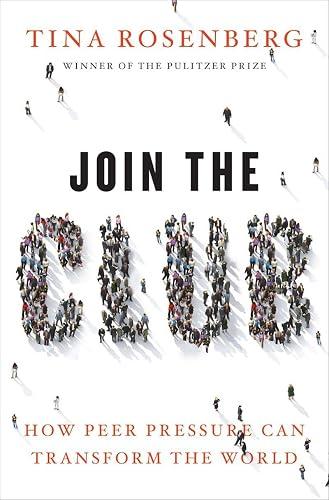
by Tina Rosenberg
Premium summary · Opens in the app · 30 min read
We like to believe we are the authors of our own decisions. We tell ourselves that we choose what to eat, how to vote, whether to study, and whom to love based on careful reasoning and personal values. This belief is comforting. It is also largely wrong.
**Author:** Tina Rosenberg **Estimated Reading Time:** 45 minutes
**What You'll Learn:**
Why the most powerful force for changing human behavior is not information, fear, or individual willpower, but the people around us. You will discover how peer pressure, when deliberately harnessed, has cured disease, toppled dictators, transformed education, and lifted millions out of poverty.
**Who This Book Is For:**
Anyone who has ever tried to change a behavior and failed. Anyone who works in health, education, activism, or leadership. Anyone curious about why people do what they do and how social forces shape our choices more than we realize.
We like to believe we are the authors of our own decisions. We tell ourselves that we choose what to eat, how to vote, whether to study, and whom to love based on careful reasoning and personal values. This belief is comforting. It is also largely wrong. The uncomfortable truth is that human beings are profoundly social creatures. We make decisions not in isolation but in constant reference to the people around us. We adopt the habits of our friends. We conform to the expectations of our communities. We seek the approval of our peers and fear their rejection. This is not a flaw in our design. It is the design itself. For most of human history, belonging to a group was not optional. It was survival. The person cast out from the tribe did not simply feel lonely. They died. Our brains evolved to treat social exclusion as a mortal threat, and that ancient wiring still governs much of our behavior today, whether we acknowledge it or not. This reality has enormous implications. It means that the most powerful lever for changing human behavior is not information, not fear, not even money. It is other people. Tina Rosenberg spent years traveling the world examining how social change actually happens. What she found repeatedly surprised her. The programs that worked, the movements that succeeded, the campaigns that genuinely altered behavior all shared a common mechanism. They did not try to change individuals in isolation. They changed the social environment around individuals. They gave people a new peer group, a new identity, and a new set of expectations to live up to. Rosenberg calls this phenomenon the social cure. The social cure is not a theory. It is a practical tool that has been deployed with remarkable success in some of the most difficult circumstances imaginable. It has helped women in rural India overcome centuries of caste discrimination. It has persuaded teenagers in South Africa to protect themselves from HIV. It has enabled black and Latino students at elite universities to excel in calculus. It has cured tuberculosis in hundreds of millions…
Continue reading in the MinuteRead app
Get the complete 30-minute summary of Join the Club
Get the complete summary in the appPeer pressure is the most powerful force for changing human behavior.
The social cure gives people a new group, a new identity, and new norms.
Information and fear are weak tools for behavior change.
Find or create a group where the desired behavior is normal and expected.
The presence of another person dramatically improves follow-through.
Identity is a more powerful motivator than information.
"Join the Club" is a strong fit if you want practical ideas around psychology, sociology, politics, especially themes like peer pressure is the most powerful force for changing human behavior; the social cure gives people a new group, a new identity, and new norms. The MinuteRead summary distills these concepts into a focused read, whether you're deciding whether to buy the book or applying its lessons at work.
Motivated to help readers with "This book is the story of a tremendously powerful kind of social change, Tina Rosenberg wrote “Join the Club” to package those ideas for a fast, focused read. In “Join the Club”, Tina Rosenberg focuses on "This book is the story of a tremendously powerful kind of social change. Through “Join the Club”, Tina Rosenberg distills the core ideas on psychology into lessons readers can absorb in a single short sitting. Readers turn to this work when they want Tina Rosenb…
Continue Reading
Access the complete 30-minute summary and thousands more nonfiction books in the MinuteRead app.

Continue reading the complete summary in the MinuteRead app.