MinuteRead
30 min
Book summary
Premium summary · Opens in the app · 30 min read
There is a story we are told about how countries become wealthy. It goes something like this. Nations prosper when they open their markets, protect private property, limit government intervention, and embrace the discipline of global competition. The countries that are rich today followed this path. The countries that remain poor have failed to do so. If only developing nations would adopt the right policies and build the right institutions, they too could join the ranks of the prosperous.
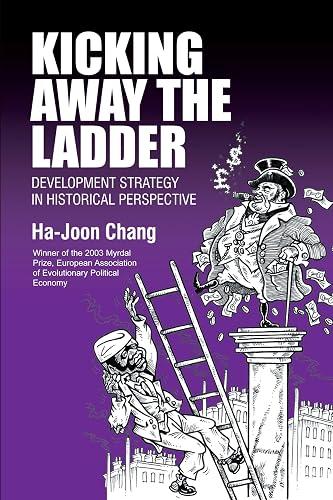
**Author:** Ha-Joon Chang
**Estimated Reading Time:** 45 minutes
**What You'll Learn:**
- Why the free-market policies prescribed to developing countries contradict the actual history of every wealthy nation - How Britain, the United States, Germany, and East Asian countries actually built their industrial power - Why institutions like democracy, professional bureaucracy, and central banking developed slowly and imperfectly in rich countries - What the "ladder-kicking" metaphor reveals about modern economic governance - How developing countries can reclaim the policy tools that worked historically
**Who This Book Is For:**
This book is for anyone who has wondered why economic development advice so often fails, for students of economics and history who suspect the standard story is incomplete, for policymakers navigating the constraints of international institutions, and for citizens who want to understand the hidden history behind today's global economic rules.
There is a story we are told about how countries become wealthy. It goes something like this. Nations prosper when they open their markets, protect private property, limit government intervention, and embrace the discipline of global competition. The countries that are rich today followed this path. The countries that remain poor have failed to do so. If only developing nations would adopt the right policies and build the right institutions, they too could join the ranks of the prosperous. This story is told with remarkable confidence by international organizations, by economists, by policymakers in wealthy capitals. It forms the backbone of loan conditions from the World Bank and the International Monetary Fund. It shapes the rules of the World Trade Organization. It determines which economic policies are considered respectable and which are dismissed as misguided. There is only one problem with this story. It is not true. Ha-Joon Chang, a South Korean economist at Cambridge University, has spent his career examining the actual historical record of how today's wealthy nations became wealthy. What he found was not a story of free markets and limited government. It was a story of protectionism, state intervention, industrial policy, and strategic use of every tool available to nurture domestic industries until they could compete globally. Britain, often imagined as the birthplace of laissez-faire capitalism, was in fact a pioneer of infant industry protection. For centuries, British monarchs and parliaments deliberately fostered manufacturing through tariffs, export subsidies, and even the poaching of skilled workers from rival nations. Only after Britain had established overwhelming industrial supremacy did it discover the virtues of free trade and begin preaching them to others. The United States, now the world's most vocal advocate of open markets, was for most of its history one of the most protectionist nations on earth. Alexander Hamilton, the first Treasury Secretary, articulated the infant industry argument…
Continue reading in the MinuteRead app
Get the complete 30-minute summary of Kicking Away the Ladder
Get the complete summary in the appEvery wealthy country used protectionist and interventionist policies during its rise, regardless of what it now recomme
Britain was a pioneer of infant industry protection, not laissez-faire, and only embraced free trade after achieving ind
The United States maintained some of the highest tariffs in the world throughout its rise to economic dominance.
The East Asian miracles were built on activist industrial, trade, and technology policies, not free markets.
Developing countries grew faster with "bad" interventionist policies than with "good" neoliberal policies.
The institutions now considered essential for development emerged slowly in wealthy countries, often as outcomes of deve
"Kicking Away the Ladder" is a strong fit if you want practical ideas around economics, history, politics, especially themes like every wealthy country used protectionist and interventionist policies during its rise, regardless of what it now recomme; britain was a pioneer of infant industry protection, not laissez-faire, and only embraced free trade after achieving ind. The MinuteRead summary distills these concepts into a focused read, whether you're deciding whether to buy the book or applying its lessons at work.
Motivated to help readers with developmental economics written by Ha-Joon Chang, a South Korean developmental and institutional economist, Ha-Joon Chang wrote “Kicking Away the Ladder” as a practical guide drawn from years of experience and research. In “Kicking Away the Ladder”, Ha-Joon Chang focuses on the short answer to this question is that the developed countries did not get where they are now through the. Through “Kicking Away the Ladder”, Ha-Joon Chang distills the core ideas on economic…
View all summaries by Ha-Joon ChangContinue Reading
Access the complete 30-minute summary and thousands more nonfiction books in the MinuteRead app.

Continue reading the complete summary in the MinuteRead app.