MinuteRead
30 min
Book summary
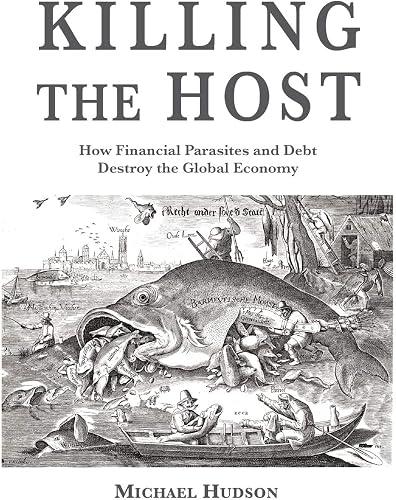
by Michael Hudson
Premium summary · Opens in the app · 30 min read
Every economy rests on a simple premise: people produce goods and services, exchange them, and in doing so create value that improves lives. For most of human history, money and credit existed to facilitate this process. Banks took deposits, made loans to businesses, and helped channel savings into productive investment. Finance was a servant of the real economy, not its master.
**Author:** Michael Hudson **Estimated Reading Time:** 42 minutes
**What You'll Learn**
How the financial sector transformed from a servant of the productive economy into its master, why debt has become a weapon of wealth extraction, and what can be done to reclaim economic democracy before the parasite kills its host.
**Who This Book Is For**
Anyone who has wondered why the economy feels rigged, why debts keep growing while wages stagnate, why governments bail out banks but not people, and why the promise of prosperity seems increasingly out of reach for ordinary workers and families.
Every economy rests on a simple premise: people produce goods and services, exchange them, and in doing so create value that improves lives. For most of human history, money and credit existed to facilitate this process. Banks took deposits, made loans to businesses, and helped channel savings into productive investment. Finance was a servant of the real economy, not its master. That relationship has been inverted. Today, the financial sector no longer primarily funds new factories, innovative startups, or productive enterprises. Instead, it lends against existing assets: houses, commercial real estate, stocks, and entire companies. It profits from the interest on debts that can never realistically be repaid. It extracts wealth through fees, penalties, and the steady appreciation of asset prices that enrich those who already own property while making it harder for everyone else to acquire any. Michael Hudson calls this phenomenon "killing the host." The host is the productive economy: the workers who labor, the businesses that produce, the governments that build infrastructure and provide services. The parasite is the financial sector, which has attached itself to this host and is steadily draining its lifeblood. The metaphor is deliberate and precise. A parasite does not want to kill its host too quickly. It needs the host alive to continue feeding. But if the parasite grows too large, if its demands become too great, the host weakens, sickens, and eventually dies. Hudson argues that we are approaching that point. The numbers tell a stark story. In the decades following World War II, the financial sector accounted for roughly 10 percent of corporate profits in the United States. By the early 2000s, that figure had climbed above 40 percent. The financial sector's share of GDP tripled. Meanwhile, wages stagnated, manufacturing declined, and household debt exploded. The financial sector grew rich while the productive economy withered. This did not happen by accident. It was engineered. Hudson traces the transformation to a deliberate shift in economic policy that began in the 1980s. Deregulation freed banks to speculate. Tax policies favored creditors over workers. Central banks adopted policies that inflated asset prices while suppressing wages. Governments abandoned their…
Continue reading in the MinuteRead app
Get the complete 30-minute summary of Killing the Host
Get the complete summary in the appThe financial sector has become parasitic, extracting wealth from the productive economy rather than supporting it.
Debt grows faster than the economy can pay it, creating an unsustainable debt overhead.
Bubbles are the predictable result of a financial system that profits from asset price inflation.
The 2008 bailouts prioritized Wall Street over Main Street, socializing losses while privatizing gains.
The financial sector has captured government through the revolving door, campaign contributions, and lobbying.
The attack on labor has shifted wealth from workers to owners, stagnating wages and increasing inequality.
"Killing the Host" is a strong fit if you want practical ideas around economics, politics, capitalism, especially themes like the financial sector has become parasitic, extracting wealth from the productive economy rather than supporting it; debt grows faster than the economy can pay it, creating an unsustainable debt overhead. The MinuteRead summary distills these concepts into a focused read, whether you're deciding whether to buy the book or applying its lessons at work.
Motivated to help readers with finance capitalism is based on exponentially growing debts owed to creditors, Michael Hudson wrote “Killing the Host” to package those ideas for a fast, focused read. In “Killing the Host”, Michael Hudson focuses on finance capitalism is based on exponentially growing debts owed to creditors. Through “Killing the Host”, Michael Hudson distills the core ideas on economics into lessons readers can absorb in a single short sitting. Readers turn to this work when they …
Continue Reading
Access the complete 30-minute summary and thousands more nonfiction books in the MinuteRead app.

Continue reading the complete summary in the MinuteRead app.