MinuteRead
30 min
Book summary
Premium summary · Opens in the app · 30 min read
Economics has a problem. For more than a century, the discipline has built elaborate mathematical models, collected vast quantities of data, and developed sophisticated theories to explain how wealth is created. Yet the most important economic events of our time continue to surprise economists. The rise of Silicon Valley, the transformation of Israel into a technology powerhouse, the collapse of centrally planned economies, the explosive growth of the internet: none of these developments were pr
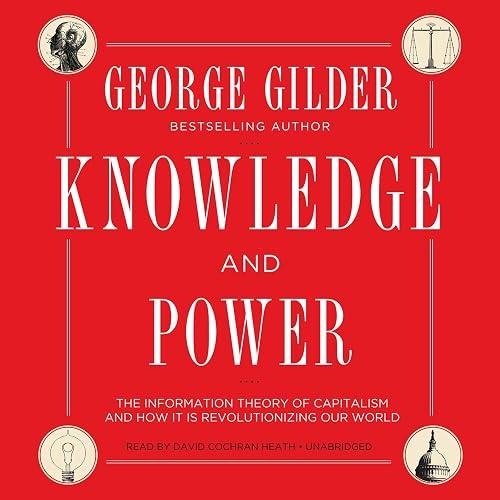
**Author:** George Gilder
**Estimated Reading Time:** 45 minutes
**What You'll Learn:**
- Why information theory, not material resources, explains economic growth - How surprise and creativity drive prosperity - Why supply creates demand, not the reverse - The critical relationship between knowledge and power in a free society - How entrepreneurship functions as an information system - Why stable foundations enable radical innovation
**Who This Book Is For:**
This book is for anyone who senses that conventional economics no longer explains the world around us. It is for entrepreneurs who feel misunderstood by traditional economic models, for investors seeking a deeper framework for understanding technology, for policymakers wrestling with questions of regulation and growth, and for curious readers who want to understand why some societies flourish while others stagnate. If you have ever wondered why innovation seems to come from unexpected places, why government programs so often fail to deliver on their promises, or what really drives the creation of wealth, this book will reshape your thinking.
Economics has a problem. For more than a century, the discipline has built elaborate mathematical models, collected vast quantities of data, and developed sophisticated theories to explain how wealth is created. Yet the most important economic events of our time continue to surprise economists. The rise of Silicon Valley, the transformation of Israel into a technology powerhouse, the collapse of centrally planned economies, the explosive growth of the internet: none of these developments were predicted by mainstream economic models. Something fundamental is missing from our understanding of how economies actually work. George Gilder argues that the missing element is information. Not information in the casual sense of data or facts, but information in the precise, mathematical sense developed by Claude Shannon in the late 1940s. Shannon's information theory, created to solve problems in telecommunications, provides a rigorous way to think about communication, surprise, uncertainty, and knowledge. Gilder's central claim is that this same framework can explain the workings of capitalism with far greater accuracy than traditional economic theory. The conventional view of economics treats wealth as a material phenomenon. Economists measure gross domestic product, track the accumulation of capital, analyze the allocation of labor, and model the behavior of consumers and producers. They assume that economic activity is fundamentally about the distribution of scarce resources. Gilder argues that this materialist perspective misses the essence of what makes economies grow. Wealth, he contends, is not primarily about stuff. It is about knowledge. Consider what happens when you buy a smartphone. The physical materials in the device: silicon, aluminum, lithium, copper, trace amounts of rare earth elements: are worth perhaps a few dollars. The rest of the value, hundreds of dollars, consists of knowledge. The…
Continue reading in the MinuteRead app
Get the complete 30-minute summary of Knowledge and Power
Get the complete summary in the app**Capitalism is an information system.** Its power lies in its ability to process information effectively, not in its in
**Information is surprise.** A message carries information to the extent that it reduces uncertainty and tells you somet
**Wealth is knowledge.** The value of goods and services lies primarily in the knowledge embedded in them, not in the ma
**Supply creates demand.** The great economic breakthroughs of history were creations of new possibilities, not response
**Entrepreneurs are information generators.** Their role is to create surprises, to introduce new knowledge into the eco
**The learning curve is real.** Each doubling of cumulative production typically leads to a 20 to 30 percent reduction i
"Knowledge and Power" is a strong fit if you want practical ideas around economics, business, politics, especially themes like **capitalism is an information system.** its power lies in its ability to process information effectively, not in its in; **information is surprise.** a message carries information to the extent that it reduces uncertainty and tells you somet. The MinuteRead summary distills these concepts into a focused read, whether you're deciding whether to buy the book or applying its lessons at work.
Motivated to help readers with "Information theory treats human creations or communications as transmissions through a channel, George Gilder wrote “Knowledge and Power” to package those ideas for a fast, focused read. In “Knowledge and Power”, George Gilder focuses on "Information theory treats human creations or communications as transmissions through a channel. Through “Knowledge and Power”, George Gilder distills the core ideas on economics into lessons readers can absorb in a single short s…
View all summaries by George GilderContinue Reading
Access the complete 30-minute summary and thousands more nonfiction books in the MinuteRead app.

Continue reading the complete summary in the MinuteRead app.