MinuteRead
30 min
Book summary
by Deirdre Nansen McCloskey
Premium summary · Opens in the app · 30 min read
For most of human history, poverty was not a problem to be solved. It was simply the condition of life. Your grandparents lived much like their grandparents, who lived much like their great-grandparents. Most people were born poor, worked hard, and died poor. The idea that ordinary people could expect their children to live better than they did would have seemed absurd, even blasphemous.
**Author:** Deirdre Nansen McCloskey **Estimated Reading Time:** 45 minutes
Why the world became dramatically wealthier starting around 1800, what actually caused this transformation, and why the ideas we hold about commerce, freedom, and human dignity matter more than capital, resources, or government planning. You will encounter a powerful argument that liberty and the acceptance of bourgeois values created the greatest improvement in human living standards in history.
Anyone who has wondered whether capitalism has truly benefited humanity, readers skeptical of simple explanations for economic progress, and those seeking a deeper understanding of how ideas shape prosperity. This book speaks to people who want to move beyond political slogans and understand the ethical and cultural foundations of modern wealth.
For most of human history, poverty was not a problem to be solved. It was simply the condition of life. Your grandparents lived much like their grandparents, who lived much like their great-grandparents. Most people were born poor, worked hard, and died poor. The idea that ordinary people could expect their children to live better than they did would have seemed absurd, even blasphemous. Then something extraordinary happened. Beginning in the eighteenth century, in a small corner of northwestern Europe, the world began to change. Not slowly, not incrementally, but dramatically and irreversibly. Average incomes, which had barely moved for millennia, began to climb. And they kept climbing. By the twenty-first century, the average person in a developed country enjoyed a standard of living roughly thirty times higher than their ancestors in 1800. The poorest people in many modern societies live better than kings did three centuries ago. Deirdre Nansen McCloskey calls this transformation the Great Enrichment. It is, she argues, the most important event in human history since the invention of agriculture. Yet most people do not understand why it happened. Economists have offered explanations ranging from capital accumulation to colonial exploitation to favorable geography. Historians have pointed to the scientific revolution or the Protestant work ethic. Politicians have claimed credit for government policies and industrial planning. McCloskey rejects all of these explanations. After decades of research across economics, history, and literature, she arrived at a different conclusion. The Great Enrichment happened because people changed the way they thought and talked about commerce, innovation, and the people who engage in them. The key was not material. It was rhetorical. It was ethical. It was a shift in ideas. Before the eighteenth century, merchants and traders were viewed with suspicion. They were seen as morally inferior to aristocrats and peasants. Commerce was tolerated but never celebrated. Innovation was treated as a threat to social order. The idea of progress did not exist. Then, gradually, this changed. People began to speak of commerce…
Continue reading in the MinuteRead app
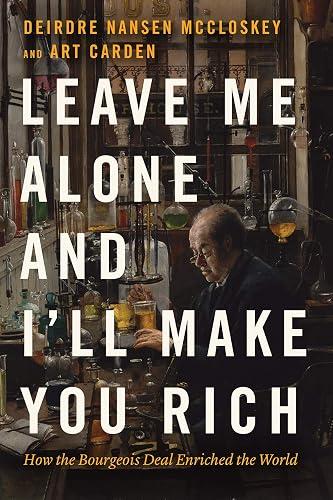
Get the complete 30-minute summary of Leave Me Alone and I'll Make You Rich
Get the complete summary in the appThe Great Enrichment increased average incomes thirty-fold since 1800.
The cause was liberty and innovation, not exploitation or material factors.
Ideas drive economic growth. Rhetoric shapes behavior.
The Bourgeois Deal: Leave me alone and I will make you rich, subject to ethics and sensible laws.
Commerce is a positive-sum game. Both parties benefit from voluntary exchange.
The bourgeois virtues of prudence, thrift, honesty, and enterprise make commercial society possible.
"Leave Me Alone and I'll Make You Rich" is a strong fit if you want practical ideas around economics, history, business, especially themes like the great enrichment increased average incomes thirty-fold since 1800; the cause was liberty and innovation, not exploitation or material factors. The MinuteRead summary distills these concepts into a focused read, whether you're deciding whether to buy the book or applying its lessons at work.
Motivated to help readers with give people liberty, Deirdre Nansen McCloskey wrote “Leave Me Alone and I'll Make You Rich” to package those ideas for a fast, focused read. In “Leave Me Alone and I'll Make You Rich”, Deirdre Nansen McCloskey focuses on give people liberty. Through “Leave Me Alone and I'll Make You Rich”, Deirdre Nansen McCloskey distills the core ideas on economics into lessons readers can absorb in a single short sitting. Readers turn to this work when they want Deirdre Nansen M…
Continue Reading
Access the complete 30-minute summary and thousands more nonfiction books in the MinuteRead app.

Continue reading the complete summary in the MinuteRead app.