MinuteRead
30 min
Book summary
by Robert P. Murphy
Premium summary · Opens in the app · 30 min read
Most people think economics is about money, banking, stock markets, and complicated equations. They imagine economists as people who forecast GDP growth or argue about interest rates on television. This is a fundamental misunderstanding.
**Author:** Robert P. Murphy
**Estimated Reading Time:** 45 minutes
**What You'll Learn**
You will learn how to think like an economist. You will understand why prices matter, why profits are not exploitation, why government interventions often backfire, and why sound money and free trade create prosperity. You will learn to see the invisible logic of human action that lies beneath the surface of everyday life.
**Who This Book Is For**
This book is for anyone who wants to understand how the world actually works. It is for students who find economics confusing or boring. It is for professionals who want a clear framework for making better decisions. It is for citizens who want to evaluate policies critically rather than emotionally. If you have ever wondered why some countries are rich and others poor, why recessions happen, or why politicians so often make things worse while trying to help, this book is for you.
Most people think economics is about money, banking, stock markets, and complicated equations. They imagine economists as people who forecast GDP growth or argue about interest rates on television. This is a fundamental misunderstanding. Economics is about something far more universal and far more important. Economics is about human action. Every day, you make choices. You decide what to eat, where to work, what to buy, and what to save. You weigh alternatives. You consider trade-offs. You act with purpose, trying to improve your situation as you understand it. When you do this, you are engaging in economic behavior. Now multiply your individual choices by billions of people across the planet. Each person is pursuing their own goals, using their own knowledge, responding to their own circumstances. Somehow, out of this vast chaos of individual decisions, order emerges. Food appears in grocery stores. Cars are manufactured. Software is developed. Books are written and distributed. The global economy produces an astonishing array of goods and services without anyone being in charge. How does this happen? What invisible forces coordinate the actions of strangers who will never meet? Why does this system work so well in some places and so poorly in others? These are the questions that economics seeks to answer. The problem is that most people never learn to think clearly about these questions. They see the world through the lens of intentions rather than outcomes. They assume that if a policy sounds good, it must be good. They believe that if a problem exists, government action is the natural solution. They fail to see the hidden costs, the unintended consequences, and the subtle ways that interventions disrupt the spontaneous order of the market. Robert Murphy wrote this book to correct these misunderstandings. He wants to teach…
Continue reading in the MinuteRead app
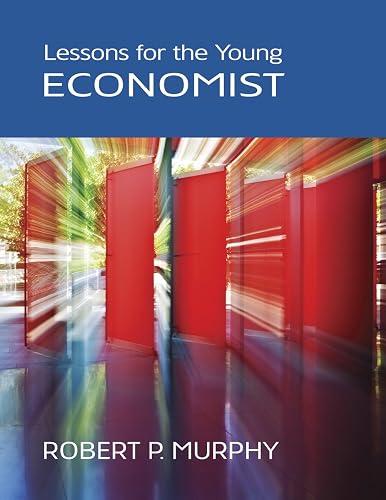
Get the complete 30-minute summary of Lessons for the Young Economist
Get the complete summary in the appEconomics is the study of purposeful human action. People act to improve their situations as they understand them.
Voluntary exchange benefits both parties. Trade is not a zero-sum game.
Prices are signals that coordinate economic activity. They convey information about scarcity and preferences.
The division of labor increases productivity. Specialization and trade create prosperity.
Profit is a signal of value creation. Loss is a signal of resource waste.
Government intervention distorts price signals and creates unintended consequences.
"Lessons for the Young Economist" is a strong fit if you want practical ideas around economics, education, politics, especially themes like economics is the study of purposeful human action. people act to improve their situations as they understand them; voluntary exchange benefits both parties. trade is not a zero-sum game. The MinuteRead summary distills these concepts into a focused read, whether you're deciding whether to buy the book or applying its lessons at work.
Motivated to help readers with economics deals with the real actions of real men, Robert P. Murphy wrote “Lessons for the Young Economist” to package those ideas for a fast, focused read. Through “Lessons for the Young Economist”, Robert P. Murphy distills the core ideas on economics into lessons readers can absorb in a single short sitting. Readers turn to this work when they want Robert P. Murphy's perspective on the subject without working through the entire original volume. The book is struc…
Continue Reading
Access the complete 30-minute summary and thousands more nonfiction books in the MinuteRead app.

Continue reading the complete summary in the MinuteRead app.