MinuteRead
30 min
Book summary
Premium summary · Opens in the app · 30 min read
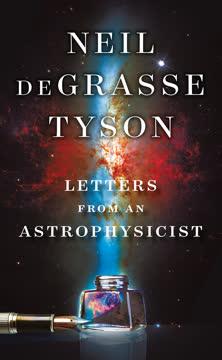
Every day, people write letters to Neil deGrasse Tyson. They write from classrooms and kitchens, from hospital beds and office cubicles. They write to ask about black holes and the Big Bang. They write to challenge him on religion. They write to share their grief, their wonder, their confusion, and their hope. They write because they sense that an astrophysicist might see the world differently, and they want to understand how.
**Author:** Neil deGrasse Tyson
**Estimated Reading Time:** 45 minutes
**What You'll Learn:**
- How scientific thinking transforms everyday decision-making - Why the cosmic perspective changes how you see yourself and others - What twenty years of correspondence reveals about human curiosity - How to separate evidence from wishful thinking - Why science and meaning can coexist without conflict
**Who This Book Is For:**
This book is for anyone who has ever looked up at the night sky and wondered. It is for the curious, the skeptical, the seekers of evidence, and those who want to understand how an astrophysicist thinks about everything from God to ghosts, from parenting to mortality, from education to the future of humanity. If you have ever wanted to sit down with Neil deGrasse Tyson and ask him the big questions, this is that conversation.
Every day, people write letters to Neil deGrasse Tyson. They write from classrooms and kitchens, from hospital beds and office cubicles. They write to ask about black holes and the Big Bang. They write to challenge him on religion. They write to share their grief, their wonder, their confusion, and their hope. They write because they sense that an astrophysicist might see the world differently, and they want to understand how. This book is a collection of those letters and his responses, spanning more than two decades. But it is not merely a compilation of correspondence. It is a window into how a scientific mind engages with the full spectrum of human experience. The letters reveal something important: the questions people ask an astrophysicist are rarely just about astrophysics. They are questions about meaning, about evidence, about how to live. A child asks why Pluto is no longer a planet. A grieving parent asks whether their deceased son is still out there somewhere. A religious believer asks whether science has disproven God. A skeptic asks whether UFOs deserve serious investigation. A student asks whether pursuing science is worth it when the world has so many other problems. What emerges from these exchanges is a coherent philosophy of life grounded in scientific thinking. Tyson does not dismiss the emotional weight of these questions. He does not retreat into equations. Instead, he demonstrates that the scientific approach, rooted in evidence, skepticism, and wonder, offers a robust framework for navigating nearly everything. The problem this book addresses is not a lack of information. We live in an age of unprecedented access to facts. The problem is a lack of clarity about how to think. We are bombarded with claims, from miracle cures to conspiracy theories to pseudoscientific promises. Without a reliable method for evaluating these claims, we become vulnerable to manipulation and error. Tyson's…
Continue reading in the MinuteRead app
Get the complete 30-minute summary of Letters from an Astrophysicist
Get the complete summary in the appScience is a method of thinking, not a collection of facts.
Extraordinary claims require extraordinary evidence.
We are literally made of star stuff.
The cosmic perspective fosters humility, wonder, and environmental stewardship.
Science and religion address different kinds of questions and can coexist.
Education should cultivate curiosity and teach children how to think.
"Letters from an Astrophysicist" is a strong fit if you want practical ideas around science, physics, astronomy, especially themes like science is a method of thinking, not a collection of facts; extraordinary claims require extraordinary evidence. The MinuteRead summary distills these concepts into a focused read, whether you're deciding whether to buy the book or applying its lessons at work.
Neil deGrasse Tyson is a renowned astrophysicist, author, and science communicator. Born and raised in New York City, he earned degrees from Harvard and Columbia. Tyson has served on government commissions related to aerospace and space exploration. He's written numerous books, including bestsellers, and hosted popular science shows like NOVA ScienceNOW and StarTalk. Tyson is known for making complex scientific concepts accessible to the public. He's received multiple honors, including honorary …
View all summaries by Neil deGrasse TysonContinue Reading
Access the complete 30-minute summary and thousands more nonfiction books in the MinuteRead app.

Continue reading the complete summary in the MinuteRead app.