MinuteRead
30 min
Book summary
Premium summary · Opens in the app · 30 min read
Most people in the modern world encounter yoga as a form of exercise. They attend a class, move through a series of postures, feel pleasantly stretched and relaxed, and then return to their ordinary lives. This is not wrong, but it is incomplete. Yoga is a profound and ancient science, developed over thousands of years, that addresses the whole human being: body, mind, emotions, and spirit.
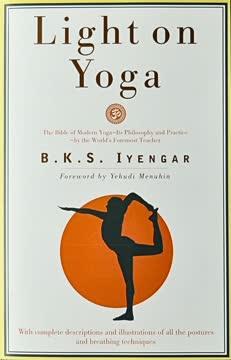
**Author:** B.K.S. Iyengar **Estimated Reading Time:** 45 minutes
**What You'll Learn**
The complete philosophical foundation of yoga as taught by one of the twentieth century's most influential masters. You will discover why yoga is far more than physical exercise, how the eight limbs form a coherent path to self-realization, what the ethical foundations of practice are, how breath control transforms the mind, and why constant practice is the only reliable path to freedom.
**Who This Book Is For**
Anyone who has ever wondered whether there is more to yoga than stretching. Anyone seeking a practical philosophy for living with greater clarity, discipline, and inner peace. Anyone who wants to understand the ancient roots of a practice that has transformed millions of lives worldwide.
Most people in the modern world encounter yoga as a form of exercise. They attend a class, move through a series of postures, feel pleasantly stretched and relaxed, and then return to their ordinary lives. This is not wrong, but it is incomplete. Yoga is a profound and ancient science, developed over thousands of years, that addresses the whole human being: body, mind, emotions, and spirit. B.K.S. Iyengar wrote *Light on Yoga* to correct a widespread misunderstanding. He wanted readers to see that the physical postures, impressive as they may be, are only one part of a much larger system. The true purpose of yoga is nothing less than the complete transformation of the individual. It is a method for uniting the limited personal self with the unlimited universal spirit. The word yoga comes from the Sanskrit root *yuj*, which means to bind, join, attach, or yoke. It is the same root from which we get the English word "yoke." In spiritual terms, yoga is the yoking of all the powers of body, mind, and soul to God. It means the disciplining of the intellect, the mind, the emotions, and the will. It is a poise of the soul that enables a person to look at life in all its aspects evenly. Iyengar knew from personal experience what this practice could do. Born in 1918 in a poor village in southern India, he suffered from malaria, tuberculosis, typhoid, and malnutrition as a child. His health was so fragile that he was not expected to live a full life. At the age of fifteen, he went to live with his sister and her husband, the renowned yoga master T. Krishnamacharya, in Mysore. There he began practicing yoga not out of spiritual aspiration but out of desperation to improve his health. The practice transformed him. Through years of intense discipline, he overcame his illnesses and developed extraordinary mastery of the body. But more importantly, he discovered that the physical…
Continue reading in the MinuteRead app
Get the complete 30-minute summary of Light on Yoga
Get the complete summary in the appYoga is the union of the individual self with the universal spirit, achieved through the integrated practice of eight in
The eight limbs are: ethical restraints, self-discipline, physical postures, breath control, sense withdrawal, concentra
The ethical foundations of yama and niyama are not optional extras; they are the roots that nourish the entire practice.
Asanas are not merely physical exercises; they are tools for mastering the body and preparing it for spiritual growth.
The breath is the bridge between body and mind. By controlling the breath, we control the mind.
The fluctuations of the mind distort our perception of reality. Yoga is the practice of calming these fluctuations.
"Light on Yoga" is a strong fit if you want practical ideas around health & fitness, health, spirituality, especially themes like yoga is the union of the individual self with the universal spirit, achieved through the integrated practice of eight in; the eight limbs are: ethical restraints, self-discipline, physical postures, breath control, sense withdrawal, concentra. The MinuteRead summary distills these concepts into a focused read, whether you're deciding whether to buy the book or applying its lessons at work.
Bellur Krishnamachar Sundararaja Iyengar was a renowned yoga teacher who founded Iyengar Yoga. Born in 1918 in India, he overcame childhood illnesses through yoga practice. Iyengar began teaching in Pune in 1937 and gained international recognition after meeting violinist Yehudi Menuhin in 1952. His 1966 book "Light on Yoga" became a global bestseller, popularizing yoga in the West. Iyengar authored numerous influential yoga texts and opened the Ramamani Iyengar Memorial Yoga Institute in 1975. …
View all summaries by B.K.S. IyengarContinue Reading
Access the complete 30-minute summary and thousands more nonfiction books in the MinuteRead app.

Continue reading the complete summary in the MinuteRead app.