MinuteRead
30 min
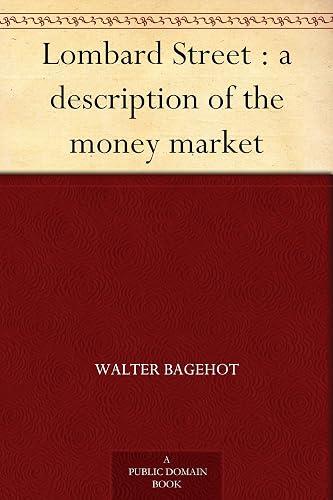
Book summary
by Walter Bagehot
Premium summary · Opens in the app · 30 min read
Imagine walking down a single street in London in the year 1870. This street, Lombard Street, is not particularly long or grand. It does not have the majesty of Parliament or the elegance of Mayfair. Yet within its modest buildings sits a concentration of financial power unlike anything the world had ever seen. Here, in the offices of bankers, bill brokers, and the Bank of England itself, the economic fate of an empire is decided daily.
**By Walter Bagehot**
**Estimated Reading Time:** 2 hours 15 minutes
**What You'll Learn:**
- Why the English banking system became the most sophisticated in the world during the nineteenth century - How the Bank of England evolved into the guardian of the nation's financial stability - Why a single reserve held by one institution creates both extraordinary efficiency and profound vulnerability - What actually happens during a financial panic and how institutions should respond - The principles that still guide central banking today
**Who This Book Is For:**
This book is for anyone who wants to understand how modern banking actually works beneath the surface. It is for investors who want to grasp why financial panics occur, for business leaders who depend on credit, for students of economic history, and for curious readers who sense that the financial system shapes their lives in ways they do not fully understand. Walter Bagehot wrote this book in 1873, but its insights remain startlingly relevant to anyone who has lived through a financial crisis.
Imagine walking down a single street in London in the year 1870. This street, Lombard Street, is not particularly long or grand. It does not have the majesty of Parliament or the elegance of Mayfair. Yet within its modest buildings sits a concentration of financial power unlike anything the world had ever seen. Here, in the offices of bankers, bill brokers, and the Bank of England itself, the economic fate of an empire is decided daily. Walter Bagehot understood that most people, including most educated people, had no idea how this system worked. They knew that money existed, that banks held it, and that sometimes panics occurred. But the deeper mechanics, the invisible machinery that allowed England to finance railways, factories, and global trade, remained mysterious. This ignorance was not merely an intellectual gap. It was dangerous. A nation that does not understand its financial system cannot protect it, cannot improve it, and cannot prevent its collapse. The problem Bagehot addresses is fundamental. England had developed a banking system unlike any other. It was extraordinarily efficient at mobilizing capital. Money deposited in quiet agricultural counties flowed rapidly to industrial centers where it funded new enterprises. A small trader with talent but no capital could borrow against future earnings and compete with established firms. The entire economy ran on credit, and this credit ran through a remarkably concentrated system. But this concentration created a vulnerability. The entire banking system of England rested on a single reserve held by the Bank of England. If that reserve faltered, if confidence wavered, the whole structure could collapse. Bagehot saw this clearly. He understood that the very features that made English banking powerful also…
Continue reading in the MinuteRead app
Get the complete 30-minute summary of Lombard Street
Get the complete summary in the appThe English banking system rested on a single reserve held by the Bank of England, creating both extraordinary efficienc
The Bank of England became the holder of the nation's reserve through historical accident, not deliberate design.
A financial panic is a crisis of confidence, not necessarily a crisis of solvency.
In a panic, the central bank should lend freely at a high rate against good collateral.
Credit is psychological as well as financial. Confidence drives the credit cycle.
The credit cycle cannot be eliminated, only managed. Booms and busts are inherent in the system.
"Lombard Street" is a strong fit if you want practical ideas around economics, finance, money, especially themes like the english banking system rested on a single reserve held by the bank of england, creating both extraordinary efficienc; the bank of england became the holder of the nation's reserve through historical accident, not deliberate design. The MinuteRead summary distills these concepts into a focused read, whether you're deciding whether to buy the book or applying its lessons at work.
Motivated to help readers with "English trade is become essentially a trade on borrowed capital, Walter Bagehot wrote “Lombard Street” to package those ideas for a fast, focused read. In “Lombard Street”, Walter Bagehot focuses on "English trade is become essentially a trade on borrowed capital. Through “Lombard Street”, Walter Bagehot distills the core ideas on economics into lessons readers can absorb in a single short sitting. Readers turn to this work when they want Walter Bagehot's perspect…
Continue Reading
Access the complete 30-minute summary and thousands more nonfiction books in the MinuteRead app.

Continue reading the complete summary in the MinuteRead app.