MinuteRead
30 min
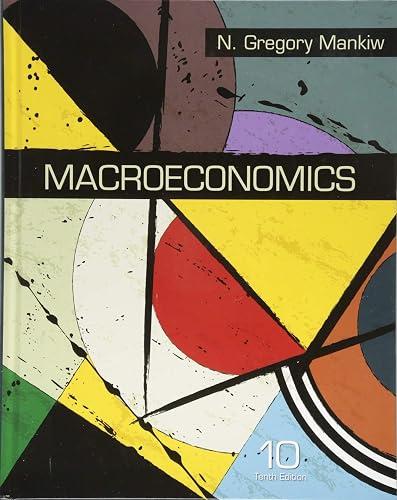
Every day, you encounter headlines about GDP growth, inflation rates, unemployment figures, and central bank decisions. These numbers shape mortgage rates, job prospects, retirement savings, and the prices you pay at the grocery store. Yet for most people, the economy remains a mysterious force, something that happens to them rather than something they understand.
**Author:** N. Gregory Mankiw
**Estimated Reading Time:** 45 minutes
**What You'll Learn:** - How economists measure and understand the performance of entire economies - Why some nations grow rich while others remain poor - What causes inflation, unemployment, and recessions - How government policies can stabilize or destabilize economic activity - The core models that shape modern macroeconomic thinking
**Who This Book Is For:** This condensed edition is for anyone who wants to understand the forces that shape economic life. Whether you are a student preparing for exams, a professional seeking to understand the economic environment you operate in, a policymaker looking for analytical frameworks, or a curious reader who wants to know why interest rates rise and fall, why unemployment persists, and what central banks actually do, this book will give you the tools to think clearly about the economy as a whole.
Every day, you encounter headlines about GDP growth, inflation rates, unemployment figures, and central bank decisions. These numbers shape mortgage rates, job prospects, retirement savings, and the prices you pay at the grocery store. Yet for most people, the economy remains a mysterious force, something that happens to them rather than something they understand. This book exists to change that. Macroeconomics is the study of the economy as a whole. It asks questions that affect billions of lives. Why do some countries grow rich while others remain mired in poverty? What causes prices to rise steadily, eroding the value of savings? Why do millions of workers sometimes find themselves unemployed through no fault of their own? What can governments do to soften the blows of economic downturns, and when do their interventions make things worse? These are not abstract academic questions. They are the questions that determine whether a family can afford a home, whether a business will expand or contract, whether a government can fund its promises to retirees, and whether a young person entering the workforce will find opportunity or frustration. N. Gregory Mankiw, a professor at Harvard University and former chairman of the Council of Economic Advisers, has spent decades teaching these ideas to students around the world. His approach is distinctive because it combines rigorous analytical thinking with a deep respect for real-world complexity. He does not offer simple answers to difficult questions. Instead, he provides the tools to think clearly about trade-offs, to understand why economic policies have unintended consequences, and to see how the short run differs fundamentally from the long run. The challenge of macroeconomics is that it deals with a system of extraordinary complexity. Millions of households make spending decisions. Millions of firms decide what to produce and whom to hire. Financial markets transmit information and allocate capital.…
Continue reading in the MinuteRead app
Get the complete 30-minute summary of Macroeconomics
Get the complete summary in the appGDP measures both income and expenditure, and real GDP adjusts for price changes to measure actual output.
In the long run, output is determined by capital, labor, and technology. Demand does not determine long-run prosperity.
Inflation is caused by excessive money growth. Central banks control inflation by controlling the money supply.
The real interest rate is the nominal rate minus inflation. The Fisher effect says nominal rates rise one-for-one with e
Unemployment has frictional and structural causes. The natural rate is determined by separation and finding rates.
Only technological progress can sustain long-run growth in living standards. Capital accumulation raises levels but not
"Macroeconomics" is a strong fit if you want practical ideas around economics, economy, finance, especially themes like gdp measures both income and expenditure, and real gdp adjusts for price changes to measure actual output; in the long run, output is determined by capital, labor, and technology. demand does not determine long-run prosperity. The MinuteRead summary distills these concepts into a focused read, whether you're deciding whether to buy the book or applying its lessons at work.
Motivated to help readers with macroeconomics, N. Gregory Mankiw wrote “Macroeconomics” to package those ideas for a fast, focused read. In “Macroeconomics”, N. Gregory Mankiw focuses on macroeconomics. Through “Macroeconomics”, N. Gregory Mankiw distills the core ideas on economics into lessons readers can absorb in a single short sitting. Readers turn to this work when they want N. Gregory Mankiw's perspective on the subject without working through the entire original volume. N. Gregory Mankiw…
View all summaries by N. Gregory MankiwContinue Reading
Access the complete 30-minute summary and thousands more nonfiction books in the MinuteRead app.

Continue reading the complete summary in the MinuteRead app.