MinuteRead
30 min
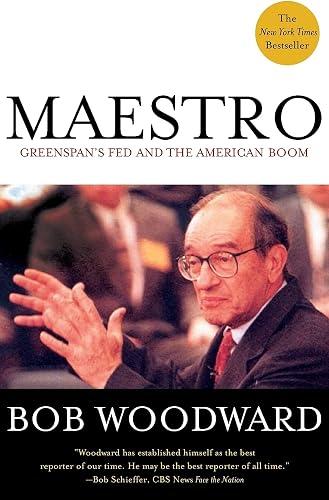
Book summary
by Bob Woodward
Premium summary · Opens in the app · 30 min read
In the autumn of 1987, a man who had spent most of his adult life studying numbers, charts, and the hidden patterns of the American economy found himself facing a crisis that no amount of data could have fully prepared him for. Alan Greenspan had been chairman of the Federal Reserve for just over two months when the stock market collapsed on October 19, losing more than a fifth of its value in a single day. The crash was not merely a financial event. It was a test of whether the entire system co
**Author:** Bob Woodward **Estimated Reading Time:** 42 minutes
The hidden mechanics of how the Federal Reserve shapes the American economy, the remarkable story of Alan Greenspan's tenure as its chairman, and the delicate art of wielding enormous power without appearing to wield it at all. You will learn how one man's obsession with data, his tolerance for uncertainty, and his mastery of Washington's political rituals allowed him to guide the economy through crashes, bubbles, and transformations.
This book is for anyone who wants to understand how economic power actually operates behind closed doors. It is for readers curious about the intersection of money, politics, and personality. It is for those who sense that the economy is not merely a collection of statistics but a living system shaped by human judgment, fear, and ambition. If you have ever wondered who really controls the levers of the American economy, this book provides the answer in vivid detail.
In the autumn of 1987, a man who had spent most of his adult life studying numbers, charts, and the hidden patterns of the American economy found himself facing a crisis that no amount of data could have fully prepared him for. Alan Greenspan had been chairman of the Federal Reserve for just over two months when the stock market collapsed on October 19, losing more than a fifth of its value in a single day. The crash was not merely a financial event. It was a test of whether the entire system could survive a sudden, violent shock. The story of Alan Greenspan and the Federal Reserve is not really a story about interest rates, monetary aggregates, or economic models. It is a story about power: how it is acquired, how it is exercised, and how it is preserved. It is a story about a man who understood that the most effective form of power often looks like restraint, that the most influential words are often the most ambiguous, and that the most important decisions are often made in silence. Bob Woodward, the legendary investigative journalist who helped uncover the Watergate scandal, spent years gaining unprecedented access to Greenspan and the inner workings of the Federal Reserve. What emerges from his reporting is a portrait of an institution that operates largely in the shadows of American public life, yet touches every aspect of it. The Fed decides how much it costs to borrow money for a home, a car, a business. It influences whether people have jobs, whether prices rise, whether the economy grows or contracts. And yet most Americans have only the vaguest understanding of what the Fed actually does. This book exists because that understanding matters. The Federal Reserve is not a…
Continue reading in the MinuteRead app
Get the complete 30-minute summary of Maestro
Get the complete summary in the appThe Fed's power comes from its control over the price of money, and that power affects nearly every economic decision in
Credibility is the Fed's most important asset. Without it, the Fed's tools become ineffective.
Greenspan's approach was shaped by a deep sense of uncertainty. He believed the future was unknowable and that pretendin
The 1987 crash taught Greenspan that decisive action and clear communication are essential in a crisis.
Moral hazard arises when risk and reward are misaligned, and it is a persistent problem in the financial system.
The Fed's independence is essential but constantly under threat, and protecting it requires subtle political skill.
"Maestro" is a strong fit if you want practical ideas around economics, biography, politics, especially themes like the fed's power comes from its control over the price of money, and that power affects nearly every economic decision in; credibility is the fed's most important asset. without it, the fed's tools become ineffective. The MinuteRead summary distills these concepts into a focused read, whether you're deciding whether to buy the book or applying its lessons at work.
Motivated to help readers with 1) The Fed's Power: More Than Just Numbers 2) Greenspan's Style: Data, Bob Woodward wrote “Maestro” to package those ideas for a fast, focused read. In “Maestro”, Bob Woodward focuses on 1) The Fed's Power: More Than Just Numbers 2) Greenspan's Style: Data. Through “Maestro”, Bob Woodward distills the core ideas on economics into lessons readers can absorb in a single short sitting. Readers turn to this work when they want Bob Woodward's perspective on the subject …
Continue Reading
Access the complete 30-minute summary and thousands more nonfiction books in the MinuteRead app.

Continue reading the complete summary in the MinuteRead app.