MinuteRead
30 min
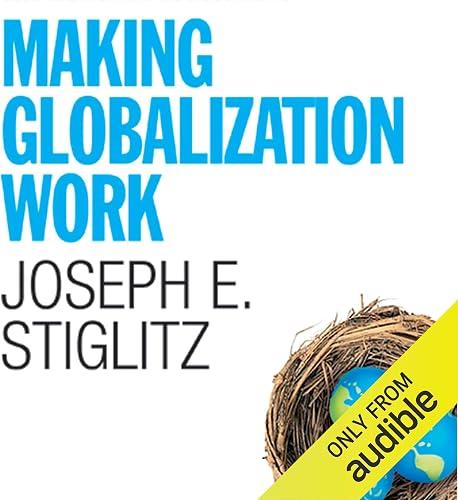
Book summary
Premium summary · Opens in the app · 30 min read
In the late 1990s and early 2000s, the word "globalization" carried an almost magical quality. Politicians, business leaders, and economists spoke of a world without borders, where goods, capital, and ideas would flow freely, lifting billions out of poverty and ushering in an era of unprecedented prosperity. The fall of the Berlin Wall had supposedly settled the great ideological debates of the twentieth century. Markets, not governments, would organize human affairs. Integration into the global
**Author:** Joseph E. Stiglitz
**Estimated Reading Time:** 45 minutes
**What You'll Learn:** Why globalization has failed to deliver on its promise for most of the world's population, how specific policies in trade, intellectual property, and global governance create and perpetuate inequality, and what reforms could make the global economic system work for everyone rather than a privileged few.
**Who This Book Is For:** Anyone who has wondered why poverty persists despite unprecedented global wealth, who senses that the rules of the international economy are rigged, or who wants to understand what "another world is possible" might actually look like in practice.
In the late 1990s and early 2000s, the word "globalization" carried an almost magical quality. Politicians, business leaders, and economists spoke of a world without borders, where goods, capital, and ideas would flow freely, lifting billions out of poverty and ushering in an era of unprecedented prosperity. The fall of the Berlin Wall had supposedly settled the great ideological debates of the twentieth century. Markets, not governments, would organize human affairs. Integration into the global economy would solve the problems that had plagued developing nations for generations. Then came the protests. Seattle in 1999. Prague, Genoa, and Washington in the years that followed. Tens of thousands of people took to the streets to express what many others felt but could not articulate: something was deeply wrong with the way globalization was being managed. The benefits seemed to flow overwhelmingly to the already wealthy, while the costs fell disproportionately on the poor, the vulnerable, and the voiceless. Joseph Stiglitz occupies a unique position in this debate. He is not an anti-globalization activist. He is a Nobel Prize-winning economist who served as Chief Economist of the World Bank and chaired the Council of Economic Advisers under President Clinton. He has seen globalization from the inside, participated in the meetings where policies were crafted, and witnessed firsthand how decisions made in Washington boardrooms affected villages in Africa and factory towns in Asia. His conclusion is uncomfortable for the architects of the current system. Globalization itself is not the problem. The problem is how globalization has been managed. The rules of the international economy have been written by and for the advanced industrial countries, often with the active collaboration of corporate interests. Developing countries have been told to open their markets, privatize their industries, and deregulate their economies, while the rich countries have simultaneously protected their own agricultural sectors, subsidized their own industries, and maintained barriers that keep poor countries poor. The result is a system that generates unbalanced outcomes. Some countries, particularly in East Asia, have managed globalization well and achieved remarkable growth. Others, particularly in Latin America and Africa, have followed…
Continue reading in the MinuteRead app
Get the complete 30-minute summary of Making Globalization Work
Get the complete summary in the appGlobalization has the potential to benefit everyone, but the current rules produce unbalanced outcomes that favor the ri
The Washington Consensus, with its emphasis on rapid liberalization and privatization, has failed to deliver on its prom
East Asia succeeded by managing globalization carefully, while Latin America's embrace of the Washington Consensus led t
The trade regime is deeply unfair, with agricultural subsidies in rich countries undercutting farmers in poor countries.
The intellectual property regime prioritizes corporate profits over access to essential medicines, with life-and-death c
The resource curse means that resource-rich countries often experience lower growth and higher poverty than resource-poo
"Making Globalization Work" is a strong fit if you want practical ideas around economics, politics, business, especially themes like globalization has the potential to benefit everyone, but the current rules produce unbalanced outcomes that favor the ri; the washington consensus, with its emphasis on rapid liberalization and privatization, has failed to deliver on its prom. The MinuteRead summary distills these concepts into a focused read, whether you're deciding whether to buy the book or applying its lessons at work.
Motivated to help readers with the current process of globalization is generating unbalanced outcomes, Joseph E. Stiglitz wrote “Making Globalization Work” to package those ideas for a fast, focused read. In “Making Globalization Work”, Joseph E. Stiglitz focuses on the current process of globalization is generating unbalanced outcomes. Through “Making Globalization Work”, Joseph E. Stiglitz distills the core ideas on economics into lessons readers can absorb in a single short sitting. Readers t…
View all summaries by Joseph E. StiglitzContinue Reading
Access the complete 30-minute summary and thousands more nonfiction books in the MinuteRead app.

Continue reading the complete summary in the MinuteRead app.