MinuteRead
30 min
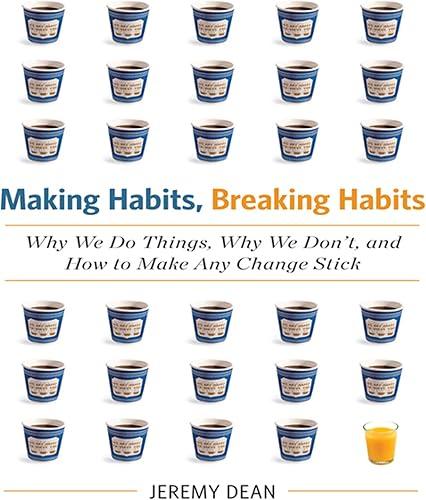
Book summary
by Jeremy Dean
Premium summary · Opens in the app · 30 min read
You probably think you know why you do the things you do. You believe your behavior is guided by your intentions, your goals, your conscious choices. You decide to eat healthier, exercise more, spend less time scrolling through your phone. You make plans. You commit.
### By Jeremy Dean
**Estimated Reading Time:** 45 minutes
**What You'll Learn:**
- Why habits form and how long they really take to establish - The hidden power of environmental cues over your behavior - Why willpower alone almost never works for breaking bad habits - How small changes create lasting transformation - The surprising connection between habits, happiness, and creativity
**Who This Book Is For:**
Anyone who has ever struggled to change a behavior, start a new routine, or understand why they keep doing things they wish they wouldn't. If you've tried and failed to break a bad habit or build a good one, this book will change how you think about the entire process.
You probably think you know why you do the things you do. You believe your behavior is guided by your intentions, your goals, your conscious choices. You decide to eat healthier, exercise more, spend less time scrolling through your phone. You make plans. You commit. Then you find yourself eating the same unhealthy snack at the same time every afternoon. You skip the gym again. You reach for your phone without even realizing you've done it until you're already three videos deep. What happened? Did you lack willpower? Were you not committed enough? Did you simply not want it badly enough? The answer, according to psychologist Jeremy Dean, is both simpler and more unsettling. Your behavior is not primarily driven by your conscious intentions. It is driven by habits: automatic, unconscious patterns that operate below the level of awareness. These habits shape far more of your daily life than you realize, and they often override your best intentions without you even noticing. This is not a character flaw. It is how the human mind works. Your brain is designed to automate repeated behaviors. Every time you perform an action in a stable context, your brain takes note. It begins to associate the context with the behavior. Over time, the behavior becomes triggered automatically by the context, requiring less and less conscious thought. This is efficient. It frees up mental resources for other tasks. It allows you to drive to work while thinking about your day, brush your teeth while planning a meeting, make coffee while mentally rehearsing a conversation. But this same efficiency comes at a cost. The behaviors that become automated are not always the ones you would consciously choose. Bad habits form just as easily as good ones, perhaps more easily, because they often provide immediate rewards. And once formed, they resist change. They persist even when you genuinely want to change them. This explains why so many people struggle with behavior change. They approach it as a battle of wills, pitting…
Continue reading in the MinuteRead app
Get the complete 30-minute summary of Making Habits, Breaking Habits
Get the complete summary in the appHabits are automatic behaviors formed through repetition in stable contexts. Each repetition increases automaticity.
The average time for a new habit to form is 66 days, but this varies widely. Be patient and focus on consistency.
Environmental cues are powerful triggers for behavior. Change your environment to change your habits.
Willpower is a limited resource. Don't rely on it for long-term behavior change.
Replace bad habits with new behaviors that provide similar rewards. Suppression rarely works.
Use implementation intentions: "If [cue], then I will [behavior]."
"Making Habits, Breaking Habits" is a strong fit if you want practical ideas around psychology, self help, personal development, especially themes like habits are automatic behaviors formed through repetition in stable contexts. each repetition increases automaticity; the average time for a new habit to form is 66 days, but this varies widely. be patient and focus on consistency. The MinuteRead summary distills these concepts into a focused read, whether you're deciding whether to buy the book or applying its lessons at work.
Motivated to help readers with each time it is repeated, Jeremy Dean wrote “Making Habits, Breaking Habits” to package those ideas for a fast, focused read. In “Making Habits, Breaking Habits”, Jeremy Dean focuses on each time it is repeated. Through “Making Habits, Breaking Habits”, Jeremy Dean distills the core ideas on psychology into lessons readers can absorb in a single short sitting. Readers turn to this work when they want Jeremy Dean's perspective on the subject without working through …
Continue Reading
Access the complete 30-minute summary and thousands more nonfiction books in the MinuteRead app.

Continue reading the complete summary in the MinuteRead app.