MinuteRead
30 min
Book summary
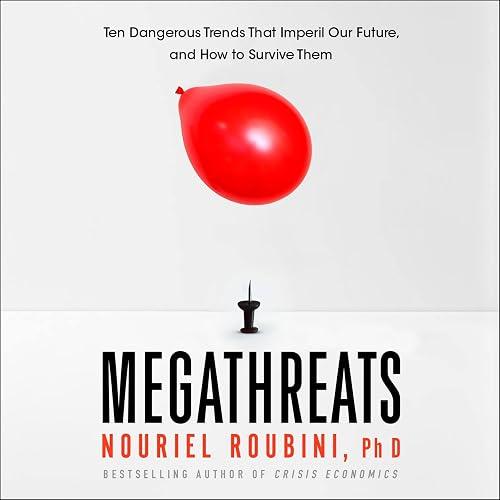
by Nouriel Roubini
Premium summary · Opens in the app · 30 min read
Nouriel Roubini earned the nickname "Dr. Doom" for a reason. In 2006, when nearly every economist, banker, and policymaker believed that housing prices would continue rising forever, Roubini stood before the International Monetary Fund and warned that the global financial system was heading toward a catastrophic collapse. He described, with uncomfortable specificity, how the housing bubble would burst, how mortgage-backed securities would become toxic, how major financial institutions would fail
**Author:** Nouriel Roubini
**Estimated Reading Time:** 45 minutes
**What You'll Learn:** - Why the world is facing a convergence of ten interconnected threats unlike anything in modern history - How unsustainable debt, demographic collapse, and monetary policy failures are creating a fragile global economy - Why stagflation, not inflation or recession alone, is the defining economic risk of our era - How deglobalization, AI disruption, and geopolitical rivalry are reshaping the world order - What individuals, businesses, and policymakers can do to prepare for an era of cascading crises
**Who This Book Is For:** This book is for anyone who senses that something fundamental has shifted in the global economy and wants to understand what is actually happening. It is for investors trying to navigate increasingly volatile markets, business leaders making long-term decisions in an unpredictable environment, policymakers grappling with problems that resist conventional solutions, and citizens who want to understand why the world feels increasingly unstable. If you have wondered whether the post-2008 era of easy money, rising asset prices, and relative stability can continue, this book provides the uncomfortable answer.
Nouriel Roubini earned the nickname "Dr. Doom" for a reason. In 2006, when nearly every economist, banker, and policymaker believed that housing prices would continue rising forever, Roubini stood before the International Monetary Fund and warned that the global financial system was heading toward a catastrophic collapse. He described, with uncomfortable specificity, how the housing bubble would burst, how mortgage-backed securities would become toxic, how major financial institutions would fail, and how the contagion would spread through the entire global economy. He was dismissed as a crank. He was ridiculed. Then he was proven right. The 2008 financial crisis nearly brought down the global financial system. Governments and central banks responded with unprecedented interventions: bailouts, quantitative easing, near-zero interest rates, and massive fiscal stimulus. The system stabilized. But Roubini argues that we never actually solved the underlying problems. We simply papered over them with more debt and more monetary expansion. And in doing so, we created the conditions for something potentially far worse. This book is not a prediction of a single crisis. It is a warning about a convergence of crises. Roubini identifies ten megathreats, each serious on its own, that are now interacting and amplifying one another in ways that create systemic risk on a scale humanity has never faced. Unsustainable debt. Financial fragility. Demographic collapse. The addiction to easy money. Stagflation. Currency instability. Deglobalization. Artificial intelligence disruption. Geopolitical conflict. Climate change. What makes these threats truly dangerous is their interconnection. A debt crisis in one country can trigger a banking crisis that spreads across borders. Climate change can create migration pressures that fuel political instability…
Continue reading in the MinuteRead app
Get the complete 30-minute summary of MegaThreats
Get the complete summary in the appThe world faces ten interconnected megathreats that amplify one another. The whole is more dangerous than the sum of its
Global debt is at unprecedented levels, making the economy vulnerable to shocks and limiting policy options.
The financial system remains fragile, and the shadow banking system poses significant systemic risks.
Aging populations will strain public finances and reduce economic growth for decades to come.
The era of easy money is over, and the transition to higher rates will be painful.
Stagflation, not inflation or recession alone, is the defining economic risk of our era.
"MegaThreats" is a strong fit if you want practical ideas around economics, finance, politics, especially themes like the world faces ten interconnected megathreats that amplify one another. the whole is more dangerous than the sum of its; global debt is at unprecedented levels, making the economy vulnerable to shocks and limiting policy options. The MinuteRead summary distills these concepts into a focused read, whether you're deciding whether to buy the book or applying its lessons at work.
Motivated to help readers with we are facing megathreats unlike anything we have faced before—and they are interconnected, Nouriel Roubini wrote “MegaThreats” to package those ideas for a fast, focused read. In “MegaThreats”, Nouriel Roubini focuses on we are facing megathreats unlike anything we have faced before—and they are interconnected. Through “MegaThreats”, Nouriel Roubini distills the core ideas on economics into lessons readers can absorb in a single short sitting. Readers turn to this…
Continue Reading
Access the complete 30-minute summary and thousands more nonfiction books in the MinuteRead app.

Continue reading the complete summary in the MinuteRead app.