MinuteRead
30 min
Book summary
by Michael A. Heller
Premium summary · Opens in the app · 30 min read
Every day, you make hundreds of small decisions about ownership. You claim a seat on the subway. You park in a public spot and assume it is yours for the evening. You stream a movie and believe, in some meaningful way, that you have acquired something. You inherit a family heirloom and feel a deep connection to it. You buy a house and assume the land beneath it extends downward forever and upward into the sky.
### The Hidden Rules of Ownership
**Author:** Michael A. Heller **Estimated Reading Time:** 45 minutes
**What You'll Learn:**
- Why ownership is a story we tell, not a fact we discover - The six narratives that decide who gets what - How companies exploit ambiguity to profit at your expense - Why your digital purchases are not really yours - How to claim, protect, and rethink what you own
**Who This Book Is For:**
Anyone who has ever fought over a reclined airplane seat, wondered who owns the air above their house, questioned why inheritance seems unfair, or clicked "buy now" on an ebook assuming it was actually theirs. This book is for people who sense that ownership rules shape their lives but have never had a clear way to understand how those rules work, and how they could work differently.
Every day, you make hundreds of small decisions about ownership. You claim a seat on the subway. You park in a public spot and assume it is yours for the evening. You stream a movie and believe, in some meaningful way, that you have acquired something. You inherit a family heirloom and feel a deep connection to it. You buy a house and assume the land beneath it extends downward forever and upward into the sky. Most of the time, these assumptions work well enough. The world does not descend into chaos every morning. People generally respect each other's property. The systems of ownership that surround us feel natural, inevitable, even obvious. But Michael Heller wants you to understand something important: none of it is natural. None of it is inevitable. And very little of it is obvious once you look closely. Ownership is a story we tell ourselves. More precisely, ownership is a set of stories we tell ourselves, stories that compete with each other constantly. When two people both believe they own the same thing, they are not disagreeing about a fact. They are telling different stories about why the thing should be theirs. One person says, "I was here first." Another says, "I worked hard for this." A third says, "This is connected to something I already own." A fourth says, "This is part of who I am." Each of these stories has power. Each has a long history. And each can be true, depending on the context, the culture, and the legal system in which the dispute takes place. The problem is that most of us walk through life believing that ownership is a simple matter of fact. We think that if we look hard enough, we can discover who really owns something. We treat ownership as the starting point of analysis, the foundation upon…
Continue reading in the MinuteRead app
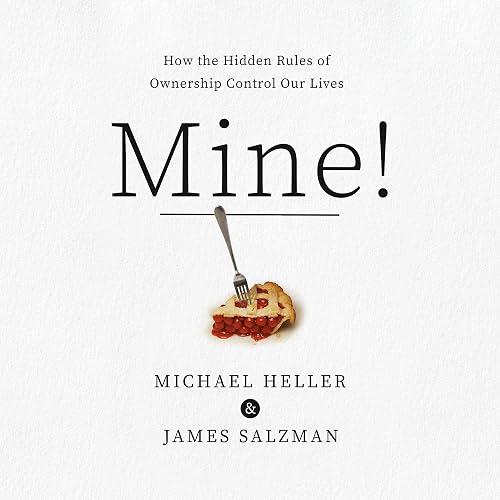
Get the complete 30-minute summary of Mine!
Get the complete summary in the appOwnership is a story we tell, not a fact we discover.
Every ownership claim derives from one of six stories: first in time, possession, labor, attachment, self-ownership, and
Strategic ambiguity allows powerful parties to profit from unclear rules.
The attachment principle extends ownership beyond physical boundaries, but its limits are contested.
Self-ownership is a dimmer, not a switch.
Inheritance rules shape wealth inequality across generations.
"Mine!" is a strong fit if you want practical ideas around psychology, economics, law, especially themes like ownership is a story we tell, not a fact we discover; every ownership claim derives from one of six stories: first in time, possession, labor, attachment, self-ownership, and. The MinuteRead summary distills these concepts into a focused read, whether you're deciding whether to buy the book or applying its lessons at work.
Motivated to help readers with ownership is the endpoint, Michael A. Heller wrote “Mine!” to package those ideas for a fast, focused read. In “Mine!”, Michael A. Heller focuses on ownership is the endpoint. Through “Mine!”, Michael A. Heller distills the core ideas on psychology into lessons readers can absorb in a single short sitting. Readers turn to this work when they want Michael A. Heller's perspective on the subject without working through the entire original volume. Sir Michael Aron Hell…
Continue Reading
Access the complete 30-minute summary and thousands more nonfiction books in the MinuteRead app.

Continue reading the complete summary in the MinuteRead app.