MinuteRead
30 min
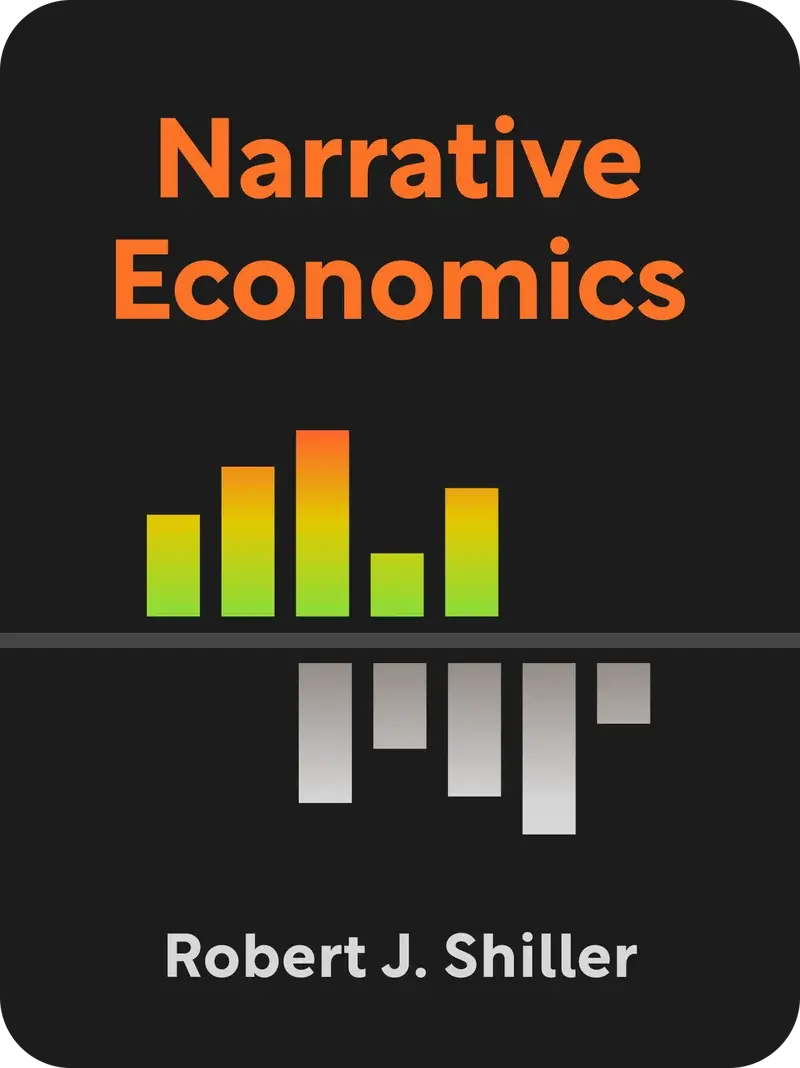
Narrative Economics explains the influence that popular stories have on the way economies operate, including the rise of Bitcoin, stock market booms and crashes, the nature of epidemics, and more.
Narrative Economics explains the influence that popular stories have on the way economies operate, including the rise of Bitcoin, stock market booms and crashes, the nature of epidemics, and more.
When the idea of Bitcoin was first introduced online in 2008 by a mysterious person under the name Satoshi Nakamoto, hype quickly grew around it. It was an entirely new system of money that had the ability to change everything we know about currency. From there, it became a global phenomenon, though partly not for the reason you’d think.
Sure, its innovation and complex mathematical theory is impressive, but what excited most people about it seemed to be the hype and mystery surrounding it. If you ask most Bitcoin investors about the actual theory that runs Bitcoin, they probably could only give you the very basics.
But ask them about what excites them about it and they’ll probably say it’s the idea of a new, revolutionary way of using currency. The way of the future. They feel that by investing in Bitcoin, they have a stake in the future, proving they are among the forward-thinkers of today.
Another narrative attached to Bitcoin is that it’s free of the control of governments and banks. This idea attracts those investors with an anarchic streak who view many modern institutions as corrupt. Because it isn’t attached to any one country, investors feel they are promoting internationalism.
In short, it is these futuristic narratives along with the mysterious founding of Bitcoin that have made it so attractive to investors, not the complex math behind it. Without the exciting story, it probably wouldn’t have succeeded as quickly as it has.
Two subjects people don’t usually compare are epidemiology, or the study of epidemics, and economics. This is a shame, because epidemiology and economics could learn a lot from each other. Epidemiologists study how diseases spread, and many of the patterns they see are similar to what economists observe. For example, they study a disease like Ebola. They keep track of things like the rate of contagion and well as recovery and death rates. When an epidemic is quickly spreading, the contagion rate is much higher than death and recovery rates. When the epidemic starts to decline, the contagion rate falls while the recovery and death rate outnumbers new cases. This idea can be applied to economic narratives that are contagious. The contagion of a narrative rapidly rises as people talk about it, whether through conversation in person or online. It also spreads through the news and other media. But just like an epidemic, eventually, the story slows down. People start to forget or they just lose interest and the story dies off. We can see…
Continue reading in the MinuteRead app
Get the complete 5-minute summary of Narrative Economics
Get the complete summary in the appTo understand how stories affect economics, look no further than the example of Bitcoin.
There is a lot in common with epidemics and economic narratives.
We must understand the narratives of the past if we want to be ready for our economic future.
"Narrative Economics" is a strong fit if you want practical ideas around culture, business, economics, especially themes like to understand how stories affect economics, look no further than the example of bitcoin; there is a lot in common with epidemics and economic narratives. The MinuteRead summary distills these concepts into a focused read, whether you're deciding whether to buy the book or applying its lessons at work.
Motivated to help readers with narrative Economics explains the influence that popular stories have on the way economies operate, Robert J. Shiller wrote “Narrative Economics” to package those ideas for a fast, focused read. In “Narrative Economics”, Robert J. Shiller focuses on narrative Economics explains the influence that popular stories have on the way economies operate. Through “Narrative Economics”, Robert J. Shiller distills the core ideas on economics into lessons readers can absorb in …
View all summaries by Robert J. ShillerContinue Reading
Access the complete 5-minute summary and thousands more nonfiction books in the MinuteRead app.

Continue reading the complete summary in the MinuteRead app.