MinuteRead
30 min
Book summary
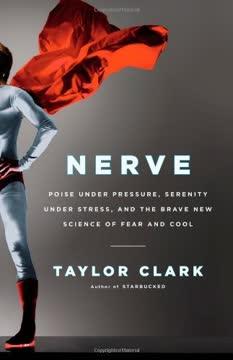
by Taylor Clark
Premium summary · Opens in the app · 30 min read
You know the feeling. Your chest tightens. Your palms go slick. Your mind, which moments ago was sharp and clear, suddenly becomes a fog of static and dread. The stakes are high, the moment is here, and your body has decided to betray you.
**Author:** Taylor Clark
**Estimated Reading Time:** 2 hours 15 minutes
**What You'll Learn:**
- Why fear is not your enemy but a misunderstood ally - The real science behind choking, panic, and freezing under pressure - How elite performers, soldiers, and crisis survivors master their nerves - Practical techniques for staying calm when everything goes wrong - How to train your brain to handle high-stakes moments with grace
**Who This Book Is For:**
Anyone who has ever felt their heart race before a presentation, frozen during an emergency, or wondered why they fall apart when it matters most. This book is for the anxious, the ambitious, the curious, and anyone who wants to understand the hidden machinery of fear and performance.
You know the feeling. Your chest tightens. Your palms go slick. Your mind, which moments ago was sharp and clear, suddenly becomes a fog of static and dread. The stakes are high, the moment is here, and your body has decided to betray you. Maybe it happens before a speech. Maybe it happens during a job interview. Maybe it happens when you hear a strange noise in the middle of the night. Wherever it strikes, the experience is universal: fear takes over, and you feel powerless to stop it. We live in a culture that treats fear as a weakness. We're told to conquer it, suppress it, push through it. We admire the fearless, the bold, the people who seem to glide through pressure while the rest of us tremble. We imagine that some people are simply born brave, gifted with nerves of steel, while the rest of us are doomed to flinch. Taylor Clark wrote "Nerve" because he wanted to understand why this picture is wrong. A self-described neurotic who once fainted at the sight of a needle, Clark spent years wrestling with his own anxieties. But instead of accepting the standard advice to just calm down, he decided to dig into the science of fear itself. What he found surprised him. Fear, it turns out, is not a flaw in the human design. It's a feature. It's an ancient survival system that has kept our species alive for millions of years. The problem isn't that we feel fear. The problem is that we misunderstand it, fight it, and let it run the show in situations where it doesn't belong. Clark's investigation took him into neuroscience labs, military training facilities, professional sports locker rooms, and the aftermath of real disasters. He talked to psychologists who study choking, soldiers who train for combat, athletes who perform under impossible pressure, and ordinary people who survived extraordinary crises. What he discovered is that the people who perform best under pressure aren't…
Continue reading in the MinuteRead app
Get the complete 30-minute summary of Nerve
Get the complete summary in the appFear is a survival mechanism, not an enemy. Learn to work with it rather than against it.
Trying to suppress fear makes it stronger. Acceptance reduces its power.
Worrying rarely leads to solutions. Most worries never come true, and we cope better than expected when they do.
Avoidance reinforces fear. Approach scary situations gradually to build confidence.
You don't rise to the occasion. You sink to the level of your training. Prepare thoroughly.
Choking happens when you overthink automatic skills. Trust your training and focus on external cues.
"Nerve" is a strong fit if you want practical ideas around psychology, science, self help, especially themes like fear is a survival mechanism, not an enemy. learn to work with it rather than against it; trying to suppress fear makes it stronger. acceptance reduces its power. The MinuteRead summary distills these concepts into a focused read, whether you're deciding whether to buy the book or applying its lessons at work.
Taylor Clark is an American author and journalist known for his engaging writing style and exploration of psychological topics. He has written for publications such as Slate, GQ, and The Atlantic. Clark's approach combines thorough research with a conversational tone, making complex subjects accessible to a general audience. In "Nerve," he draws on personal experiences with anxiety, admitting to being "a fairly neurotic guy." This vulnerability enhances his credibility and relatability as he exp…
View all summaries by Taylor ClarkContinue Reading
Access the complete 30-minute summary and thousands more nonfiction books in the MinuteRead app.

Continue reading the complete summary in the MinuteRead app.