MinuteRead
30 min
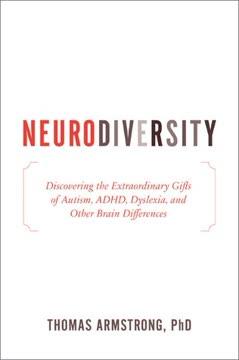
"We need a new field of neurodiversity that regards human brains as the biological entities that they are and appreciates the vast natural differences that exist from one brain to another regarding sociability, learning, attention, mood, and other important mental functions." Paradigm shift.
**Author:** Thomas Armstrong
**Estimated Reading Time:** 45 minutes
**What You'll Learn**
This book introduces a transformative way of understanding human brains. You will learn why conditions like ADHD, autism, dyslexia, and mood disorders are not simply disorders to be fixed but natural variations in human cognition with their own strengths, gifts, and evolutionary purposes. You will discover how to reframe these differences, how to build environments where neurodivergent people can thrive, and why the future of society depends on preserving cognitive diversity.
**Who This Book Is For**
This book is for anyone who has ever been labeled with a neurological condition, for parents and educators who want to support neurodivergent children, for employers who want to build truly inclusive workplaces, and for anyone curious about the vast natural differences that exist from one human brain to another. If you have ever suspected that the concept of a "normal" brain is a fiction, this book will give you the language and framework to understand why you were right.
Something is wrong with the way we talk about the human brain. For decades, the dominant model in psychiatry, education, and medicine has treated certain neurological conditions as disorders. ADHD is a deficit of attention. Autism is a social impairment. Dyslexia is a reading disability. Depression is a mood disorder. The language itself tells a story of brokenness, of brains that failed to develop properly, of people who need to be fixed. But what if that story is fundamentally incomplete? What if the same genetic variations that make reading difficult for a dyslexic child also give her extraordinary abilities in three-dimensional thinking and pattern recognition? What if the distractibility of an ADHD brain is not a deficit but a different way of attending to the world, one that was highly adaptive for our hunter-gatherer ancestors? What if the intense emotions of bipolar disorder are connected to the same cognitive architecture that produces great art, poetry, and scientific breakthroughs? Thomas Armstrong proposes a paradigm shift. He calls it neurodiversity. The concept is simple but radical. Neurodiversity means that human brains exist along natural continuums of traits. There is no single "normal" brain hidden away in a vault somewhere, no perfect neurological standard against which all other brains should be measured. Instead, there is biodiversity of the mind. Just as ecosystems thrive on biological diversity, human communities thrive on cognitive diversity. The different ways that brains process information, experience emotion, attend to the world, and interact with others are not errors in the human genome. They are features of it. This idea challenges deeply held assumptions. The medical model has trained us to see neurological differences as pathologies. A child who cannot sit still in…
Continue reading in the MinuteRead app
Get the complete 30-minute summary of Neurodiversity
Get the complete summary in the appNeurodiversity means that human brains exist along natural continuums of traits. There is no single normal brain.
ADHD traits are not defects but adaptations to ancestral environments that required constant scanning, movement, and rap
Autism is not a social deficit but a different cognitive style characterized by enhanced systemizing abilities.
Dyslexia comes with enhanced visual-spatial reasoning, three-dimensional thinking, and holistic pattern recognition.
Mood disorders are connected to heightened emotional sensitivity and creative potential. The goal of treatment is to red
Anxiety is an adaptive mechanism. Moderate anxiety enhances attention to detail, problem anticipation, and motivation.
"Neurodiversity" is a strong fit if you want practical ideas around psychology, autistic spectrum disorder, adhd, especially themes like neurodiversity means that human brains exist along natural continuums of traits. there is no single normal brain; adhd traits are not defects but adaptations to ancestral environments that required constant scanning, movement, and rap. The MinuteRead summary distills these concepts into a focused read, whether you're deciding whether to buy the book or applying its lessons at work.
Thomas Armstrong is a psychologist and educator with over 20 published books on learning and human development. His work focuses on neurodiversity, multiple intelligences, and alternative approaches to education. Armstrong's latest novel, "Childless," explores themes of childhood and societal norms. With a background in special education and a personal understanding of mood disorders, he brings both professional expertise and lived experience to his writing. Armstrong's diverse interests, includ…
View all summaries by Thomas ArmstrongContinue Reading
Access the complete 30-minute summary and thousands more nonfiction books in the MinuteRead app.

Continue reading the complete summary in the MinuteRead app.