MinuteRead
30 min
Every day, you make thousands of decisions. Most of them happen so quickly and so automatically that you barely notice them. You choose which brand of coffee to buy, which email to open first, which person to trust in a meeting, which proposal to accept. You tell yourself these decisions are rational. You weigh the options. You consider the evidence. You make a logical choice.
**Author:** Patrick Renvoisé
**Estimated Reading Time:** 45 minutes
**What You'll Learn:** - Why the most primitive part of the human brain makes nearly all purchasing decisions - The six specific stimuli that trigger a "yes" response from your customer's decision-making center - A four-step framework for structuring any sales message to maximize persuasive impact - How to use visual communication, storytelling, and emotional engagement to bypass rational resistance - Practical techniques for handling objections, closing deals, and simplifying your message
**Who This Book Is For:** Sales professionals who want to understand why traditional feature-and-benefit selling often fails. Marketers who need to create campaigns that resonate at a deeper psychological level. Entrepreneurs who must persuade investors, customers, and partners. Anyone who communicates for a living and wants to understand the hidden decision-making machinery inside every human brain.
Every day, you make thousands of decisions. Most of them happen so quickly and so automatically that you barely notice them. You choose which brand of coffee to buy, which email to open first, which person to trust in a meeting, which proposal to accept. You tell yourself these decisions are rational. You weigh the options. You consider the evidence. You make a logical choice. But what if that story you tell yourself is largely an illusion? Patrick Renvoisé spent years studying how the human brain actually makes decisions, drawing on neuroscience research that reveals a startling truth. The conscious, rational part of your brain, the part you identify as "you," is not the part calling the shots. Instead, a much older, more primitive brain structure, one that evolved hundreds of millions of years ago, is the true decision-maker. This discovery has profound implications for anyone who sells, markets, persuades, or communicates. It means that most of what you learned about selling is built on a flawed premise. It means that logical arguments, detailed feature lists, and rational appeals are speaking to the wrong audience inside your customer's head. The old brain, sometimes called the reptilian brain, sits at the base of your skull. It evolved to keep you alive in a dangerous world. It processes threats and opportunities instantly. It triggers fight-or-flight responses. It seeks pleasure and avoids pain. And crucially, it decides what to buy, whom to trust, and what to believe. Your new brain, the neocortex, is the most recent addition to your neural architecture. It handles language, abstract reasoning, complex planning, and conscious thought. When you explain the technical specifications of your product, you are speaking to the new brain. When you present a detailed cost-benefit analysis, you are speaking to the new brain. When you list features and benefits, you are speaking to the new brain. But the new…
Continue reading in the MinuteRead app
Get the complete 30-minute summary of Neuromarketing
Get the complete summary in the appThe old brain makes all decisions. The rational brain only rationalizes afterward.
Speak to the old brain using six stimuli: self-centeredness, contrast, tangible input, beginnings and endings, visual st
Structure every persuasive message using four steps: diagnose the pain, differentiate your claims, demonstrate the gain,
Open with a grabber that is unexpected, emotionally engaging, and directly relevant to your audience's pain.
Use visuals whenever possible. The old brain processes images 40 times faster than words.
Tell customer stories. They are the most persuasive form of proof, far more powerful than data.
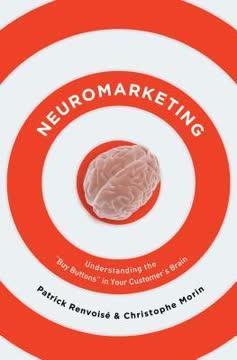
"Neuromarketing" is a strong fit if you want practical ideas around psychology, business, neuroscience, especially themes like the old brain makes all decisions. the rational brain only rationalizes afterward; speak to the old brain using six stimuli: self-centeredness, contrast, tangible input, beginnings and endings, visual st. The MinuteRead summary distills these concepts into a focused read, whether you're deciding whether to buy the book or applying its lessons at work.
Patrick Renvoise is a marketing expert and author specializing in neuromarketing. He co-wrote "Neuromarketing: Understanding the Buy Buttons in Your Customer's Brain," which explores how understanding brain function can improve marketing and sales strategies. Renvoise's work focuses on applying neuroscience principles to business communication and persuasion techniques. His approach emphasizes targeting the "old brain" or primitive emotional brain to influence decision-making. Renvoise's experti…
View all summaries by Patrick RenvoiséContinue Reading
Access the complete 30-minute summary and thousands more nonfiction books in the MinuteRead app.

Continue reading the complete summary in the MinuteRead app.