MinuteRead
30 min
Neuro-Linguistic Programming began with a simple but profound question: How do people create their subjective experience of reality? In the early 1970s, Richard Bandler and John Grinder set out to understand why some therapists achieved remarkable results while others with similar training did not. Their investigation led to the creation of NLP, a methodology for studying and replicating excellence in human behavior.
**Author:** Robert B. Dilts
**Estimated Reading Time:** 45 minutes
**What You'll Learn:**
- How Neuro-Linguistic Programming has evolved beyond cognitive techniques into a holistic approach integrating body wisdom and collective intelligence - The three minds that shape human experience: cognitive, somatic, and field - Practical methods for achieving optimal performance through inner alignment - How to transform difficult emotions rather than merely managing them - A framework for aligning personal ambition with deeper purpose
**Who This Book Is For:**
This book is for anyone who has explored personal development and found traditional approaches incomplete. It is for coaches, therapists, leaders, and individuals who sense that lasting change requires more than reframing thoughts or adjusting behaviors. If you have ever felt that your body holds wisdom your mind cannot articulate, or that your greatest insights emerge from connection with others rather than isolated reflection, this book will provide a framework for understanding and cultivating those experiences.
Neuro-Linguistic Programming began with a simple but profound question: How do people create their subjective experience of reality? In the early 1970s, Richard Bandler and John Grinder set out to understand why some therapists achieved remarkable results while others with similar training did not. Their investigation led to the creation of NLP, a methodology for studying and replicating excellence in human behavior. The early promise of NLP was extraordinary. By understanding the structure of how people think, communicate, and behave, practitioners could help individuals overcome phobias, transform limiting beliefs, and achieve goals that had previously seemed impossible. The tools were elegant, the results often dramatic, and the field grew rapidly. But something was missing. The first generation of NLP focused almost entirely on the cognitive mind. It treated the brain as the seat of intelligence and the body as a vehicle that carried that brain around. It addressed problems at the level of behavior and capability, helping people do things differently. This approach produced genuine results, but it also had limitations. People could change their thinking patterns yet still feel stuck in their bodies. They could adopt new beliefs yet still struggle to connect meaningfully with others. They could achieve external success yet feel internally empty. The second generation of NLP, emerging in the mid-1980s, expanded the scope to include beliefs, values, and meta-programs. It acknowledged that lasting change required working at deeper levels of identity and purpose. It introduced tools for shifting limiting beliefs and aligning actions with values. This was a significant advance, but it still operated primarily within the domain of the individual mind. Third Generation NLP, the subject of this book, represents a more fundamental shift. It recognizes that human intelligence is not confined to the brain. The body possesses its…
Continue reading in the MinuteRead app
Get the complete 30-minute summary of NLP II
Get the complete summary in the appYou have three minds: cognitive, somatic, and field. Access all three for complete intelligence.
Your body knows things your brain cannot articulate. Pay attention to felt sense.
Connection with others creates intelligence that exceeds individual capacities.
Generative change creates something new. It is different from fixing problems.
Awareness is the foundation of choice. You cannot choose what you cannot see.
The COACH state is your optimal inner condition: Centered, Open, Attending, Connected, Holding.
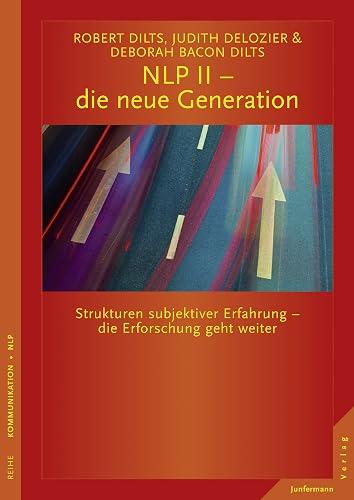
"NLP II" is a strong fit if you want practical ideas around psychology, self help, personal growth, especially themes like you have three minds: cognitive, somatic, and field. access all three for complete intelligence; your body knows things your brain cannot articulate. pay attention to felt sense. The MinuteRead summary distills these concepts into a focused read, whether you're deciding whether to buy the book or applying its lessons at work.
Motivated to help readers with third generation NLP expands to include both somatic processes and larger system dynamics (i.e, Robert B. Dilts wrote “NLP II” to package those ideas for a fast, focused read. In “NLP II”, Robert B. Dilts focuses on third generation NLP expands to include both somatic processes and larger system dynamics (i.e. Through “NLP II”, Robert B. Dilts distills the core ideas on psychology into lessons readers can absorb in a single short sitting. Readers turn to this work …
View all summaries by Robert B. DiltsContinue Reading
Access the complete 30-minute summary and thousands more nonfiction books in the MinuteRead app.

Continue reading the complete summary in the MinuteRead app.