MinuteRead
30 min
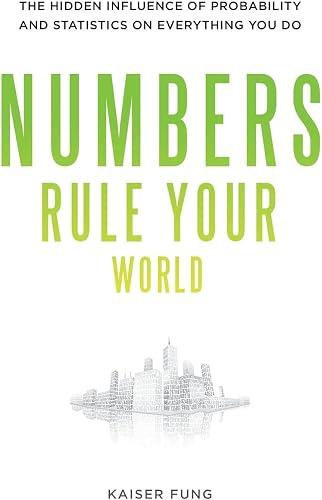
Book summary
by Fung
Premium summary · Opens in the app · 30 min read
Every day, without your knowledge or consent, you participate in dozens of statistical experiments. The traffic lights you wait at are timed by algorithms. The credit card offer in your mailbox was selected by a predictive model. The wait time at your favorite theme park ride was engineered by queuing theory. The medical screening your doctor recommended was calibrated against a statistical threshold. The price you paid for your flight was set by a revenue optimization system that predicted what
### The Hidden Power of Statistical Thinking in Everyday Life
**By Kaiser Fung**
**Estimated Reading Time:** 45 minutes
**What You'll Learn:** - Why your intuition about averages often leads you astray - How statisticians think about uncertainty, risk, and rare events - Why imperfect models outperform perfect theories - How hidden statistical systems shape your daily decisions - Practical tools for making better choices with data
**Who This Book Is For:** Anyone who has ever wondered whether to trust a medical study, how credit scores actually work, why airport security lines move the way they do, or whether the "safest" airline really exists. If you make decisions in a world full of data, this book is for you.
Every day, without your knowledge or consent, you participate in dozens of statistical experiments. The traffic lights you wait at are timed by algorithms. The credit card offer in your mailbox was selected by a predictive model. The wait time at your favorite theme park ride was engineered by queuing theory. The medical screening your doctor recommended was calibrated against a statistical threshold. The price you paid for your flight was set by a revenue optimization system that predicted what you would be willing to pay. You are already living inside a world built by statisticians. The question is whether you understand how that world works. Most people do not. Most people go through life with a vague sense that numbers are important but a deep uncertainty about what those numbers actually mean. They hear that a drug reduces risk by 50 percent and do not ask: 50 percent of what? They see an average commute time and do not wonder: what happens on the bad days? They read that a test is 99 percent accurate and do not consider: what does that mean when the condition is rare? This is not a book about mathematics. You will find no equations to solve, no formulas to memorize, no statistical software to learn. This is a book about a way of thinking. It is about the mental habits that statisticians use to make sense of a messy, uncertain world. It is about learning to ask the right questions when someone presents you with a number, a claim, or a prediction. The statistician's mindset is fundamentally different from the everyday mindset. Most people look for certainty. Statisticians look for variability. Most people want to know the average. Statisticians want to know the distribution. Most people ask: is this model correct? Statisticians ask: is this model useful? Most people treat rare events as impossible. Statisticians treat impossible events as rare, which is not the same thing at all. These differences matter enormously in practice. They…
Continue reading in the MinuteRead app
Get the complete 30-minute summary of Numbers Rule Your World
Get the complete summary in the app**Question averages.** Always ask about the distribution, the variability, and the extremes. The average hides the infor
**Compare like with like.** Before comparing two groups, ask whether they are comparable. Stratify to avoid Simpson's Pa
**Embrace imperfect models.** All models are wrong, but some are useful. The goal is usefulness, not perfection.
**Understand error asymmetry.** The two types of errors are rarely equally costly. Ask about the costs of each type of e
**Respect rare events.** Rare events are not impossible. They happen eventually. Prepare for them.
**Look beyond the average.** The variability of outcomes is often more important than the average outcome.
"Numbers Rule Your World" is a strong fit if you want practical ideas around psychology, science, mathematics, especially themes like **question averages.** always ask about the distribution, the variability, and the extremes. the average hides the infor; **compare like with like.** before comparing two groups, ask whether they are comparable. stratify to avoid simpson's pa. The MinuteRead summary distills these concepts into a focused read, whether you're deciding whether to buy the book or applying its lessons at work.
Motivated to turn hard-won expertise into something readers can use every day, Fung wrote “Numbers Rule Your World” to distill the ideas behind the work into clear, actionable lessons. Through “Numbers Rule Your World”, Fung distills the core ideas on psychology into lessons readers can absorb in a single short sitting. Readers turn to this work when they want Fung's perspective on the subject without working through the entire original volume. The book is structured so each chapter highlights a…
Continue Reading
Access the complete 30-minute summary and thousands more nonfiction books in the MinuteRead app.

Continue reading the complete summary in the MinuteRead app.