MinuteRead
30 min
Book summary
Premium summary · Opens in the app · 30 min read
Most people spend a great deal of their lives trying to be what they are not. They construct elaborate facades to meet the expectations of parents, partners, employers, and society. They learn early that certain feelings are unacceptable, certain thoughts are shameful, and certain aspects of themselves must remain hidden. Over time, the gap between who they are and who they appear to be widens into a chasm that drains their energy, confuses their decisions, and leaves them feeling hollow.
**Author:** Carl R. Rogers **Estimated Reading Time:** 45 minutes
**What You'll Learn** This book reveals how genuine human connection, honest self-expression, and deep acceptance can transform not only therapy but every relationship in your life. You will learn why the drive to grow is already inside you, how to create conditions where others can flourish, and what it truly means to become yourself.
**Who This Book Is For** This book is for anyone who has ever felt they were performing a role rather than living a life. It is for therapists, educators, parents, leaders, and anyone who wants to understand how real change happens. If you have ever wondered why some relationships help you grow while others make you shrink, this book provides the answer.
Most people spend a great deal of their lives trying to be what they are not. They construct elaborate facades to meet the expectations of parents, partners, employers, and society. They learn early that certain feelings are unacceptable, certain thoughts are shameful, and certain aspects of themselves must remain hidden. Over time, the gap between who they are and who they appear to be widens into a chasm that drains their energy, confuses their decisions, and leaves them feeling hollow. Carl Rogers spent his professional life studying this gap and discovering what helps people close it. He was not interested in clever techniques or diagnostic labels. He wanted to understand something more fundamental: What are the conditions under which a person can grow? What kind of relationship allows someone to drop their defenses and become more fully themselves? The answers he found were surprising in their simplicity and profound in their implications. Rogers discovered that growth does not require expert advice, clever interpretations, or motivational pressure. It requires a particular kind of relationship, one characterized by genuineness, acceptance, and deep understanding. When people experience these conditions, they naturally move toward greater honesty, flexibility, and fulfillment. This book represents the culmination of decades of clinical experience, rigorous research, and personal reflection. Rogers shares not only his therapeutic philosophy but also his own journey toward becoming a more authentic person. He writes with remarkable candor about his struggles, his doubts, and what he learned from thousands of hours sitting with people in pain. The problem this book addresses is universal. Every person wrestles with the tension between who they are and who they think they should be. Every person longs to be known and accepted without condition. Every person carries an innate drive toward growth that can be either nourished or starved by the relationships around them. What makes Rogers' approach different is his radical trust in the individual. He does not see people as broken machines…
Continue reading in the MinuteRead app
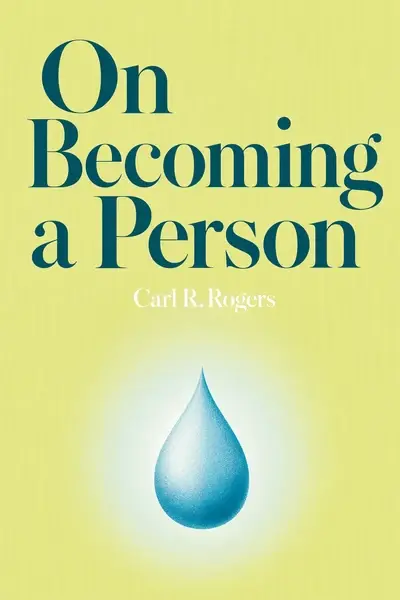
Get the complete 30-minute summary of On Becoming a Person
Get the complete summary in the appEvery person has an innate drive toward growth and self-actualization. The task is not to create motivation but to remov
The three conditions for growth-promoting relationships are congruence (genuineness), unconditional positive regard (acc
Conditions of worth are the primary obstacle to growth. They teach people that they are only acceptable when they meet c
The client is the expert on their own experience. The therapist's role is to facilitate, not to direct.
Real listening means seeking to understand before seeking to be understood. Most communication breakdowns result from ev
Congruence does not mean saying everything you feel. It means that what you do express is consistent with your genuine e
"On Becoming a Person" is a strong fit if you want practical ideas around psychology, self help, counselling, especially themes like every person has an innate drive toward growth and self-actualization. the task is not to create motivation but to remov; the three conditions for growth-promoting relationships are congruence (genuineness), unconditional positive regard (acc. The MinuteRead summary distills these concepts into a focused read, whether you're deciding whether to buy the book or applying its lessons at work.
Carl Ransom Rogers was a pioneering American psychologist who developed the person-centered approach to psychotherapy. Born in 1902, he initially studied agriculture and history before pursuing psychology. Rogers earned his Ph.D. from Columbia University in 1931. He taught at various universities and was elected president of the American Psychological Association in 1946. Rogers published influential works, including "Client-centered Therapy" (1951) and "On Becoming a Person" (1961). His humanis…
View all summaries by Carl R. RogersContinue Reading
Access the complete 30-minute summary and thousands more nonfiction books in the MinuteRead app.

Continue reading the complete summary in the MinuteRead app.