MinuteRead
30 min
Book summary
Premium summary · Opens in the app · 5 min read
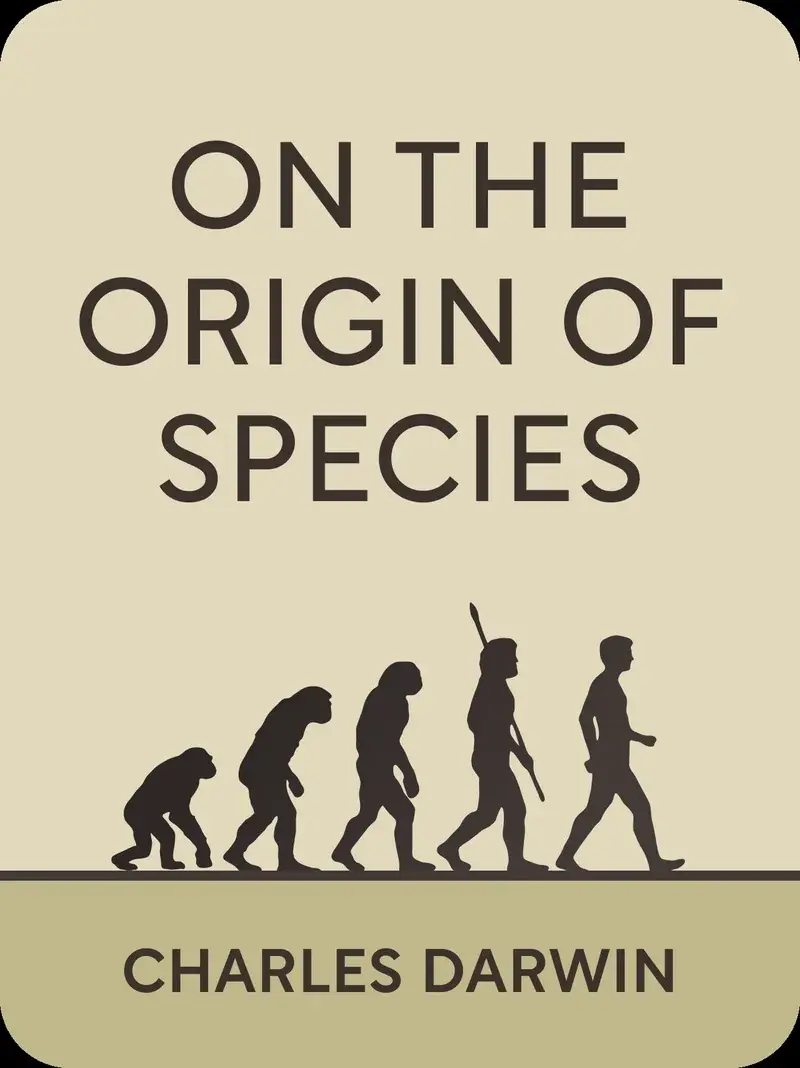
On the Origin of Species is the foundational book for modern evolutionary biology that marked a turning point in how we think about the beginnings of humankind.
On the Origin of Species is the foundational book for modern evolutionary biology that marked a turning point in how we think about the beginnings of humankind.
Before we proceed to explore the laws of natural selection, let’s look at human-induced breeding of certain animals. Various breeds of dogs or pigeons, for example, are the product of human selection.
Let’s assume a pigeon keeper wants to obtain a breed of pigeons with long necks. What she will do is select a couple of pigeons from a bunch with longer necks. After they mate and produce offspring, she will again pick the longest-necked pigeons from among them and breed them again.
After repeating this process for many generations, the breeder will eventually get pigeons with significantly longer necks than those in the first bunch. This process is possible thanks to the rule of descent with modification. According to that rule, parents’ genes are passed down to their offspring – but always with some modification and mixing with their partner’s genes.
We can acknowledge that, in the process of natural selection, nature acts as an “invisible breeder” of the species. However, rather than picking the trait variations based on some arbitrary aesthetic principles (like with pigeon breeding), nature chooses those traits which support the species survival.
The more a specific trait is useful for survival, the more the possessor of that trait is likely to breed. This ensures that the most adaptive traits are passed down to the offspring – and so, the next generations always evolve to be better suited for survival than their ancestors.
Survival-enabling traits are important. But they’re not the only factor which decides about how natural selection will shape the species. Other important mechanisms in play are sexual selection and diversification. A very well-adapted individual, whose genes enable it to thrive in their current environment may still not manage to pass those genes on if it fails to mate. That’s why being attractive to the potential sexual partner is also a key factor in natural selection. Interestingly, the competition in this realm happens mainly between males. As Darwin notes, male are the ones who have to adjust their traits to the liking of the females. The latter, conversely, get to decide which characteristics they value the most in their mates. Consequently, they have an important say in how the species evolves! This is certainly an important point to the ongoing feminist debate. But Darwin was probably unaware of that while making this observation. Another important factor for a species’ survival is diversification. As a population of one species grows, it needs to spread to other habitats in order to simply feed itself. As it spreads, the particular…
Continue reading in the MinuteRead app
Get the complete 5-minute summary of On the Origin of Species
Get the complete summary in the appTo understand natural selection, it may help to look at human selection first.
Evolution uses sexual selection and diversification as important factors to decide what genes are passed on.
The consequence of natural selection is the divergent biosphere in very similar geographical locations.
"On the Origin of Species" is a strong fit if you want practical ideas around culture, environment, history, especially themes like to understand natural selection, it may help to look at human selection first; evolution uses sexual selection and diversification as important factors to decide what genes are passed on. The MinuteRead summary distills these concepts into a focused read, whether you're deciding whether to buy the book or applying its lessons at work.
Charles Robert Darwin, (/ˈdɑːrwɪn/; 12 February 1809 – 19 April 1882) was an English naturalist and geologist, best known for his contributions to evolutionary theory. He established that all species of life have descended over time from common ancestors, and in a joint publication with Alfred Russel Wallace introduced his scientific theory that this branching pattern of evolution resulted from a process that he called natural selection, in which the struggle for existence has a similar effect t…
View all summaries by Charles DarwinContinue Reading
Access the complete 5-minute summary and thousands more nonfiction books in the MinuteRead app.

Continue reading the complete summary in the MinuteRead app.