MinuteRead
30 min
Most people approach the stock market the way they approach a casino. They walk in with hope, place bets based on tips and hunches, and walk out confused about what happened to their money. The market feels like a mysterious force that rewards some and punishes others without rhyme or reason.
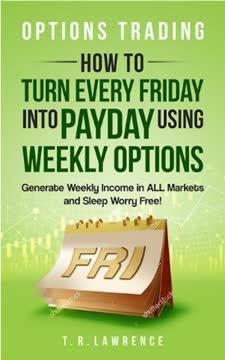
**Author:** T.R. Lawrence
**Estimated Reading Time:** 45 minutes
**What You'll Learn:** - How your relationship with money shapes every financial decision you make - The psychology that drives market movements and how to avoid emotional traps - A complete framework for generating consistent weekly income through options - Risk management strategies that let you sleep at night - How to build an unemotional trading plan and execute it with discipline
**Who This Book Is For:** - Beginners who want to understand options without drowning in jargon - Intermediate traders looking for a systematic income-generating approach - Anyone who has felt anxiety about market positions and wants defined risk - Readers who appreciate practical frameworks over abstract theory
Most people approach the stock market the way they approach a casino. They walk in with hope, place bets based on tips and hunches, and walk out confused about what happened to their money. The market feels like a mysterious force that rewards some and punishes others without rhyme or reason. But the market is not a casino. It is a system governed by observable patterns, human psychology, and mathematical relationships. The difference between those who consistently profit and those who consistently lose is not luck. It is knowledge, preparation, and emotional discipline. T.R. Lawrence wrote this book for people who are tired of guessing. He wrote it for the person who has watched their portfolio swing wildly with market sentiment, who has felt the knot in their stomach when a stock drops, who has wondered if there is a better way to approach investing than hoping for the best. The central problem Lawrence addresses is not a lack of information. Most people have access to more financial data than any generation in history. The problem is a lack of structure. Without a framework for making decisions, all that information becomes noise. Without a plan, every market movement triggers an emotional response. Without defined risk, every position becomes a source of anxiety. Options trading offers a solution to these problems, but only when approached correctly. Most people think of options as speculative instruments, ways to make leveraged bets on stock movements. Lawrence presents a different view. Options can be tools for generating consistent income while maintaining strict control over risk. They can be insurance policies that protect your capital while you collect premiums. They can be the foundation of a systematic approach to the market that removes emotion from the equation. The book's philosophy rests on a simple observation: those who understand money make money work for them, while those who do not understand money become slaves to it. This is not a motivational slogan. It is a practical truth about how financial…
Continue reading in the MinuteRead app
Get the complete 30-minute summary of Options Trading
Get the complete summary in the appYour money beliefs shape your financial decisions; examine them.
Fear and greed drive markets; a plan protects you from both.
Options give you the right, not the obligation, to buy or sell.
Selling options generates income through premium collection.
Weekly options decay rapidly, which benefits sellers.
The KaChing Formula combines long-dated protection with weekly income.
"Options Trading" is a strong fit if you want practical ideas around finance, business, especially themes like your money beliefs shape your financial decisions; examine them; fear and greed drive markets; a plan protects you from both. The MinuteRead summary distills these concepts into a focused read, whether you're deciding whether to buy the book or applying its lessons at work.
T.R. Lawrence is an experienced author and trader in the securities industry. His writing style is described as friendly and approachable, making complex topics accessible to beginners. Lawrence focuses on teaching readers about trading psychology, risk management, and practical strategies for options trading. He emphasizes the importance of understanding one's motivations and biases when approaching the market. Lawrence provides readers with additional resources, such as spreadsheets, to suppor…
View all summaries by T.R. LawrenceContinue Reading
Access the complete 30-minute summary and thousands more nonfiction books in the MinuteRead app.

Continue reading the complete summary in the MinuteRead app.