MinuteRead
30 min
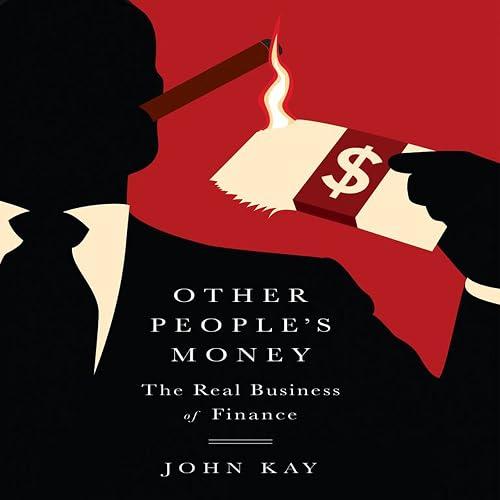
Book summary
by John Kay
Premium summary · Opens in the app · 30 min read
There is a peculiar moment in the history of modern finance when the numbers stopped making sense. By the early twenty-first century, the daily volume of foreign exchange trading had reached almost one hundred times the value of all international trade in goods and services. The assets of major banks exceeded the annual income of the countries in which they operated. The notional value of derivative contracts was estimated at three times the value of every physical asset on the planet.
**Author:** John Kay
**Estimated Reading Time:** 45 minutes
**What You'll Learn:**
- Why the financial sector has grown so large while serving the real economy so poorly - How financial innovation created more instability rather than less - Why regulation has failed to prevent repeated crises - What a genuinely useful financial system would look like - How to think clearly about money, intermediation, and economic value
**Who This Book Is For:**
This book is for anyone who has wondered why finance seems disconnected from the everyday economy. It is for readers who sense that something has gone wrong when banks grow larger than nations, when trading volumes dwarf actual trade, and when the brightest graduates flock to manipulate money rather than build things. It is for citizens who want to understand what happened in 2008, why it keeps happening, and what might actually change.
There is a peculiar moment in the history of modern finance when the numbers stopped making sense. By the early twenty-first century, the daily volume of foreign exchange trading had reached almost one hundred times the value of all international trade in goods and services. The assets of major banks exceeded the annual income of the countries in which they operated. The notional value of derivative contracts was estimated at three times the value of every physical asset on the planet. These numbers should have prompted a simple question: what is all this activity for? John Kay asks that question with the patience of a scholar and the clarity of someone who has spent decades watching finance from the inside. He is not a firebrand calling for the abolition of banking. He is an economist who believes that finance has an essential purpose, and that it has lost its way. The core problem, as Kay sees it, is that the financial sector has become an end in itself. What began as a service industry, designed to connect savers with borrowers and to facilitate payments, has evolved into something closer to a parallel economy. This parallel economy trades with itself, profits from its own complexity, and occasionally crashes into the real world with devastating consequences. The 2008 financial crisis was not an aberration. It was the logical outcome of decades of financialization, a process through which financial motives, financial markets, and financial elites came to dominate economic thinking. The crisis revealed that much of what passed for sophisticated risk management was actually sophisticated risk creation. The instruments designed to spread risk had concentrated it. The systems built to stabilize the economy had made it more fragile. Kay's argument is not that finance is inherently bad. It is that finance has forgotten its place. A well-functioning financial…
Continue reading in the MinuteRead app
Get the complete 30-minute summary of Other People's Money
Get the complete summary in the appFinance is a service industry that exists to serve the real economy, not an end in itself.
The growth of the financial sector has not translated into faster economic growth because much of that growth has been v
The deposit channel and the trading floor are fundamentally different activities that should be separated.
Much financial innovation has created more instability, not less, because complexity and opacity make risks harder to as
The incentive structures of finance encourage short-term thinking and excessive risk-taking, with private gains and publ
Regulation has failed because there has been too much of the wrong kind, not too little.
"Other People's Money" is a strong fit if you want practical ideas around economics, finance, business, especially themes like finance is a service industry that exists to serve the real economy, not an end in itself; the growth of the financial sector has not translated into faster economic growth because much of that growth has been v. The MinuteRead summary distills these concepts into a focused read, whether you're deciding whether to buy the book or applying its lessons at work.
Motivated to help readers with the notion that finance was special was uncontroversial, John Kay wrote “Other People's Money” to package those ideas for a fast, focused read. In “Other People's Money”, John Kay focuses on the notion that finance was special was uncontroversial. Through “Other People's Money”, John Kay distills the core ideas on economics into lessons readers can absorb in a single short sitting. Readers turn to this work when they want John Kay's perspective on the subject witho…
Continue Reading
Access the complete 30-minute summary and thousands more nonfiction books in the MinuteRead app.

Continue reading the complete summary in the MinuteRead app.