MinuteRead
30 min
For most of the past four decades, the story of globalization seemed simple. Factories in China produced goods. Container ships carried those goods across oceans. Consumers in wealthy countries bought them at ever-lower prices. This arrangement, whatever its flaws, appeared permanent. It was the natural order of the modern economy.
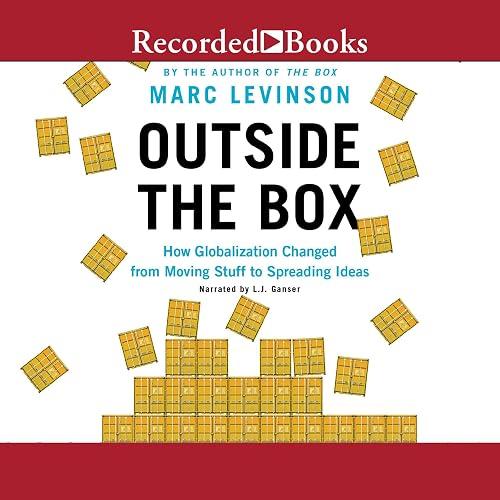
**Author:** Marc Levinson
**Estimated Reading Time:** 45 minutes
**What You'll Learn:** How globalization has evolved through distinct historical phases, why the era of shipping physical goods across vast distances is winding down, and what the emerging Fourth Globalization means for economies, businesses, and individuals.
**Who This Book Is For:** Readers who want to understand the deeper forces shaping the global economy, business leaders navigating changing supply chains, policymakers grappling with economic disruption, and anyone curious about how the world became so interconnected and where that interconnection is heading next.
For most of the past four decades, the story of globalization seemed simple. Factories in China produced goods. Container ships carried those goods across oceans. Consumers in wealthy countries bought them at ever-lower prices. This arrangement, whatever its flaws, appeared permanent. It was the natural order of the modern economy. Marc Levinson argues that this story was never permanent. It was not even particularly natural. It was a specific historical phase, made possible by a unique convergence of technologies, policies, and economic conditions. And that phase is now ending. The globalization we have experienced since the late 1980s was not the first globalization. It was the third. The first emerged in the nineteenth century, built on steamships, telegraphs, and the ideology of free trade. It collapsed in the guns of August 1914. The second arose after World War II, shaped by the Bretton Woods monetary system and the rebuilding of industrial economies. It was limited in scope, largely confined to wealthy nations. The third, the one most people alive today remember, was different. It was defined by long-distance value chains, container shipping, deregulated finance, and the rise of China as the world's factory. Each of these globalizations was distinct. Each was shaped by particular technologies and particular political choices. And each eventually gave way to something new. The central claim of this book is that we are now witnessing the end of the Third Globalization and the emergence of a Fourth. This new phase will not be defined by the movement of physical goods across oceans. It will be defined by the flow of ideas and services. The container ship, the symbol of the previous era, will be replaced by the fiber optic cable and the digital platform. This shift matters enormously. For decades, economic development strategies around the world have been built on the assumption that manufacturing for export was the path to prosperity. Countries built ports, roads, and industrial zones. They offered tax breaks to attract factories. They trained workers for assembly lines. That model is losing its power. The future belongs to those who can produce and export knowledge, not just goods. Understanding this transition requires understanding how…
Continue reading in the MinuteRead app
Get the complete 30-minute summary of Outside the Box
Get the complete summary in the appGlobalization has gone through distinct phases, and we are now entering a new one.
The First Globalization collapsed in World War I. Globalization is not permanent.
The Second Globalization was limited to wealthy countries and left the developing world behind.
The Third Globalization was built on container shipping, deregulated finance, and China's rise.
The container revolution made long-distance supply chains economically viable.
China's entry into the global economy created the China price, benefiting consumers but hurting workers in developed cou
"Outside the Box" is a strong fit if you want practical ideas around economics, history, globalization, especially themes like globalization has gone through distinct phases, and we are now entering a new one; the first globalization collapsed in world war i. globalization is not permanent. The MinuteRead summary distills these concepts into a focused read, whether you're deciding whether to buy the book or applying its lessons at work.
Motivated to help readers with in the next stage of economic development, Marc Levinson wrote “Outside the Box” to package those ideas for a fast, focused read. In “Outside the Box”, Marc Levinson focuses on in the next stage of economic development. Through “Outside the Box”, Marc Levinson distills the core ideas on economics into lessons readers can absorb in a single short sitting. Readers turn to this work when they want Marc Levinson's perspective on the subject without working through the …
View all summaries by Marc LevinsonContinue Reading
Access the complete 30-minute summary and thousands more nonfiction books in the MinuteRead app.

Continue reading the complete summary in the MinuteRead app.