MinuteRead
30 min
Book summary
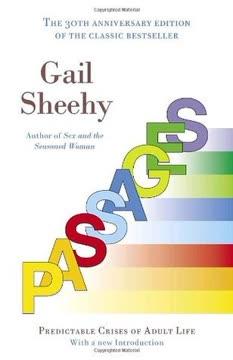
by Gail Sheehy
Premium summary · Opens in the app · 30 min read
Most people assume that growing up ends somewhere around age twenty-one. You finish school, find a job, perhaps marry, and then you are simply an adult. The rest of life, according to this view, is a matter of managing whatever comes your way. There are no further stages to pass through, no predictable upheavals, no developmental milestones after the first flush of independence.
**Author:** Gail Sheehy
**Estimated Reading Time:** 45 minutes
**What You'll Learn:**
- Why adult life unfolds in predictable stages, not random events - What triggers the major transitions most people experience - How men and women navigate developmental passages differently - Why the crises you face are not failures but signals of growth - How to recognize where you are and prepare for what comes next
**Who This Book Is For:**
Anyone who has ever felt stuck, restless, or uncertain about their direction in life. If you have wondered why you feel differently at thirty than you did at twenty, or why your priorities shifted at forty, this book explains the underlying patterns. It is for people navigating career changes, relationship transitions, identity questions, and the quiet but powerful transformations that mark every adult life.
Most people assume that growing up ends somewhere around age twenty-one. You finish school, find a job, perhaps marry, and then you are simply an adult. The rest of life, according to this view, is a matter of managing whatever comes your way. There are no further stages to pass through, no predictable upheavals, no developmental milestones after the first flush of independence. Gail Sheehy discovered that this assumption is not merely incomplete. It is fundamentally wrong. In the early 1970s, Sheehy began interviewing hundreds of men and women about their lives. She spoke with people in their twenties, thirties, forties, and beyond. She asked about their careers, marriages, ambitions, disappointments, and inner lives. What emerged from these conversations was a pattern so consistent that it demanded attention. People were not living formless adult lives. They were moving through distinct, predictable stages, each with its own challenges, opportunities, and internal logic. The problem was that almost no one recognized these stages while living through them. A thirty-five-year-old man who suddenly questioned his career and marriage believed something had gone wrong with him personally. A twenty-eight-year-old woman who felt restless despite having achieved everything she was supposed to want assumed she was ungrateful or broken. A forty-two-year-old executive who felt a strange pull toward creative work he had abandoned decades earlier thought he was having a breakdown. None of these people were broken. They were passing through predictable developmental transitions. They simply had no map. Sheehy's central insight was that adult life has a structure. It is not a smooth, continuous line. It is a series of passages, periods of relative stability punctuated by periods of upheaval and transformation. These passages are not optional. They are built into the architecture of human development. The only choice is whether you move through them consciously or blindly. The stakes of this ignorance are high. When people do not…
Continue reading in the MinuteRead app
Get the complete 30-minute summary of Passages
Get the complete summary in the appAdult development continues throughout life, unfolding in predictable stages and transitions.
The discomfort of transition is not a sign of failure but a signal of growth.
The twenties are dominated by the "shoulds" of family, culture, and generation.
The Catch-30 is a predictable period of reevaluation, not a personal crisis.
Men and women experience developmental passages differently due to different social expectations.
Midlife can be either a crisis or an awakening, depending on how it is approached.
"Passages" is a strong fit if you want practical ideas around health & fitness, psychology, self help, especially themes like adult development continues throughout life, unfolding in predictable stages and transitions; the discomfort of transition is not a sign of failure but a signal of growth. The MinuteRead summary distills these concepts into a focused read, whether you're deciding whether to buy the book or applying its lessons at work.
Gail Sheehy is an American writer and lecturer known for her work on life cycles and stages. Her book Passages, published in the 1970s, became a cultural phenomenon and was dubbed "a road map of adult life." Sheehy has written several books exploring various life stages, including menopause and what she terms "Second Adulthood." Her works often focus on women's experiences, vitality, and sexuality in later life. Sheehy has also penned a biography of Hillary Clinton and contributes to Vanity Fair…
View all summaries by Gail SheehyContinue Reading
Access the complete 30-minute summary and thousands more nonfiction books in the MinuteRead app.

Continue reading the complete summary in the MinuteRead app.