MinuteRead
30 min
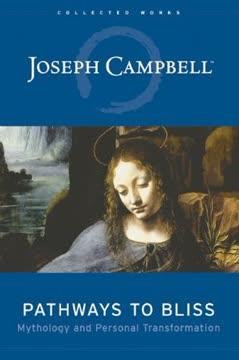
Book summary
Premium summary · Opens in the app · 30 min read
Every human being who has ever lived has asked the same fundamental questions. Why am I here? What should I do with my life? How do I face suffering, loss, and death? What does it mean to live well?
**Author:** Joseph Campbell
**Estimated Reading Time:** 45 minutes
**What You'll Learn:**
- Why myths are not ancient relics but living maps for psychological growth - How the hero's journey unfolds in your own life, whether you recognize it or not - The psychological function of myth in bridging your conscious and unconscious mind - How to identify and follow your personal myth toward genuine fulfillment - Why modern life feels fragmented and how to rebuild meaning through ritual and symbol
**Who This Book Is For:**
This book is for anyone who has ever felt that life should hold more meaning than the daily routine suggests. It is for those who sense that ancient stories still speak to modern struggles, for readers navigating transitions, searching for purpose, or simply curious about why certain narratives move us so deeply. If you have ever wondered what dragons represent in your own life, or why sacrifice appears in every spiritual tradition, this book will illuminate the path.
Every human being who has ever lived has asked the same fundamental questions. Why am I here? What should I do with my life? How do I face suffering, loss, and death? What does it mean to live well? For most of human history, people found answers to these questions in mythology. The great stories of the world's traditions were not entertainment in the modern sense. They were instruction manuals for the soul. They told people how to navigate the passages of life, how to understand their inner conflicts, and how to connect with something larger than themselves. Then something changed. The modern world arrived with its scientific revolutions, its industrial transformations, and its relentless focus on material progress. The old stories began to seem quaint, superstitious, irrelevant. We stopped telling them to our children. We stopped believing they had anything to teach us. But the questions did not go away. They simply went underground, emerging as anxiety, depression, restlessness, and a pervasive sense that something essential is missing from contemporary life. People still hunger for meaning. They still need guidance through life's transitions. They still struggle with the same inner demons that ancient heroes faced. What has disappeared is not the need for myth but the cultural framework that once satisfied that need. Joseph Campbell spent his life studying the myths of the world and discovered something remarkable. Beneath the surface differences of culture and time, the same patterns appear again and again. The hero who leaves home. The dragon that must be slain. The treasure that must be recovered. The return to share what was found. These patterns are not arbitrary. They reflect the structure of the human psyche itself. Campbell's work reveals that mythology…
Continue reading in the MinuteRead app
Get the complete 30-minute summary of Pathways to Bliss
Get the complete summary in the appThe hero's journey is the universal pattern of transformation: departure, initiation, and return.
Myths are symbolic maps of the human psyche, not primitive attempts to explain nature.
Follow your bliss: the deep satisfaction that comes from living in alignment with your authentic self.
The dragon represents the unconscious forces you must face and integrate, not destroy.
Ritual is myth enacted. Create rituals that are meaningful to you.
Wholeness requires integrating masculine and feminine qualities, regardless of your biological sex.
"Pathways to Bliss" is a strong fit if you want practical ideas around mythology, psychology, philosophy, especially themes like the hero's journey is the universal pattern of transformation: departure, initiation, and return; myths are symbolic maps of the human psyche, not primitive attempts to explain nature. The MinuteRead summary distills these concepts into a focused read, whether you're deciding whether to buy the book or applying its lessons at work.
Joseph Campbell was an American mythologist, writer, and lecturer born in 1904. Fascinated by mythology from childhood, he studied literature and was influenced by artists, writers, and psychologists during his time abroad. Campbell developed theories linking myths across cultures to universal human needs. He taught at Sarah Lawrence College, wrote extensively on comparative mythology, and is best known for "The Hero with a Thousand Faces" (1949). Campbell's work explores the hero's journey arch…
View all summaries by Joseph CampbellContinue Reading
Access the complete 30-minute summary and thousands more nonfiction books in the MinuteRead app.

Continue reading the complete summary in the MinuteRead app.