MinuteRead
30 min
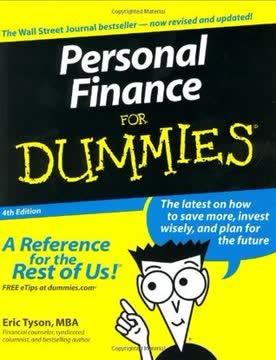
Book summary
by Eric Tyson
Premium summary · Opens in the app · 30 min read
Most people never receive a formal education in personal finance. You can graduate from high school, earn a college degree, and enter the professional world without ever taking a single course on how to manage money. Yet from the moment you receive your first paycheck, you're expected to make complex financial decisions: how much to save, where to invest, whether to rent or buy, which insurance to purchase, and how to plan for a future that feels impossibly far away.
**Author:** Eric Tyson
**Estimated Reading Time:** 45 minutes
**What You'll Learn:**
- How to assess your true financial health and set goals that actually work - Why living below your means is the foundation of all wealth building - How to invest intelligently without falling for Wall Street's traps - The right way to use tax-advantaged accounts to accelerate your progress - How to make smart decisions about real estate, insurance, and debt - How to protect what you build and plan for life's biggest transitions
**Who This Book Is For:**
This book is for anyone who wants to take control of their financial life but doesn't know where to start. Whether you're just beginning your career, navigating major life changes, or simply tired of feeling confused about money, this condensed edition will give you the clarity and confidence to make better decisions starting today.
Most people never receive a formal education in personal finance. You can graduate from high school, earn a college degree, and enter the professional world without ever taking a single course on how to manage money. Yet from the moment you receive your first paycheck, you're expected to make complex financial decisions: how much to save, where to invest, whether to rent or buy, which insurance to purchase, and how to plan for a future that feels impossibly far away. The consequences of this educational gap are severe. Millions of people carry high-interest credit card debt they don't fully understand. Many workers leave free money on the table by not maximizing employer retirement matches. Families buy homes they can barely afford because no one taught them how to calculate the true cost of ownership. And countless individuals reach retirement age with far less saved than they need, wondering where all the money went. Eric Tyson wrote Personal Finance for Dummies to fill this gap. His central insight is both simple and profound: personal finance is not rocket science. The principles that lead to financial security are straightforward and accessible to anyone willing to learn them. What most people lack is not intelligence or discipline, but a clear framework for making decisions. Tyson's approach stands out because of his willingness to challenge the financial services industry. He spent years working as a financial advisor before becoming an author, and he saw firsthand how conflicts of interest lead to bad advice. Brokers who earn commissions push products that may not serve their clients. Insurance agents sell policies that benefit themselves more than the people they're supposed to help. The entire industry, Tyson argues, is built on making simple things complicated so that professionals can justify their fees. This book strips away that complexity. It teaches you to…
Continue reading in the MinuteRead app
Get the complete 30-minute summary of Personal Finance for Dummies
Get the complete summary in the appCalculate your net worth today and track it quarterly.
Save at least 10 to 15 percent of your income by paying yourself first.
Build an emergency fund of three to six months of living expenses.
Invest in low-cost index funds with an asset allocation that matches your time horizon.
Maximize tax-advantaged accounts, especially employer-matched 401(k)s.
Pay off high-interest debt before investing beyond your employer match.
"Personal Finance for Dummies" is a strong fit if you want practical ideas around finance, personal finance, money, especially themes like calculate your net worth today and track it quarterly; save at least 10 to 15 percent of your income by paying yourself first. The MinuteRead summary distills these concepts into a focused read, whether you're deciding whether to buy the book or applying its lessons at work.
Eric Tyson, MBA, is a renowned personal finance counselor, writer, and speaker. With extensive experience helping individuals manage their finances, Tyson has authored numerous bestselling books on personal finance and investing. His straightforward approach and ability to simplify complex financial concepts have made him a trusted voice in the industry. Eric Tyson is known for providing practical, unbiased advice and exposing conflicts of interest within the financial services sector. His work …
View all summaries by Eric TysonContinue Reading
Access the complete 30-minute summary and thousands more nonfiction books in the MinuteRead app.

Continue reading the complete summary in the MinuteRead app.