MinuteRead
30 min
Book summary
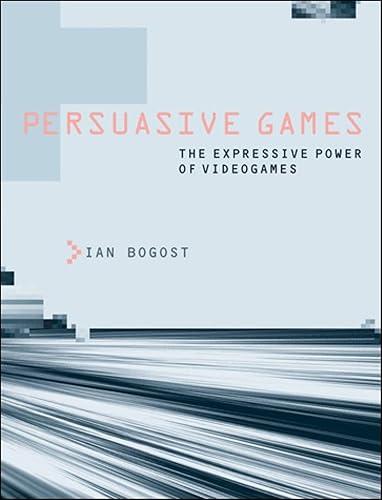
by Ian Bogost
Premium summary · Opens in the app · 30 min read
We live in an age of persuasion. Every day, we encounter thousands of messages designed to change what we think, what we buy, and how we act. We have developed sophisticated tools for understanding verbal arguments, visual advertisements, and cinematic propaganda. We know how a politician uses language to frame an issue. We recognize when a photograph has been staged to evoke sympathy. We can spot the emotional manipulation in a thirty-second commercial.
By Ian Bogost
**Estimated Reading Time:** 42 minutes
**What You'll Learn:** How videogames make arguments through their rules and systems, why procedural rhetoric represents a new form of persuasion, and how to critically read the games that surround you.
**Who This Book Is For:** Game designers, media critics, educators, marketers, policymakers, and anyone who wants to understand how interactive systems shape beliefs and behavior.
We live in an age of persuasion. Every day, we encounter thousands of messages designed to change what we think, what we buy, and how we act. We have developed sophisticated tools for understanding verbal arguments, visual advertisements, and cinematic propaganda. We know how a politician uses language to frame an issue. We recognize when a photograph has been staged to evoke sympathy. We can spot the emotional manipulation in a thirty-second commercial. But something new has emerged over the past few decades, something we have not yet learned to read critically. That something is the videogame. When most people think of videogames, they think of entertainment, distraction, or perhaps addiction. They think of teenagers in basements, of arcades and living rooms, of Mario and Grand Theft Auto. What they do not think about is persuasion. They do not consider that a game might be making an argument, advancing a worldview, or teaching a lesson about how some system in the world operates. Ian Bogost argues that this is a profound oversight. Videogames, he contends, represent a fundamentally new form of rhetoric, one that persuades not through words or images but through processes. When you play a game, you are not just receiving a message. You are participating in a simulation of how something works. You are experiencing the logic of a system from the inside. This matters because so much of our world is governed by systems. Economies, political institutions, social networks, corporate bureaucracies, educational systems, and technological infrastructures all operate according to rules that are often hidden from view. We experience the effects of these systems every day, but we rarely understand how they actually function. We feel the weight of debt without grasping the mechanics of compound interest. We sense that our workplace is dysfunctional without being able to articulate the structural reasons why. We know that certain political policies fail repeatedly without understanding the underlying logic that guarantees their failure. Videogames offer a unique solution to this problem. Because computers are fundamentally machines for running processes, they can model systems in ways that other media cannot. A game about urban planning can actually simulate the feedback loops between zoning decisions, tax revenue, and population growth. A game about counterterrorism can demonstrate, through its rules, why certain military strategies inevitably produce civilian casualties.…
Continue reading in the MinuteRead app
Get the complete 30-minute summary of Persuasive Games
Get the complete summary in the appProcedural rhetoric makes arguments through rules and systems, not just words and images.
Computers are uniquely suited to procedural rhetoric because they run processes.
The rules of a game encode claims about how some aspect of the world works.
Players experience procedural arguments through interaction, not passive reception.
The rhetoric of failure shows that a system is broken by making success impossible.
Political games expose ideological frames by operationalizing them as playable mechanics.
"Persuasive Games" is a strong fit if you want practical ideas around games, technology, computer science, especially themes like procedural rhetoric makes arguments through rules and systems, not just words and images; computers are uniquely suited to procedural rhetoric because they run processes. The MinuteRead summary distills these concepts into a focused read, whether you're deciding whether to buy the book or applying its lessons at work.
Motivated to help readers with procedural rhetoric, Ian Bogost wrote “Persuasive Games” to package those ideas for a fast, focused read. In “Persuasive Games”, Ian Bogost focuses on procedural rhetoric. Through “Persuasive Games”, Ian Bogost distills the core ideas on games into lessons readers can absorb in a single short sitting. Readers turn to this work when they want Ian Bogost's perspective on the subject without working through the entire original volume. Persuasive video games are a subg…
Continue Reading
Access the complete 30-minute summary and thousands more nonfiction books in the MinuteRead app.

Continue reading the complete summary in the MinuteRead app.