MinuteRead
30 min
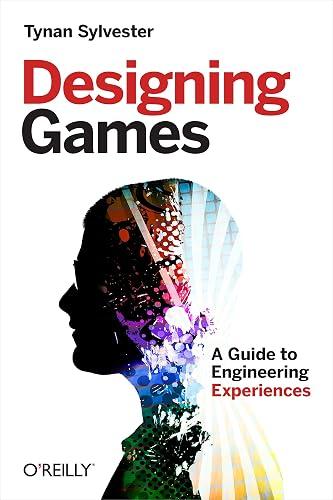
Book summary
by Tynan Sylvester
Premium summary · Opens in the app · 30 min read
Most books about game design begin with a definition. They tell you that a game is a system of rules, a form of play, a structured activity with goals and challenges. These definitions are accurate, but they miss something essential. They describe what games are made of, not what games do.
**Author:** Tynan Sylvester
**Estimated Reading Time:** 45 minutes
**What You'll Learn:**
- Why games are fundamentally different from every other creative medium - How to design mechanics that generate emotional experiences - The principles of elegance, balance, and meaningful choice - How narrative works differently in interactive systems - Practical frameworks for testing, iterating, and positioning your game
**Who This Book Is For:**
This book is for game designers, aspiring developers, and anyone curious about how interactive experiences are crafted. It is equally valuable for the solo indie developer working on their first prototype and the seasoned professional seeking a deeper understanding of why certain games resonate while others fall flat. If you have ever wondered why a simple mechanic like jumping can feel joyful, why a difficult boss fight can feel triumphant, or why a quiet moment in a virtual world can feel genuinely moving, this book will give you the language and frameworks to understand and create those experiences.
Most books about game design begin with a definition. They tell you that a game is a system of rules, a form of play, a structured activity with goals and challenges. These definitions are accurate, but they miss something essential. They describe what games are made of, not what games do. Tynan Sylvester begins from a different place. A game, he argues, is an artificial system for generating experiences. The emphasis belongs on the final word. Experiences. Not rules. Not graphics. Not technology. Experiences. This distinction matters more than it might first appear. When you think of games as rule systems, you design rules. When you think of games as experiences, you design emotions. You design moments of tension, release, triumph, fear, curiosity, and satisfaction. The rules become tools rather than ends. The mechanics become instruments rather than the composition itself. The problem with most game design education is that it focuses on the visible surface of games. It teaches you about mechanics, balance, level design, and user interfaces. These are all important, but they are the vocabulary, not the poetry. A designer who understands mechanics but not emotion can create a functional game that nobody wants to play. A designer who understands emotion but not mechanics can create a compelling vision that never becomes playable. The craft lies in connecting the two. Sylvester's approach is different because he treats game design as a form of engineering. Not engineering in the cold, mechanical sense, but in the sense of building systems that reliably produce desired outcomes. A bridge engineer understands that certain materials and structures will predictably support certain loads. A game designer should similarly understand that certain mechanics and structures will predictably produce certain emotional responses. This is…
Continue reading in the MinuteRead app
Get the complete 30-minute summary of Designing Games
Get the complete summary in the appA game is an artificial system for generating experiences. Design experiences, not mechanics.
Mechanics produce events, and events produce emotions. Always ask what events a mechanic will generate.
Uncertainty is essential for engagement. The sweet spot is between guaranteed success and certain failure.
Elegance is maximum depth from minimum complexity. Simple rules can generate deep experiences.
The value of a mechanic is determined by its interactions with other mechanics.
Challenge must be fair. Failure should feel instructive, not arbitrary.
"Designing Games" is a strong fit if you want practical ideas around game design, design, games, especially themes like a game is an artificial system for generating experiences. design experiences, not mechanics; mechanics produce events, and events produce emotions. always ask what events a mechanic will generate. The MinuteRead summary distills these concepts into a focused read, whether you're deciding whether to buy the book or applying its lessons at work.
Motivated to help readers with gAME is an artificial system for generating experiences, Tynan Sylvester wrote “Designing Games” to package those ideas for a fast, focused read. In “Designing Games”, Tynan Sylvester focuses on gAME is an artificial system for generating experiences. Through “Designing Games”, Tynan Sylvester distills the core ideas on game design into lessons readers can absorb in a single short sitting. Readers turn to this work when they want Tynan Sylvester's perspective on th…
Continue Reading
Access the complete 30-minute summary and thousands more nonfiction books in the MinuteRead app.

Continue reading the complete summary in the MinuteRead app.