MinuteRead
30 min
Book summary
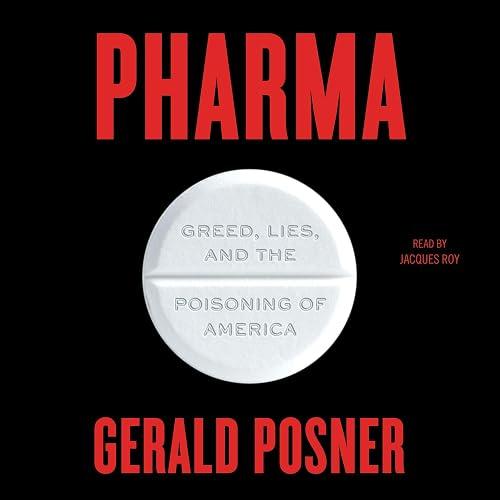
by Gerald Posner
Premium summary · Opens in the app · 30 min read
The medicine cabinet in your bathroom contains a story that spans more than a century and a half. It is a story of brilliant scientists who conquered diseases that once killed millions. It is also a story of corporations that sold heroin as a cough remedy, marketed cocaine as a cure for toothaches, and convinced doctors that a powerful opioid was safer than aspirin.
**Author:** Gerald Posner **Estimated Reading Time:** 45 minutes
**What You'll Learn:** How the American pharmaceutical industry evolved from unregulated patent medicine peddlers into one of the most powerful and profitable industries in history. You will learn why the pursuit of breakthrough medicines has repeatedly collided with the pursuit of profit, how regulatory battles shaped the drugs in your medicine cabinet, and how the opioid crisis emerged from decisions made decades earlier.
**Who This Book Is For:** Anyone who takes prescription medications, anyone curious about why drug prices remain so high, anyone concerned about the opioid epidemic, and anyone who wants to understand the complicated relationship between medical innovation and corporate power.
The medicine cabinet in your bathroom contains a story that spans more than a century and a half. It is a story of brilliant scientists who conquered diseases that once killed millions. It is also a story of corporations that sold heroin as a cough remedy, marketed cocaine as a cure for toothaches, and convinced doctors that a powerful opioid was safer than aspirin. Gerald Posner's Pharma tells this story without flinching. The book opens a window into an industry that has saved countless lives while simultaneously creating public health crises that have destroyed countless others. The tension between those two realities defines the history of American pharmaceuticals. The industry began in the chaos of war. During the Mexican-American War and the Civil War, demand for painkillers, disinfectants, and surgical supplies created opportunities for ambitious entrepreneurs. Companies like Pfizer and Squibb got their start fulfilling military contracts, manufacturing morphine and other opium derivatives that were completely legal at the time. These early companies established a pattern that would persist for generations: profit from the suffering of the sick, and worry about consequences later. By the late nineteenth century, the American marketplace was flooded with patent medicines. These products promised to cure everything from cancer to baldness, and they often contained ingredients that were dangerous, addictive, or both. Cocaine appeared in toothache drops for children. Heroin was sold as a non-addictive substitute for morphine. Cannabis extracts were marketed as remedies for nervous disorders. None of these products required a prescription. None of them faced meaningful government oversight. The companies that manufactured them grew wealthy while their customers grew dependent. The story of American pharmaceuticals is not simply a story of corporate greed. It is also a story of genuine scientific achievement. The discovery of penicillin in 1928, and its mass production during World War II, transformed medicine. For the first time, doctors could actually cure infections rather than merely treat symptoms. The antibiotic era began, and with it came a new understanding of what medicine could accomplish. The industry that…
Continue reading in the MinuteRead app
Get the complete 30-minute summary of Pharma
Get the complete summary in the appThe pharmaceutical industry was built on the sale of addictive substances marketed as safe medicines.
The tension between healing and profit defines the industry.
Regulation has always been resisted by the industry and weakened by lobbying.
The development of penicillin required government involvement, not just private enterprise.
Patents create monopolies that drive up drug prices.
Medical advertising is designed to influence doctors, not just inform them.
"Pharma" is a strong fit if you want practical ideas around science, history, business, especially themes like the pharmaceutical industry was built on the sale of addictive substances marketed as safe medicines; the tension between healing and profit defines the industry. The MinuteRead summary distills these concepts into a focused read, whether you're deciding whether to buy the book or applying its lessons at work.
Motivated to help readers with some of today’s largest drug companies got their start selling then-legal heroin, Gerald Posner wrote “Pharma” to package those ideas for a fast, focused read. In “Pharma”, Gerald Posner focuses on some of today’s largest drug companies got their start selling then-legal heroin. Through “Pharma”, Gerald Posner distills the core ideas on science into lessons readers can absorb in a single short sitting. Readers turn to this work when they want Gerald Posner's perspe…
Continue Reading
Access the complete 30-minute summary and thousands more nonfiction books in the MinuteRead app.

Continue reading the complete summary in the MinuteRead app.