MinuteRead
30 min
Book summary
by Stuart M. Brown Jr.
Premium summary · Opens in the app · 30 min read
The most important question Stuart Brown ever asked a patient was not about symptoms, medications, or family history. It was simpler and stranger. He asked about play.
**Author:** Stuart M. Brown Jr. **Estimated Reading Time:** 45 minutes
Why play is not a luxury but a biological necessity. How play shapes the brain, builds social intelligence, fuels innovation, and protects mental health. What happens when play is missing from a life, and how to bring it back.
Anyone who has ever felt that adulthood came with an unspoken rule to put away childish things. Parents wondering how to raise resilient children. Leaders trying to build creative teams. Couples who have lost their spark. And anyone who suspects that the absence of joy in their daily life is not a character flaw but a correctable deficit.
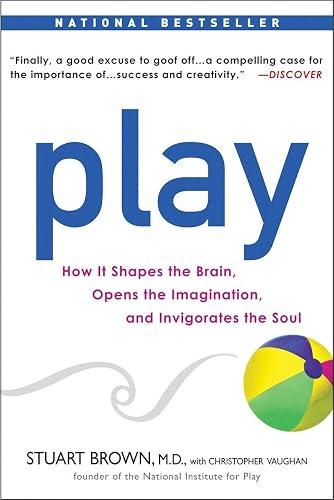
The most important question Stuart Brown ever asked a patient was not about symptoms, medications, or family history. It was simpler and stranger. He asked about play. Brown was a young psychiatrist working with men who had committed violent crimes. He was not looking for play. He was looking for patterns, for some thread that might explain why certain people became capable of terrible acts. What he found surprised him. Again and again, the men he interviewed shared a common history. They had not played as children. At first, Brown dismissed the observation. It seemed too simple, too soft to matter in the hard world of criminal psychiatry. But the pattern persisted. When he compared the childhood histories of violent offenders with those of nonviolent individuals, the difference was stark. The absence of play was not incidental. It was predictive. This discovery launched Brown on a decades-long investigation into the nature and purpose of play. He left clinical medicine to study animal behavior, working with researchers like Jane Goodall and documenting play across species. He founded the National Institute for Play, a research organization dedicated to understanding what play is, why it exists, and what happens when it disappears. What Brown discovered is that play is not a frivolous activity that children eventually outgrow. It is a fundamental biological process, as essential to healthy development as sleep and nutrition. Play is nature's way of building brains, testing social skills, and preparing organisms for the unexpected challenges of life. The problem is that modern society has forgotten this. We have organized play out of our lives. Children spend more time in structured activities and less time in free, unstructured play than any previous generation. Schools have cut recess to make room for test preparation. Adults wear busyness as a badge of honor and treat leisure as a guilty pleasure. We have created a play-deprived world, and we are paying the price in rising rates of anxiety, depression, and social disconnection. Brown's argument is not that we need more entertainment. Entertainment is passive. Play is…
Continue reading in the MinuteRead app
Get the complete 30-minute summary of Play
Get the complete summary in the appPlay is a biological necessity, not a luxury.
The opposite of play is not work. It is depression.
Play builds the brain by creating new neural connections and stimulating the production of BDNF.
Play deprivation in childhood is a strong predictor of later behavioral problems.
There are eight play personalities. Find yours.
Play at work increases creativity, engagement, and productivity.
"Play" is a strong fit if you want practical ideas around psychology, parenting, self help, especially themes like play is a biological necessity, not a luxury; the opposite of play is not work. it is depression. The MinuteRead summary distills these concepts into a focused read, whether you're deciding whether to buy the book or applying its lessons at work.
Motivated to help readers with nature's greatest tool for creating new neural networks and for reconciling cognitive difficulties, Stuart M. Brown Jr. wrote “Play” to package those ideas for a fast, focused read. In “Play”, Stuart M. Brown Jr. focuses on nature's greatest tool for creating new neural networks and for reconciling cognitive difficulties. Through “Play”, Stuart M. Brown Jr. distills the core ideas on psychology into lessons readers can absorb in a single short sitting. Readers turn…
Continue Reading
Access the complete 30-minute summary and thousands more nonfiction books in the MinuteRead app.

Continue reading the complete summary in the MinuteRead app.