MinuteRead
30 min
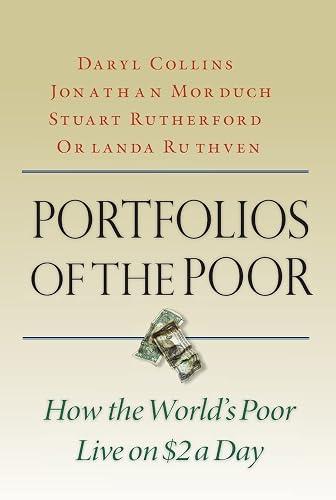
Book summary
by Daryl Collins
Premium summary · Opens in the app · 30 min read
The standard image of poverty is simple. A person earns a little money. They spend it immediately on food. By the end of the day, nothing remains. The next day, the cycle repeats. There is no saving because there is nothing to save. There is no planning because survival leaves no room for the future.
**Author:** Daryl Collins, Jonathan Morduch, Stuart Rutherford, Orlanda Ruthven
**Estimated Reading Time:** 45 minutes
**What You'll Learn:** How families living on less than two dollars a day manage money with remarkable sophistication, why their financial lives are far more active than most people assume, and what this means for building better financial tools for the world's poor.
**Who This Book Is For:** Anyone interested in poverty, microfinance, economic development, or the hidden financial lives of the world's most vulnerable people. If you have ever wondered how the poor survive, save, borrow, and plan, this book will change how you see the problem entirely.
The standard image of poverty is simple. A person earns a little money. They spend it immediately on food. By the end of the day, nothing remains. The next day, the cycle repeats. There is no saving because there is nothing to save. There is no planning because survival leaves no room for the future. This image is wrong. Between 1999 and 2005, researchers tracked the financial lives of more than 250 households in Bangladesh, India, and South Africa. They visited families every two weeks for a full year, sometimes longer. They recorded every transaction, every loan, every savings deposit, every repayment, every gift, every sale of an asset. The result was a collection of financial diaries that revealed something surprising. Poor households are active money managers. They save. They borrow. They lend. They join savings clubs. They negotiate with shopkeepers. They buy insurance through burial societies. They manage complex portfolios of financial tools, often using a dozen or more different instruments in a single year. The total amount of money flowing through these tools frequently exceeds their annual income. The problem is not that poor people lack financial sophistication. The problem is that the tools available to them are inadequate. Informal arrangements with neighbors and relatives offer flexibility but little reliability. Formal banks and microfinance institutions offer reliability but little flexibility. Neither option fits the reality of lives lived on unpredictable, irregular, and painfully small incomes. This book matters because it changes the conversation about poverty. For decades, the dominant assumption was that poor people needed credit to start businesses. Microfinance was built on this idea. But the financial diaries reveal a broader set of needs. Poor households need tools to manage daily cash flow, to cope with emergencies, and to build large sums for life events like weddings, funerals, and education. Business loans are only one small piece of a much larger puzzle. The authors of this book are not armchair theorists. Daryl Collins, Jonathan Morduch, Stuart Rutherford, and Orlanda Ruthven spent years in the field, building relationships with families, recording their financial lives in…
Continue reading in the MinuteRead app
Get the complete 30-minute summary of Portfolios of the Poor
Get the complete summary in the appPoor households are sophisticated money managers who save, borrow, and plan despite living on less than two dollars a da
The triple whammy of low income, irregular income, and lack of suitable tools makes financial management extraordinarily
Cash flow management is the most fundamental financial task, requiring constant effort to ensure daily needs are met.
Risk is omnipresent, and without insurance or savings, shocks can push families deeper into poverty.
Building large sums for life events requires combining saving, borrowing, and gifts from multiple sources.
Informal finance offers flexibility but lacks reliability. Formal finance offers reliability but lacks flexibility.
"Portfolios of the Poor" is a strong fit if you want practical ideas around economics, finance, development, especially themes like poor households are sophisticated money managers who save, borrow, and plan despite living on less than two dollars a da; the triple whammy of low income, irregular income, and lack of suitable tools makes financial management extraordinarily. The MinuteRead summary distills these concepts into a focused read, whether you're deciding whether to buy the book or applying its lessons at work.
Motivated to help readers with no matter where we looked, Daryl Collins wrote “Portfolios of the Poor” to package those ideas for a fast, focused read. In “Portfolios of the Poor”, Daryl Collins focuses on no matter where we looked. Through “Portfolios of the Poor”, Daryl Collins distills the core ideas on economics into lessons readers can absorb in a single short sitting. Readers turn to this work when they want Daryl Collins's perspective on the subject without working through the entire orig…
Continue Reading
Access the complete 30-minute summary and thousands more nonfiction books in the MinuteRead app.

Continue reading the complete summary in the MinuteRead app.