MinuteRead
30 min
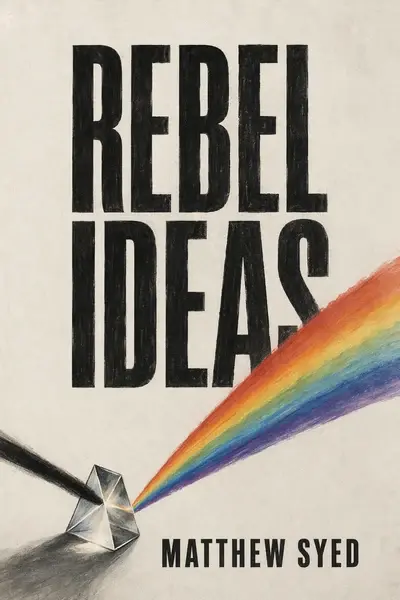
Book summary
by Matthew Syed
Premium summary · Opens in the app · 30 min read
In the autumn of 2001, the United States intelligence community faced a reckoning. For years, the CIA had recruited from a narrow pool of candidates: white, male, Protestant, American-born, and educated at a handful of elite universities. These were, by any conventional measure, brilliant people. They had sharp analytical minds. They were dedicated to their mission. They worked long hours in service of their country.
**Author:** Matthew Syed
**Estimated Reading Time:** 45 minutes
**What You'll Learn:**
Why the most intelligent teams often make the worst decisions, how diversity of thought drives breakthrough innovation, and what you can do to build genuinely smarter organizations, teams, and communities.
**Who This Book Is For:**
Leaders who want better decisions, professionals who want to understand why their teams underperform despite individual brilliance, and anyone curious about how human collaboration actually works in a complex world.
In the autumn of 2001, the United States intelligence community faced a reckoning. For years, the CIA had recruited from a narrow pool of candidates: white, male, Protestant, American-born, and educated at a handful of elite universities. These were, by any conventional measure, brilliant people. They had sharp analytical minds. They were dedicated to their mission. They worked long hours in service of their country. And yet, on September 11, 2001, they failed catastrophically. The warning signs had been there. Intelligence reports had flagged suspicious activity. Intercepts had suggested something was coming. But the people analyzing those signals shared such similar backgrounds, such similar assumptions, such similar ways of seeing the world that they could not imagine what a group of terrorists from a radically different culture might attempt. They were collectively blind. This is the central puzzle that Matthew Syed explores in Rebel Ideas: Why do smart people, working together, so often make terrible decisions? Why do organizations filled with talented individuals fail to see what, in retrospect, seems obvious? And what can we do about it? The answer, Syed argues, is both simple and profound. Individual intelligence is not enough. What matters is collective intelligence: the ability of a group to see problems from multiple angles, to challenge its own assumptions, and to combine diverse perspectives into better solutions. When teams lack cognitive diversity, they become vulnerable. They develop blind spots. They make mistakes that no single member would make alone. This book is about those blind spots and how to avoid them. It is about why diversity matters not as a matter of political correctness, but as a matter of survival in a complex world. It is about how echo chambers form, how dissent gets silenced, and how the best teams in the world manage to harness the power of disagreement. Syed draws on a remarkable range of examples: the codebreakers at Bletchley Park who cracked the Enigma code during World War II, the tragic failure of the CIA before 9/11, the collapse of a disastrous tax policy in Britain, the surprising history of the wheeled suitcase, and the science of why some teams innovate while others stagnate. What emerges is a compelling case for a different way of thinking about…
Continue reading in the MinuteRead app
Get the complete 30-minute summary of Rebel Ideas
Get the complete summary in the app**Cognitive diversity is the key to collective intelligence.** Teams with diverse perspectives outperform homogeneous te
**Homophily is a hidden force that pulls groups toward homogeneity.** It affects everyone, and counteracting it requires
**Constructive dissent improves decision-making.** Minority viewpoints stimulate divergent thinking and reduce the risk
**Innovation is recombinant.** The most impactful ideas combine existing concepts in new ways.
**Echo chambers distort reality.** They are systems of strategic discrediting, not just limited exposure.
**Standardization overlooks individual differences.** The average person does not exist.
"Rebel Ideas" is a strong fit if you want practical ideas around psychology, business, leadership, especially themes like **cognitive diversity is the key to collective intelligence.** teams with diverse perspectives outperform homogeneous te; **homophily is a hidden force that pulls groups toward homogeneity.** it affects everyone, and counteracting it requires. The MinuteRead summary distills these concepts into a focused read, whether you're deciding whether to buy the book or applying its lessons at work.
Matthew Syed is a bestselling author and speaker specializing in high performance and mindset. He has written six books, including Rebel Ideas and Bounce, exploring how individuals and organizations can achieve continuous improvement. Syed is also a journalist for The Times and former England table tennis champion. His work examines the connection between mindset and performance in complex environments. Syed co-founded Matthew Syed Consulting, which works with clients to build growth mindset cul…
View all summaries by Matthew SyedContinue Reading
Access the complete 30-minute summary and thousands more nonfiction books in the MinuteRead app.

Continue reading the complete summary in the MinuteRead app.