MinuteRead
30 min
Book summary
by Todd W. Hall
Premium summary · Opens in the app · 30 min read
For centuries, spiritual formation has been framed largely as an individual pursuit. The image of the solitary seeker, the monk in the cell, the person rising early for quiet time alone with God, has dominated our imagination of what it means to grow spiritually. These practices matter. But they are incomplete.
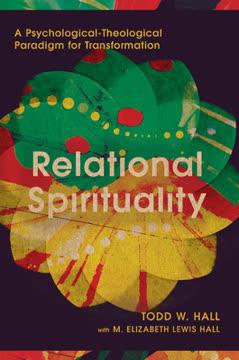
**Relational Spirituality** *By Todd W. Hall*
**Estimated Reading Time:** 45 minutes
**What You'll Learn**
Why the deepest spiritual life is not found in isolation but in the quality of your connections. This book reveals how every relationship you have, with God, with yourself, with others, and with the world around you, is the actual terrain of spiritual transformation. You will discover why vulnerability is not weakness but the doorway to intimacy, how psychological science and ancient spiritual wisdom converge on the same truth, and what it practically means to build a life where love becomes the organizing principle.
**Who This Book Is For**
This book is for anyone who has ever felt that something was missing in their spiritual life despite disciplined practice. It is for those who sense that genuine transformation should affect how they love the people in front of them. It is for readers who want a spirituality that is psychologically grounded, theologically rich, and relationally alive. If you have ever wondered whether your faith could heal your relationships rather than complicate them, this book will show you how.
For centuries, spiritual formation has been framed largely as an individual pursuit. The image of the solitary seeker, the monk in the cell, the person rising early for quiet time alone with God, has dominated our imagination of what it means to grow spiritually. These practices matter. But they are incomplete. Todd W. Hall begins with a conviction that runs counter to much of what we have absorbed about the spiritual life. Human beings are not isolated selves trying to connect with a distant God. We are relational beings to our core, created in the image of a relational God, and our growth happens not despite our relationships but through them. This is not a sentimental claim. Hall is a professor of psychology at Biola University who has spent decades studying attachment theory, neuroscience, and spiritual formation. His argument is built on rigorous research and deep theological reflection. What he presents is a paradigm shift that changes how we understand everything from prayer to community to personal healing. The problem Hall addresses is widespread and often unnamed. Many people experience a disconnect between their spiritual practices and their actual lives. They pray, attend services, read sacred texts, and yet find that their relationships remain strained, their inner world remains anxious, and their sense of God remains abstract. Something is not working. Relational spirituality proposes that the missing piece is relationship itself. Not relationship as an add-on to spiritual practice, but relationship as the very medium through which spiritual transformation occurs. God is not found by escaping our connections but by entering them more fully, with greater awareness, vulnerability,…
Continue reading in the MinuteRead app
Get the complete 30-minute summary of Relational Spirituality
Get the complete summary in the appYou are made for connection. Your fundamental nature is relational, not individualistic.
Vulnerability is the doorway to intimacy. True strength includes the courage to be seen.
God is relationship. The Trinity reveals that love is the fabric of reality.
Spiritual growth happens through relationships, not in isolation from them.
Your attachment history affects your relationship with God. Healing is possible through new relational experiences.
Presence and attunement are spiritual practices that can be developed.
"Relational Spirituality" is a strong fit if you want practical ideas around theology, christian, psychology, especially themes like you are made for connection. your fundamental nature is relational, not individualistic; vulnerability is the doorway to intimacy. true strength includes the courage to be seen. The MinuteRead summary distills these concepts into a focused read, whether you're deciding whether to buy the book or applying its lessons at work.
Todd W. Hall is a psychology professor at Biola University's Rosemead School of Psychology. His work focuses on integrating psychology and theology, particularly in the areas of spiritual formation and relational spirituality. Todd W. Hall has authored several books and articles on these topics, demonstrating expertise in attachment theory, neuroscience, and their applications to spiritual growth. His academic background and research contribute to his ability to bridge scientific and theological…
View all summaries by Todd W. HallContinue Reading
Access the complete 30-minute summary and thousands more nonfiction books in the MinuteRead app.

Continue reading the complete summary in the MinuteRead app.